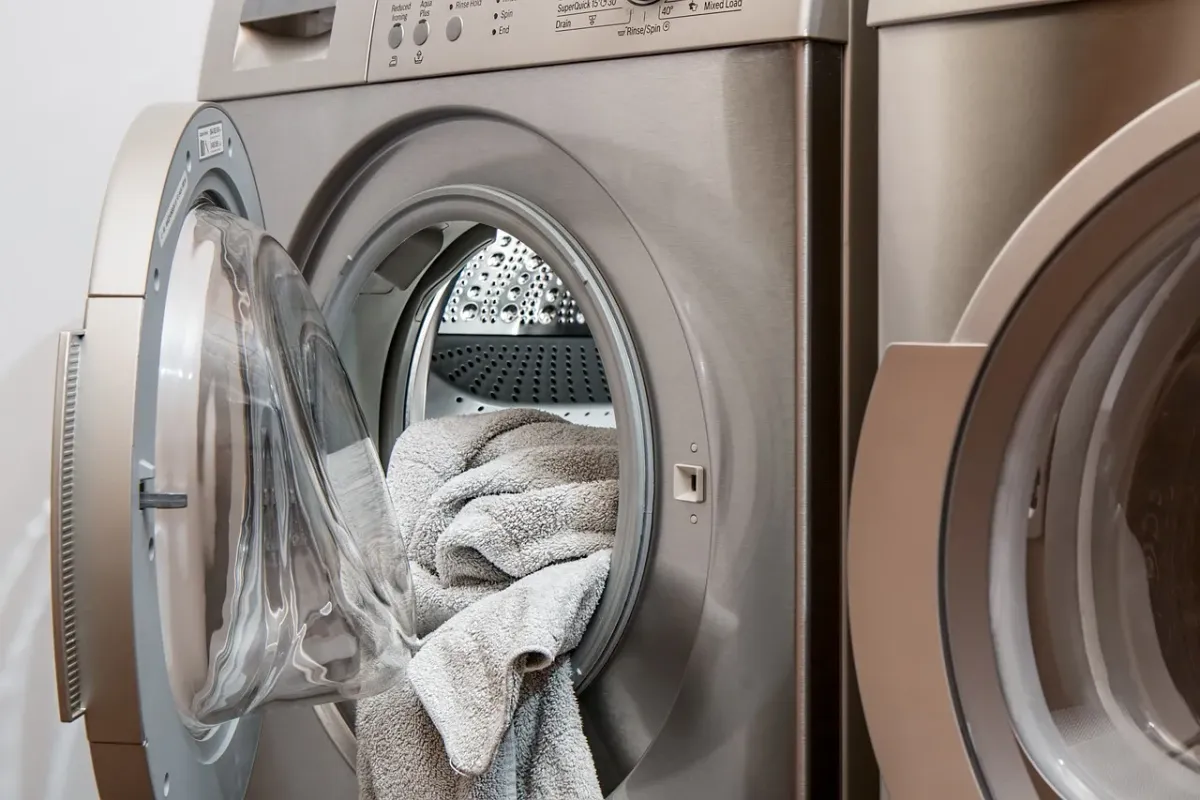
Midway through a wash cycle in a front-load or top-load washing machine, the drum halts filled with soapy water, displaying drain error codes like OE, E20, 5C, or E2 while a continuous buzzing motor hum vibrates from the base. Before spending thousands of dollars replacing the mainboard, understand that over 90% of drain failures and humming noises stem simply from pocket items like coins, bobby pins, bra underwires, or toothpicks washed down into the drain pump filter chamber, jamming the impeller. By mastering safe water drainage and unscrewing the debris filter to remove trapped objects, you can resolve the issue in 10 minutes at zero cost.
Looking for the Chinese version of this article?切換至繁體中文版 →
Fix Washing Machine Drain Pump Jammed by Coins or Lint

This article is compiled from publicly available online sources for general reference only; readers should independently verify and judge its accuracy, and it is not legal, tax, medical or engineering advice. Rules, fees and subsidies change; check the latest notice from the responsible authority before acting. For electrical, gas, structural or health risks, consult a qualified professional.
This is the English edition of a Chinese article, adapted with AI assistance and checked against the original. Where the two differ, the Chinese version and the official sources it cites prevail.
Electrical safety and water leakage warning:
Before opening or cleaning the bottom drain filter, always disconnect the 3-prong grounded power plug to prevent shock hazards. A full front-load drum holds 15 to 30 liters of trapped water. Before loosening the filter cap, use the small black emergency drain tube at the bottom front to drain water into basins in batches. Never unthread the main filter cap while the drum is full, or scalding soapy water will flood balconies or wood floors.
1. Four Core Causes of Washer Drainage Failures and Error Codes
While drain control logic varies slightly across brands, error codes generally point to drain circuit abnormalities:
| Brand | Drain Error Code | System Protection Logic | Most Common Physical Cause |
|---|---|---|---|
| LG Front Load | OE (Output Error) | Water level sensor detects level not dropping to benchmark within 8 minutes of drain cycle | Coins jamming front debris filter plug, or broken drain pump impellers |
| Panasonic | U11 | Cannot drain wash water within preset duration; buzzer sounds and halts cycle | Kinked or flattened drain hose, or exterior drain outlet clogged with dense lint |
| Samsung | 5C / 4E / nd | Microcomputer detects pump motor coil current overload or unchanged water level frequency | Toothpicks or coins wedged across pump impeller, stalling rotor with a hum |
| Hitachi / Bosch | C02 / E18 / F18 | Pressure switch feedback timeout; control board locks door to prevent scalding overflows | Bra underwire wound around filter, or seized drain solenoid mechanical assembly |
2. Front-Load Washer Emergency Draining and Coin Removal SOP
To safely clear a waterlogged drum, prepare a shallow basin, 2 large absorbent towels, and needle-nose pliers:
- Cut power and prepare protection: Unplug the washer power cord. Spread 2 thick towels on the floor directly beneath the machine to catch spills.
- Open the lower right access panel: Use a flathead screwdriver or coin to gently pry open the square access door on the lower right front of the machine, exposing the circular filter knob and small black emergency drain hose.
- Drain drum water via emergency hose: Pull out the small black tube, position the tip over the shallow basin, and pull out the plug to let 10 to 20 liters of standing water drain out. Re-plug when the basin fills and empty it, repeating 2 to 3 times until completely dry.
- Unscrew the main debris filter counterclockwise: Place rags under the filter opening and rotate the knob counterclockwise (it may feel stiff if sand is present; wrap in a towel for grip) to slide out the cylindrical plastic filter cartridge.
- Extract coins and check the impeller: Inspect the filter housing and remove 1, 5, or 10 TWD coins, hairpins, or lint clumps. Reach into the chamber with a finger and gently rotate the plastic cross impeller; it should rotate with elastic stepping resistance smoothly across 360 degrees. If seized, use needle-nose pliers to remove threads or toothpicks wound around the shaft.
- Reinstall filter and perform water test: Align filter guide tracks and slide the cartridge in, turning clockwise firmly until fully seated to ensure a watertight seal. Re-plug the emergency hose, stow it in its clip, and close the access door. Plug in the machine and run a spin-only cycle to verify smooth drainage without leaks.
3. Troubleshooting Top-Load Washer Drain Motor Pullers and Hoses
Top-load washers typically do not use an impeller pump, utilizing an electromagnetic drain motor puller instead:
- Detached puller cable or burned-out motor: A square black puller underneath the machine retracts a steel cable to pull open a rubber drain flapper upon powering up. If you hear slipping gear clicking or see zero movement, internal gears are stripped or motor coils are burned out. Buying an identical replacement puller online for about 200 to 350 TWD lets you replace it by undoing two screws.
- Foreign objects lodged in rubber bellows hose: The black corrugated rubber hose connecting the drum base to the drain valve frequently catches socks or pocket change. Tilting the washer back 45 degrees against a wall and loosening spring hose clamps allows removing the hose to retrieve trapped items.
- Detergent clogs and fabric softener grease: Overusing concentrated powder or dense liquid fabric softener forms chalk-like grease buildup in hose bends. Pouring hot water at roughly 50℃ mixed with baking soda into the drum dissolves and flushes these residues.
4. Three Principles to Prevent Foreign Object Damage to Washers
Good laundry habits prevent pump blockages and can extend washing machine service life beyond 10 years:
- Empty pockets and zip zippers before washing: Coins, screws, and lighters are prime threats to pump impellers and outer tubs. Check all pockets by hand before loading; close metal zippers to prevent teeth from snagging and breaking loose.
- Place underwire bras and small socks in laundry mesh bags: Under centrifugal spinning force, underwires can poke through fabric and wedge into the outer tub or pump. In addition, invisible no-show socks easily wash down drain channels unless washed inside zippered mesh bags.
- Unscrew and rinse the pump filter monthly: Rather than waiting for error codes, unscrew the lower filter monthly and brush away hair and lint with an old toothbrush to stop foul odors and sludge buildup.
5. Frequently Asked Questions FAQ
Q1: Why does water leak heavily from the bottom after cleaning and reinstalling the filter?
This is commonly caused by cross-threading the filter cap. Large plastic threads can feel tight even when cross-threaded, preventing proper compression of the rubber O-ring waterproofing seal. Unscrew counterclockwise, verify that the O-ring is intact and clean of sand, push the filter in straight and level, and tighten clockwise firmly until the latch snaps into position.
Q2: If the filter is clean of coins but the washer still hums and will not drain, what is broken?
This indicates a burned-out pump motor rotor or stripped gears. If the impeller spins freely by hand but does not rotate when powered, humming with a low vibrational frequency, the permanent magnet rotor has cracked or demagnetized, or the control board delivers insufficient AC voltage. Replacement drain pump assemblies cost about 500 to 800 TWD online and require undoing only three mounting screws and quick-connect electrical clips.
Q3: Why does a top-load washer violently bang against its cabinet during spinning, displaying UE or E3?
This usually indicates degraded suspension rod damping rather than a drainage defect. The inner tub is suspended by four metal suspension rods with internal grease damping springs. After more than 5 years, dried damping grease causes resonant pendulum banging during spin cycles. Replacing all four suspension rods for about 600 to 900 TWD restores smooth spinning balance.
Q4: Can a front-load washer drain hose be laid flat directly into a floor drain?
No. This triggers siphoning water loss. On European and most front-load washers, the drain hose must loop upward to a height of 60 to 90 cm above the floor at the rear of the cabinet before descending into the standpipe or floor trap. Laying the hose flat allows wash water to siphon out by gravity during filling, causing the machine to lose water continuously and trigger 4E or IE water supply timeout alarms.
Related reading: Cleaning Washing Machine Lint Filters and Inlet Screens · Washing Machine Slow Drain and Floor Overflow Triage