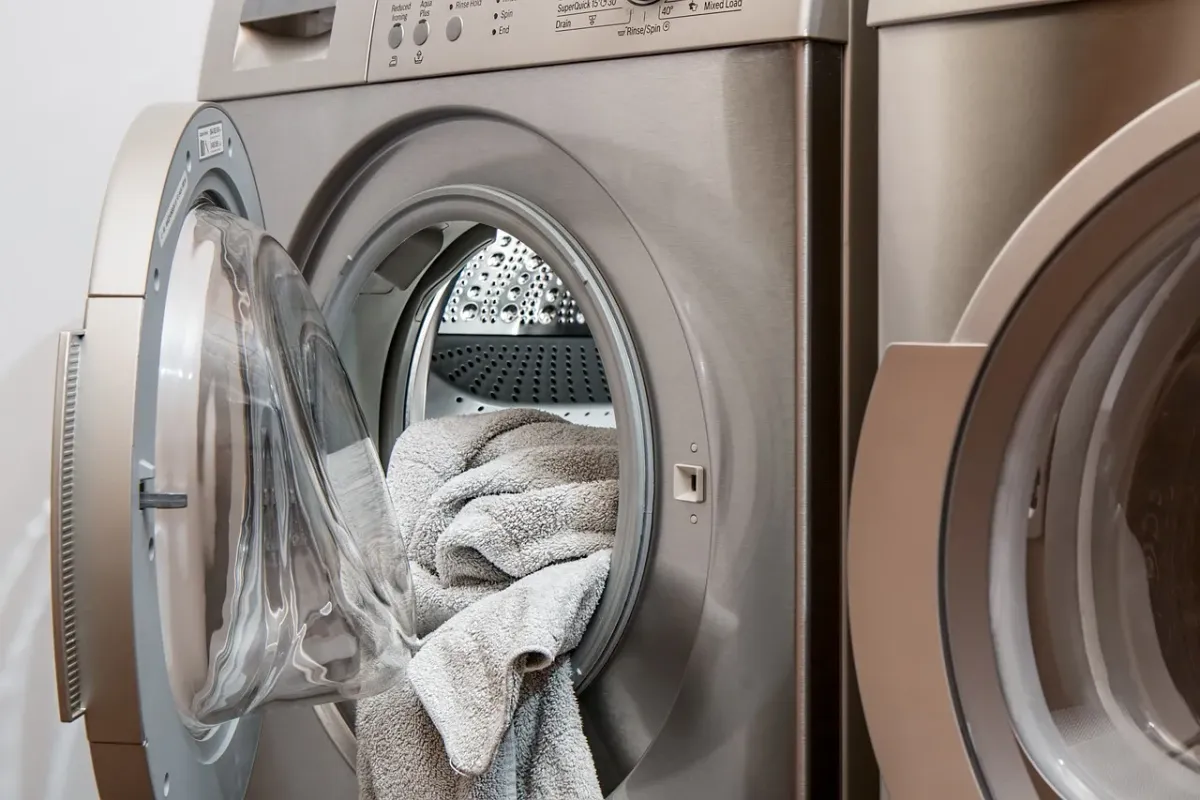
Many homeowners have experienced this balcony nightmare: shortly after the washing machine begins filling, a loud rush of water erupts outside. Rushing to investigate, the washing machine inlet hose adapter has completely blown off the faucet under water pressure, spraying high-pressure water like a fire hydrant toward the ceiling and flooding balconies and indoor flooring. Over 99% of these disasters stem from using outdated four-prong screw clamp inlet adapters, where four small set screws loosen and strip under repeated water hammer vibrations.
Looking for the Chinese version of this article?切換至繁體中文版 →
Fix Washing Machine Inlet Hose Leak and Upgrade Faucets
This article is compiled from publicly available online sources for general reference only; readers should independently verify and judge its accuracy, and it is not legal, tax, medical or engineering advice. Rules, fees and subsidies change; check the latest notice from the responsible authority before acting. For electrical, gas, structural or health risks, consult a qualified professional.
This is the English edition of a Chinese article, adapted with AI assistance and checked against the original. Where the two differ, the Chinese version and the official sources it cites prevail.
Warning: The moment an inlet adapter slips and sprays water, immediately shut off the dedicated balcony water supply valve. Never attempt to force the fitting back on by hand while water sprays under high pressure; slippery pressurized jets can cause severe arm collisions with walls and risk fatal electrocution if water contacts the 110V electrical outlet powering the washer!
1. Inherent Structural Flaws of Traditional 4-Prong Clamp Adapters
Standard accessories packaged with new washing machines often include a white plastic adapter equipped with four Phillips set screws spaced at 90 degrees holding an internal black rubber compression washer. It seals by tightening screws directly against the smooth outer surface of a standard faucet bibb and threading down the lower collar to compress the rubber washer.
This design creates serious engineering hazards:
- Smooth pipe bodies lack physical retaining grooves: Standard bibb faucets have smooth spouts without retaining lips. Four set screws rely purely on point friction. Every opening and closing cycle of the washer solenoid creates sharp water hammer shock waves that inevitably loosen screws after thousands of cycles.
- Uneven torque tilts and tears rubber compression gaskets: Non-professionals rarely achieve 100% symmetrical torque across all four screws. Uneven tension pinches the rubber gasket askew, causing micro-jets of water that rapidly corrode screws and strip threads.
- Galvanic corrosion between dissimilar metals: The four zinc-plated iron screws pressed against brass or stainless steel bibbs generate galvanic corrosion in humid environments. Screw tips powder away over several years, leading to abrupt blowout failure.
2. How Quick-Connect Steel Ball-Lock Couplers Operate
Modern washing machine inlet hoses utilize standardized stainless steel ball-lock quick-connect couplers. The female socket houses 4 to 6 high-hardness Grade 304 stainless steel balls enclosed by a spring-loaded sliding collar.
Pulling down the collar retracts the steel balls to open the channel. Once the male adapter is inserted and the collar is released, internal springs thrust the sleeve forward, locking the balls into a 360-degree retaining groove machined into the male fitting. This metal ball-and-socket lock withstands extreme hydraulic pressure exceeding 15 kg/cm² (about 210 psi) without blowouts.
3. 3 Steps to Identify Imminent Inlet Hose Blowouts
- Gently wiggle the white plastic adapter by hand: Grasp the plastic adapter beneath the faucet and gently rock it sideways. Any noticeable play or weeping water drops indicates that the screws have loosened and lost clamping pressure, risking disconnection during the next fill cycle.
- Examine the four screws for rust and angular tilt: Use a flashlight to inspect the threads. Reddish rust on screw heads or visibly tilted screws proves metal fatigue and compromised structural integrity.
- Feel the hose braiding for hardening or blistering: Trace along the inlet hose. If the gray PVC jacket feels brittle or shows blister-like bulges, internal high-pressure reinforcement braiding has ruptured, requiring immediate replacement.
4. Permanent Solution: Upgrading to an Auto-Shutoff Faucet in 4 Steps
The definitive way to eliminate balcony flooding risks is replacing the old bibb with a dedicated washing machine bibb faucet featuring an integrated ball-lock groove and auto-shutoff valve:
- Shut off balcony water and remove the old faucet: Turn off the balcony angle valve or roof main shutoff. Use an adjustable wrench on the hex base of the faucet and turn counterclockwise to unthread the old fixture from the wall fitting.
- Clean wall fitting threads and apply PTFE tape: Clear debris and scale from internal wall threads. Take a new 304 stainless steel washing machine faucet (featuring built-in retaining groove and automatic shutoff core) and wrap the 4-point (1/2-inch) male threads clockwise with 20 to 22 wraps of PTFE thread seal tape.
- Thread in level and verify water tightness: Hand-thread the faucet into the wall fitting and tighten with a wrench until the spout points straight down. Turn on the main water supply and monitor the threaded joint for 3 minutes to confirm zero weeping.
- Snap the inlet hose female coupler onto the spout: Pull the spring-loaded collar at the top of the hose fully downward, insert the male faucet spout firmly into the female socket, and release the collar until you hear a crisp, distinct click. Tug firmly downward on the hose to verify that the steel balls are securely locked in the groove.
5. Safety and Performance: 4-Prong Adapters vs. Integrated Auto-Shutoff Faucets
| Faucet and Adapter Type | Connection and Securing Method | Water Hammer Resistance | Anti-Burst Automatic Shutoff | DIY Component Cost (TWD) |
|---|---|---|---|---|
| Integrated auto-shutoff faucet (Recommended) | 360-degree groove with steel ball lock | Extreme (withstands 15 kg/cm²) | Yes (shuts off in 0.1 seconds upon disconnect) | $280 - $450 |
| Snap-coupler bibb faucet | Integrated quick-connect spout | High (withstands 10 kg/cm²) | None (relies on hose shutoff valve) | $180 - $280 |
| Traditional 4-prong clamp adapter (Dangerous) | Four set screws biting smooth spout | Extremely poor (loosens from vibration) | None (sprays until manual intervention) | $50 - $90 (Avoid using) |
6. Official Standards and Plumbing Hardware Safety Regulations
Residential washing machine supply fittings must comply with Bureau of Standards, Metrology and Inspection (BSMI) standard CNS 8088 Faucets hydrostatic pressure testing (withstanding 17.5 kgf/cm² hydrostatic pressure for 1 minute without leakage) and CNS 15848 valve safety criteria. Follow National Land Management Agency under the Ministry of the Interior building plumbing equipment guidelines, and ensure compliance with Taiwan Water Corporation supply pressure guidelines.
For more plumbing and electrical work pipe protection insights, see our articles on water hammer causes and arrester installation and extracting rusted broken angle valves from wall piping and wiring.
7. Frequently Asked Questions FAQ
Q1: What is an auto-shutoff faucet and how does its safety mechanism work?
It represents top-tier flood prevention hardware. The spout houses a stainless steel micro-plunger check valve. When the inlet hose is connected, the internal hose pin depresses the plunger to allow water flow. If the hose detaches under impact or bursts, hydraulic pressure instantly drives the spring plunger forward, snapping the outlet shut in 0.1 seconds. Even if the faucet handle remains fully turned on, zero water escapes.
Q2: If my washing machine hose is too short, can I couple two hoses together?
Coupling hoses with plastic double-female connectors is not recommended. Every threaded plastic joint introduces a major weak point susceptible to fatigue ruptures under sustained water pressure. Instead, purchase a continuous high-pressure reinforced hose of adequate length (such as 3 or 5 meters) to maintain zero intermediate joints.
Q3: Why does my wall make a loud thumping noise whenever the washer stops filling?
This is classic water hammer. Washing machine inlet valves use microcomputer solenoids that snap shut in under 0.05 seconds. The sudden deceleration converts rushing water momentum into shock waves that reverberate through pipes, loosening set screws and cracking pipe joints. Installing an integrated faucet along with a diaphragm water hammer arrester absorbs these destructive pressure spikes.
Q4: Must I install the rubber filter screen when connecting the washer faucet?
Yes. The inlet hose connector must include a rubber washer with an integrated 304 stainless steel mesh. If suspended grit from water mains bypasses filtration into the washer solenoid valve, debris can jam valve seats open, causing continuous water leakage into the drum even while powered off.