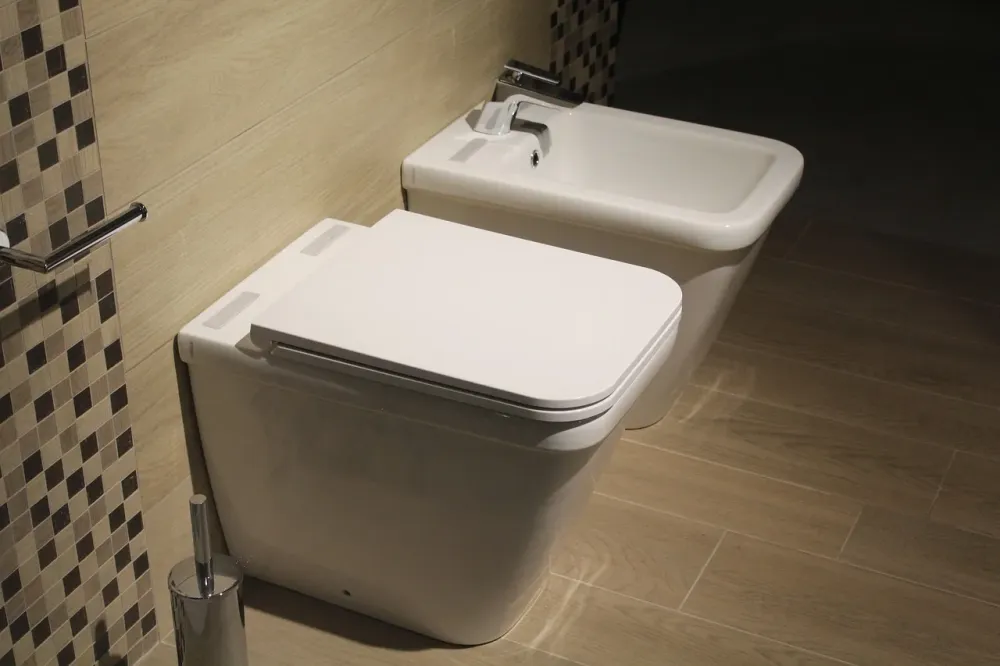
When replacing a toilet, the most essential first step is measuring the rough-in distance: the measurement from the finished tiled wall surface to the center of the floor waste pipe. Caesar Sanitary Ware notes that 30 cm (30) is the modern Taiwanese standard, traditional homes often have 40 cm (40), and occasional European imports use 18 to 22 cm (18-22 cm) or wall-hung rear discharge; the specified rough-in of the new toilet must accommodate your home's exact dimension or it cannot be mounted. Once rough-in dimensions are determined, select suitable fixture styles, confirm angle shut-off valves and power outlets, and proceed with installation.
Looking for the Chinese version of this article?切換至繁體中文版 →
Toilet Rough-In Distance Measurement and Replacement Guide
This article is compiled from publicly available online sources for general reference only; readers should independently verify and judge its accuracy, and it is not legal, tax, medical or engineering advice. Rules, fees and subsidies change; check the latest notice from the responsible authority before acting. For electrical, gas, structural or health risks, consult a qualified professional.
This is the English edition of a Chinese article, adapted with AI assistance and checked against the original. Where the two differ, the Chinese version and the official sources it cites prevail.
Notice: Shut the angle valve next to the toilet before detaching old fixtures, or shut the master water supply if the valve fails. Smart toilets and bidet seats require electrical outlets; retain a licensed electrician to add protected receptacles rather than using extension cords. If concrete slabs or waste collars are fractured or require relocation, consult a licensed plumbing contractor.
What Is Rough-In Distance and Common Dimensions Across Taiwan
Caesar's buyer guide (January 2025; 2025-01) explains that rough-in distance measures from the finished wall (including tile thickness) to the waste outlet centerline. Taiwan predominantly uses 30 cm (30cm), older buildings frequently feature 40 cm (40cm), and select fixtures follow European 18 to 22 cm or rear wall discharge. TOTO product specifications designate this as "drainage distance," with the CW981GUR (981) installation manual describing it as "finished wall to floor drain pipe center." Both brands describe identical physical geometry.
Manufacturer catalogs record dimensions in varied formats as sampled from official product documentation below:
| Product Model (Brand) | Official Website Specification | Documentation Source |
|---|---|---|
| CW981GUR Two-Piece (TOTO; 981) | Drainage distance 305 mm (305) | TOTO Taiwan product page and manual |
| CW864SGU One-Piece (TOTO; 864) | Drainage distance 305 mm | TOTO Taiwan product page |
| CW865SGU One-Piece (TOTO; 865) | Drainage distance 390 mm (390) | TOTO Taiwan product page |
| CW288SGUR One-Piece (TOTO; 288) | Drainage distance 305 to 400 mm (305-400 mm; 400) | TOTO Taiwan product page |
| CES75110ATW G5 Neorest (TOTO; 75110, 5) | Drainage distance 305 mm / 400 mm, with wall drain variant | TOTO Taiwan product page |
| AFC230G Smart Bidet Toilet (HCG; 230) | Rough-in distance 300 mm (300) | HCG product page |
| CT1325 Gold Water-Saving (Caesar; 1325) | 30 rough-in, drainage distance 300 mm | CAESAR product page |
| CT1425 Gold Water-Saving (Caesar; 1425) | 40 rough-in, drainage distance 400 mm | CAESAR product page |
In market parlance, "30 rough-in" corresponds to 300 mm or 305 mm in catalogs; "40 rough-in" commonly means 400 mm, though certain models list 390 mm (e.g., TOTO CW865SGU). Certain models state a singular dimension, while others support adjustable ranges like 305 to 400 mm. Do not rely solely on conversational terms; verify that your measured distance falls within the manufacturer's official specifications before purchasing.
How to Measure: Before and After Fixture Detachment
- Measure from the finished wall face: Caesar specifies measuring from finished tiles. If baseboards or wall mouldings project outward, measure rough-in from tile faces while verifying the cistern tank clears obstructions.
- Measure to the center of the drain pipe, not the pipe edge: TOTO installation manuals specify measuring to the "center of the floor drainage pipe." Once the old bowl is detached, measuring straight to pipe center yields exact figures.
- Before removing the existing toilet: Check model stickers or warranty booklets on the existing fixture to verify original rough-in; otherwise have a plumber assess on site. Visual estimation alone carries high error risks.
- Verify side clearance and front walkway space: Caesar recommends preserving at least 15 cm (15cm) clearance on both sides for maintenance, 50 cm (50cm) front clearance for comfort, and 1 to 2 cm (1-2 cm; 2) gap behind the tank to avoid earthquake cracking.
- Verify whether discharge exits through floor or wall: Pipes protruding from walls represent rear-discharge plumbing requiring wall-drain fixtures (such as TOTO G5 wall-drain editions).
If rough-in dimensions mismatch, select alternate fixtures or have contractors evaluate offset options; moving drain lines affects waterproofing, so detail items with the Repair Quotation Generator before comparing quotes.
Selecting Styles: One-Piece, Two-Piece, and Smart All-In-One
Caesar's guide categorizes toilets into one-piece, two-piece, and smart integrated units, differing in maintenance convenience, cleaning ergonomics, and purchase pricing. Key criteria include:
- Flushing mechanism: Caesar explains that washdown flushing expels waste via direct water volume, requiring less venting but consuming more water with louder splash sounds, primarily found in European models or older buildings; siphon jet flushing dominates American and Japanese models, drawing waste via siphon suction more quietly and efficiently.
- Water efficiency label: Under Water Resources Agency standards, single-flush Gold label toilets require under 4.8 liters (4.8) per flush (Standard under 6.0 liters; 6.0); dual-flush Gold models require under 4.8 liters for full flush and 3.0 liters (3.0) for half flush (Standard 6.0L / 3.0L).
- Smart toilets and bidet seats: Require wall electrical outlets. Caesar suggests roughing in dedicated outlets behind toilets; HCG AFC230G lists operating water pressures from 0.7 to 5 kgf/cm² (0.7-5 kgf/cm²). For electrical work, review Installing Bidet Toilet Outlets in Bathrooms; for pressure issues, consult Low Water Pressure Diagnostic Tree.
Wall-hung toilets with concealed in-wall cisterns require pre-embedding carriers inside structural walls during rough renovations, requiring contractor engineering.
Installation Best Practices: Manufacturer Manual Specifications
Referencing the TOTO CW981GUR two-piece installation manual (July 2023 edition; 2023.07, G060227):
- Maintain level floor subgrades around the toilet mounting footprint to prevent rocking.
- Avoid sand bedding beneath granite floor tiles, as it prevents secure anchoring of drainage sleeves.
- Always seal between the floor waste pipe and drainage socket sleeve with wax mastic to prevent sewer odors.
- Ensure 305 mm distance from finished wall to pipe center, leaving drain collars projecting 10 mm (10mm).
- Do not overtighten mounting screws to avoid cracking porcelain, but ensure both sides are tightened securely to prevent bowl slippage.
- Assemble the cistern tank securely onto the bowl prior to setting the fixture; inverting order risks leaks.
- Utilize hardware included in the package, including angle stops, high-pressure braided supply hoses, and flange bolt caps.
If new bowls are not mounted immediately, plug open waste pipes to prevent debris blockages. For supply stop thread sizes, review Measuring Faucet Angle Valve Sizes. For cleaning base silicone caulk, see Tile Grout Mold Cleaning and Regrouting.
When to Hire Licensed Plumbing Contractors
- Rough-in mismatches requiring floor pipe relocation or damaged waste collars: involves structural flooring and waterproofing, demanding licensed plumbers.
- Persistent sewer gas rising from waste pipes after bowl detachment: reflects compromised wax seals or vent stack failures; see P-Trap Failure and Pipe Shaft Odor Remediation.
- Cisterns cycling refills or weak flushes do not necessitate full fixture replacement; inspect components in Toilet Tank Water Running Troubleshooting; for blockages, see Clearing Toilet Clogs.
- Rental tenancies: agree on maintenance responsibilities with landlords before replacement; see Rental Maintenance Responsibility Guide.
Frequently Asked Questions
Can 30 cm and 40 cm rough-in toilets be interchanged?
It depends on product engineering. Some models list a single distance (e.g., 305 mm or 400 mm), while others support adjustable ranges (e.g., TOTO CW288SGUR lists 305 to 400 mm). Your measured rough-in must fall within the model's range; otherwise select another model or relocate piping.
Should rough-in be measured to the bare wall or the baseboard?
Measure to the finished wall surface with tiles installed. Caesar defines this as "finished wall surface (including tiles)," and TOTO manuals specify "wall finished surface."
Should new toilets feature official Water Conservation Labels?
Yes. Water efficiency labels issued by the Water Resources Agency certify single-flush Gold models under 4.8 L (Standard under 6.0 L). Regulations enacted April 1, Year 107 (107-4-1) mandate that washing machines and toilets sold must hold water-saving certifications, ensuring verified quality.
Can homeowners replace toilets DIY?
If rough-in aligns, subfloors are level, and the project is a like-for-like replacement, DIY is achievable with appropriate tools. However, porcelain is heavy and brittle; TOTO manuals caution that impact damage causes bodily cuts or water leaks. For pipe relocation or bidet electrical work, hire licensed trades.
Last updated: 2026-10-30
Compiled by SOSfix from public resources for general guidance; consult manufacturers or licensed plumbing trades for individual installations.
Reference Sources
- CAESAR: 2025 Toilet Buying Guide (2025-01-01; 01): Rough-in definitions across 30, 40, and 18-22 cm, fixture categories, flushing physics, clearances, and water conservation labels.
- TOTO Taiwan: CW981GUR Two-Piece Toilet Manual (2023.07, G060227; 2023, 7): Installation precautions A through D, 305 mm, 10 mm collar, screw torques, assembly sequence, and ceramic care.
- TOTO Taiwan: CW981GUR Product Page (Updated 2025/6/30; 6): Drainage distance 305 mm.
- TOTO Taiwan: CW864SGU One-Piece Product Page (Updated 2025/6/30): Drainage distance 305 mm.
- TOTO Taiwan: CW865SGU One-Piece Product Page (Updated 2025/6/30): Drainage distance 390 mm.
- TOTO Taiwan: CW288SGUR One-Piece Product Page (Updated 2025/6/30): Drainage distance 305 to 400 mm.
- TOTO Taiwan: CES75110ATW G5 Neorest Product Page (Updated 2026/8/28; 8, 28): 305 mm / 400 mm floor and wall drain editions.
- HCG: AFC230G Smart Bidet Toilet Product Page: Rough-in 300 mm and operating water pressure specifications.
- CAESAR: CT1325 Gold Water-Saving Toilet Product Page: 30 rough-in, drainage distance 300 mm.
- CAESAR: CT1425 Gold Water-Saving Toilet Product Page: 40 rough-in, drainage distance 400 mm.
- Water Resources Agency Water Conservation Label System: Product Categories and Standards: Gold and Standard flush volumes; April 1, Year 107 mandate notice for washing machines and toilets.
Related reading: Dual Flush Toilet Button Stuck: Rod Adjustment and DIY Fix