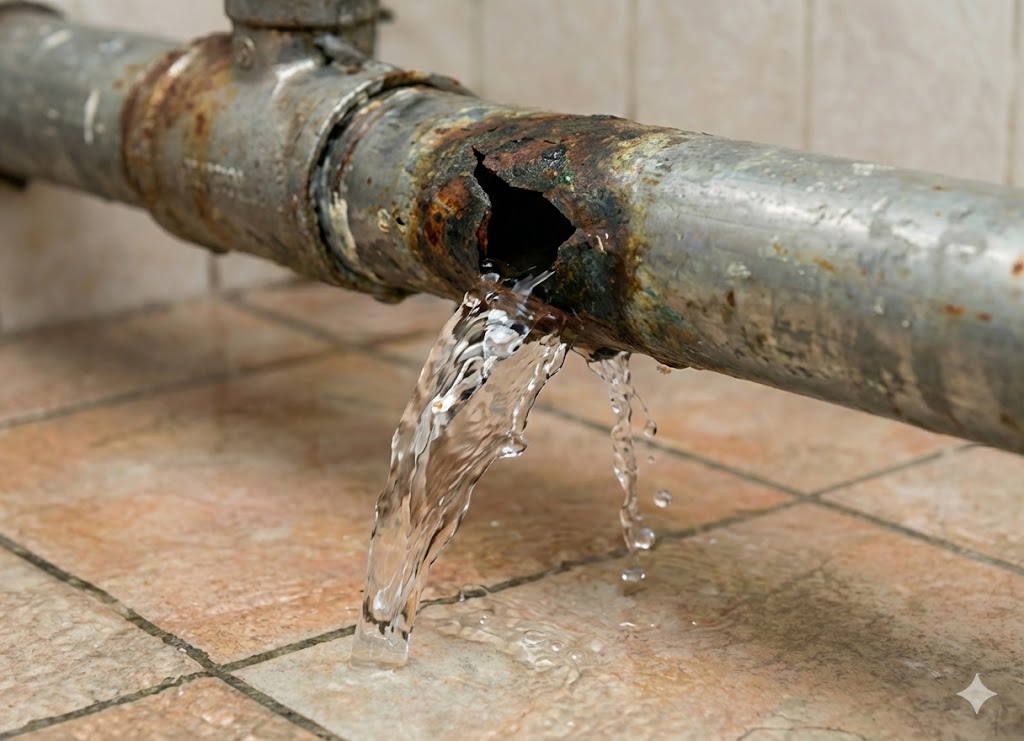
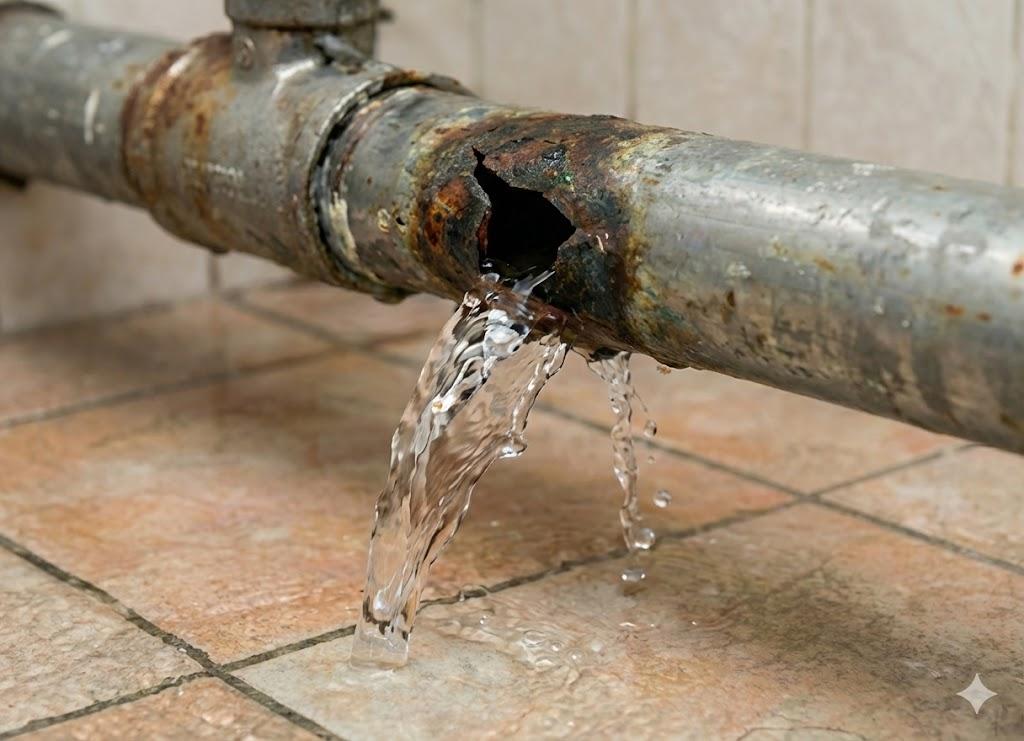
Short answer: many people assume that dozens of foliage plants or a vegetable garden on the balcony are what make the household water bill "skyrocket," but by tap-water pricing, the water used for watering itself is small. Consider an assumed estimate: 30 medium-sized pots on the balcony, about 0.5 liters of water per pot each time, watered three times a week, comes to about 180 liters (0.18 units of water) in a month, which works out to a water charge of about NT$1 to NT$2 per month (counting only the per-unit water charge, not the other fees collected on the bill). If your bill suddenly rises by several hundred or even over a thousand NT dollars, the more common causes are an abnormal booster pump, an aging toilet-tank flapper leaking slightly, or seepage from a concealed pipe inside a wall. Three quick checks on site: first, shut off every tap in the home and pause the washing machine and watering; second, open the meter box and watch the small pointer on the water meter (commonly a small red star-shaped or triangular pointer, varying by meter); third, observe for five to ten minutes. If the pointer keeps turning, there may be a continuous leak inside the home. (Sources checked November 2026.)
How Much Do Balcony Plants Add to a Taiwan Water Bill?
This article is compiled from publicly available online sources for general reference only; readers should independently verify and judge its accuracy, and it is not legal, tax, medical or engineering advice. Rules, fees and subsidies change; check the latest notice from the responsible authority before acting. For electrical, gas, structural or health risks, consult a qualified professional.
This is the English edition of a Chinese article, adapted with AI assistance and checked against the original. Where the two differ, the Chinese version and the official sources it cites prevail.
The Math: 30 Plants Use About 0.18 Units a Month (NT$1 to NT$2 in Water Charges), and Bill Spikes Are Mostly Leaks
In Taiwan, tap water is billed in "units," and 1 unit equals 1 cubic meter, or 1,000 liters.
Here is a hypothetical estimate (the numbers are illustrative; actual figures depend on plant count, pot size and season): suppose the balcony holds 30 foliage plants in pots of 5 to 7 inches, watered with an average of about 0.5 liters per pot, so one round uses 30 × 0.5 = 15 liters. Watering three times a week gives twelve waterings in a month (four weeks), for a monthly total of 15 × 12 = 180 liters, or 180 ÷ 1,000 = 0.18 units. Using the water-charge unit prices of the two suppliers below (about NT$5.0 to NT$12.075 per unit), the water charge for these 0.18 units is about NT$1 to NT$2. Even with a hundred plants on the balcony, the extra water charge from watering is usually only a few NT dollars to a little over ten.
Water Charge Unit Prices of Taipei Water Department and Taiwan Water Corporation (Checked November 2026)
Tap water in Taiwan is supplied mainly by the Taipei Water Department and Taiwan Water Corporation. Which one serves each area of Taipei and New Taipei does not necessarily follow administrative districts, so go by the supplier shown on your water bill. Their water-charge unit prices are as follows:
- Taipei Water Department (rate table in effect since March 1, 2016 [ROC year 105], by monthly units used):
- 1 to 20 units: NT$5.0 per unit
- 21 to 60 units: NT$6.7 per unit (progressive difference NT$34)
- 61 to 200 units: NT$8.5 per unit (progressive difference NT$142)
- 201 to 1,000 units: NT$14.0 per unit (progressive difference NT$1,242)
- 1,001 units and above: NT$20.0 per unit (progressive difference NT$7,242)
- (Note: the Taipei Water Department calculates the charge as "units used × unit price of the applicable tier − progressive difference"; a basic fee based on meter diameter is also charged. Actual rates follow the Department's current announcement.)
- Taiwan Water Corporation:
- First tier (1 to 10 units per month): NT$7.35 per unit
- Second tier (11 to 30 units per month): NT$9.45 per unit
- Third tier (31 to 50 units per month): NT$11.55 per unit
- Fourth tier (51 units or more per month): NT$12.075 per unit
- (Note: Taiwan Water Corporation applies the tiers according to the meter-reading cycle, and when meters are read every other month the unit brackets double; the water charge is the sum of each tier's units multiplied by that tier's unit price.)
Besides the water charge and the basic fee, the bill carries items collected together with the water charge: Taiwan Water Corporation states that the water source conservation and feedback fee is the water charge (before tax) × 5%, while the sewer usage fee is calculated at the per-unit rate announced by each county or city authority. These rates differ by location and are not listed separately here.
Water Use and Charges Compared: Normal Watering, a Dripping Tap and a Slightly Leaking Toilet Tank (Illustrative Assumptions)
The flow rates in the table below are illustrative assumed values, not measurements; water charges are estimated at NT$5.0 to NT$12.075 per unit (the lowest and highest unit prices of the two suppliers above), and actual amounts depend on your applicable tier:
| Usage scenario or leak type | Assumed flow and volume | Total monthly water use (liters) | Monthly equivalent in units | Extra monthly water charge (rough estimate) |
|---|---|---|---|---|
| Normal watering of 30 balcony plants | 3 times a week, 15 liters each time | About 180 liters | About 0.18 units | About NT$1 to NT$2 |
| Large balcony sky garden with 100 pots | 3 times a week, 50 liters each time | About 600 liters | About 0.6 units | About NT$3 to NT$7 |
| Balcony tap connection dripping slightly | 2 drops per second, assuming about 0.05 ml per drop | About 260 liters | About 0.26 units | About NT$1 to NT$3 |
| Aging toilet-tank flapper seeping slightly | Assuming a steady trickle of about 0.5 liters per minute | About 21,600 liters | About 21.6 units | About NT$110 to NT$260 |
| Concealed pipe with a small crack seeping continuously | Assuming flow all day at about 2 liters per minute | About 86,400 liters | About 86.4 units | About NT$430 to NT$1,040 |
As you can see, watering uses far less water than a continuous leak; when the bill is abnormal, check for leaks first rather than cutting back on watering.
Hose, Watering Can and Drip Irrigation: Water-Saving Efficiency Compared
Although the water cost of watering is low, the methods still differ in watering efficiency and plant health:
- Spraying directly with a hose (uses more water and harms roots): Blasting with a thick hose without a nozzle sends water so fast that it scatters the topsoil surface, and much of the water drains out of the hole at the bottom of the pot before the soil can absorb it, which not only wastes water but also easily compacts the soil.
- Fine-rose watering can (even): The fine droplets mimic natural rainfall and wet the soil evenly, which suits dusting leaves and more delicate shade-tolerant plants.
- Micro-spray stakes and pressure-compensating drip irrigation (saves more water): Water is delivered as drops directly near the root zone, so there is less loss to evaporation and runoff, and it makes less mess on the floor; but the connectors and tubing must be checked regularly for leaks.
When the Water Bill Spikes: 3 Steps to Trace a Leak With the Water Meter
If your water bill shows water use far above the usual, you can run these preliminary checks yourself first:
- Check the toilet tank first: Put a few drops of red dye or food coloring in each toilet tank and leave it for thirty minutes without flushing. If colored streaks run down the inside of the bowl, the flapper (water-stop seal) may have aged and deformed; replacing the flapper stops the loss.
- Static meter test: Close all taps in the home, the water dispenser's inlet valve and the washing machine. Open the meter box and look directly at the small pointer on the meter (commonly a small red star-shaped or triangular pointer, varying by meter). With all water use in the home stopped, the pointer should be completely still; if it keeps turning, water-using equipment or concealed piping in the home may be leaking.
- Sectional shutoff elimination: First close the cold-water inlet angle valve below the water heater. If the meter pointer stops immediately after closing, the hot-water piping may be leaking; if the pointer keeps turning, the cold-water piping or other equipment may be leaking, and it is recommended to have a qualified plumbing and electrical contractor locate the leak by listening or similar methods before repairing it.
For more estimates of abnormal water bills, use the water leak cost calculator; for concealed-pipe detection and exposed-pipe rerouting, see leak detection and rerouting methods for pipes under the floor; for liability determination, see the leak liability checker.
Frequently Asked Questions
If I get an abnormal water-use notice from the water company, how severe is the leak?
Receiving a notice means water use this period is clearly higher than in the past; it does not necessarily let you infer the amount leaked. After receiving it, check the meter and the toilet tank right away and have a qualified plumbing and electrical contractor find and repair the leak as soon as possible. Taiwan Water Corporation has a water-charge reduction application for underground leaks in the customer's internal piping, which requires that month's water bill receipt, a reduction application form and a repair certificate from a qualified pipe installation contractor; it does not apply to situations such as visible leaks, leaks from bathroom fixtures and customers whose meters are read monthly. Whether it applies to you, confirm with your water supplier.
Why does the small pointer on the meter turn a bit and stop when no tap is open at home?
Possible causes include pressure fluctuation in the public mains or minor water use inside the home (for example a slightly leaking toilet tank or a dripping tap). Run the static meter test and the sectional shutoff method above first; if you still cannot tell, contact your water supplier or a qualified plumbing and electrical contractor, and do not decide on your own that the meter is simply running idle.
Will a timer-based watering device bought online and attached to a tap run off several tons of water a month?
As long as it is set properly, the volume is usually very limited. For example, assuming it opens for two minutes a day at a flow of about 2.5 liters per minute, that is about 5 liters a day and about 150 liters (0.15 units of water) over thirty days in a month. The key to water use is not the timer itself but whether the connectors leak and whether you remember to turn off the timer on rainy days.
Sources
- Taipei Water Department: New Water Rate Adjustment Principles and Prices (checked November 2026): States the water-charge unit prices, progressive differences and basic fees by meter diameter in effect since March 1, 2016 (ROC year 105).
- Taiwan Water Corporation: Meter Reading and Billing (checked November 2026): Explains how water charges are calculated, that the water source conservation and feedback fee is 5% of the water charge (before tax), and that the sewer usage fee follows the rates announced by each county or city, with a worked example listing the tier prices of NT$7.35, NT$9.45, NT$11.55 and NT$12.075.
- Taiwan Water Corporation: Water Charge Reduction for Underground Leaks in Internal Piping (checked November 2026): Explains the documents needed to apply for a reduction after repair and the cases where it does not apply.
Related reading: Plant Watering While Away: Burst Risk and Valve Checks