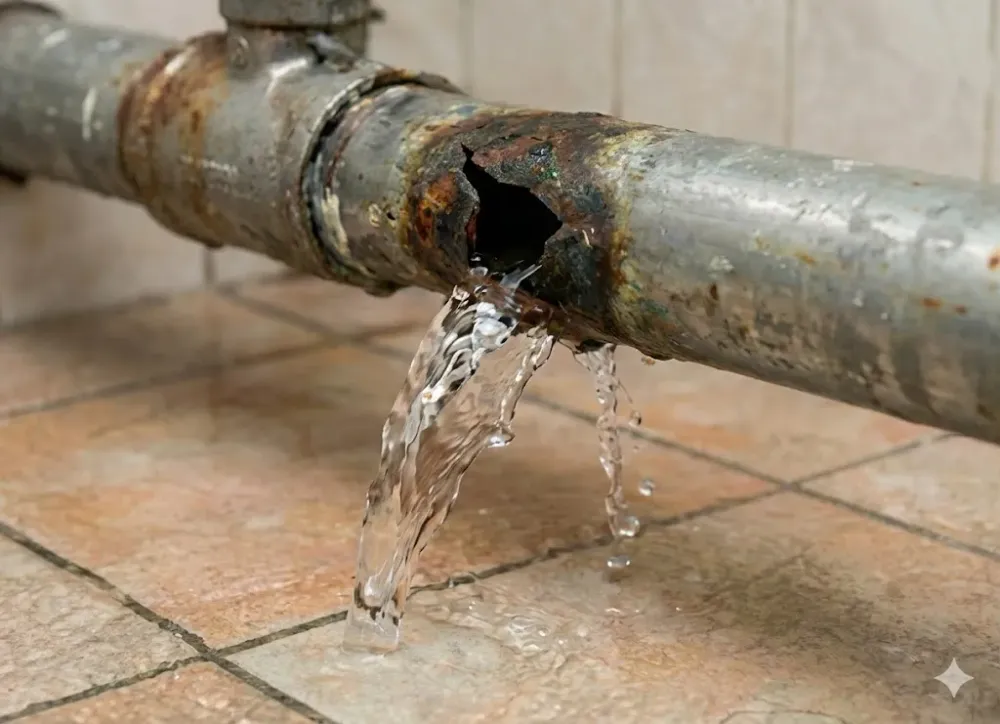
Many people looking at their balcony or building exterior air conditioning piping and wiring often find that the white foam covering the outer layer of the copper pipes has turned black and cracked, or even completely disintegrated and fallen off, exposing the bare, dark red copper pipes. When the air conditioner is turned on, the copper pipes drip condensation like popsicles, sometimes even dripping onto the downstairs neighbor's balcony. Deteriorated insulation not only causes disputes over exterior wall leaks but also causes the low-temperature refrigerant to absorb a large amount of outdoor heat during transmission, leading to compressor overload, significantly reduced cooling capacity, and an increase in electricity bills by over 15%.
Looking for the Chinese version of this article?切換至繁體中文版 →
AC Copper Pipe Insulation Degradation & Repair
This article is compiled from publicly available online sources for general reference only; readers should independently verify and judge its accuracy, and it is not legal, tax, medical or engineering advice. Rules, fees and subsidies change; check the latest notice from the responsible authority before acting. For electrical, gas, structural or health risks, consult a qualified professional.
This is the English edition of a Chinese article, adapted with AI assistance and checked against the original. Where the two differ, the Chinese version and the official sources it cites prevail.
Warning: When replacing insulation sleeves and removing old foam, strictly avoid "right-angle deep cuts" with the utility knife. The blade must maintain a very shallow, inclined angle. Do not scratch or cut the internal high-pressure copper pipes, which are under pressure, to avoid high-pressure refrigerant spray causing frostbite or refrigerant leakage. When working on high-rise exterior walls, always wear a five-point fall protection harness. Do not lean out or suspend yourself in the air.
1. Physical Function of AC Copper Pipe Insulation: Blocking Heat Transfer and Eliminating Dew Point Condensation
When a split-type air conditioner operates, the coarse copper pipe (low-pressure return gas pipe) carries low-temperature gaseous refrigerant at approximately 5°C to 10°C. Taiwan's summer ambient temperature can reach 30°C to 35°C and relative humidity often exceeds 70%. At this time, the atmospheric "Dew Point" is around 24°C.
According to thermodynamic principles, when a cold metal copper pipe below the dew point temperature is directly exposed to the air, surrounding water vapor will instantly condense into liquid water droplets on the metal surface. Closed-cell foam insulation pipes of adequate thickness (8mm to 10mm or more) form a strong thermal resistance layer, maintaining the outermost surface temperature above the dew point. This prevents condensation drips and fully retains the cooling heat exchange efficiency within the indoor unit.
2. Traditional Foamed PE Pipe vs. Fire-Retardant Rubber-Plastic Foam Pipe (NBR) Material Weather Resistance Comparison
When builders install air conditioners in pre-sale homes or with budget-friendly units, the cheapest white low-density polyethylene (PE) foam pipes are often used, covered only with ordinary thin tape. These pipes become brittle and disintegrate within 2 to 3 years under direct sun exposure. For DIY or renovation projects, weather-resistant specifications should be chosen:
| Insulation Material Type | UV Resistance Lifespan | Thermal Conductivity (W/m·K) | Fire Resistance Rating | Characteristics and Applicable Scenarios |
|---|---|---|---|---|
| Ordinary White PE Foam Pipe | 2 - 3 years (prone to pulverization) | Approximately 0.038 | Flammable (no flame retardancy) | Extremely low cost, common standard for builder handovers |
| High-Density Anti-UV Fire-Retardant PE Pipe | 5 - 8 years | Approximately 0.034 | CNS Flame Retardant Class 1 / Fire Resistant Class 2 | Features embossed wear-resistant outer layer, excellent value for money |
| Black Rubber-Plastic Sponge Pipe (NBR/EPDM) | 8 - 15 years (most weather-resistant) | Approximately 0.031 | CNS Flame Retardant Class 1 (fire-retardant, self-extinguishing) | Excellent elasticity, high closed-cell ratio, only specified for high-end air conditioning |
3. 4 Steps for DIY Copper Pipe Insulation Sleeve Replacement
- Thoroughly Remove Old Deteriorated Debris: Wear cut-resistant gloves and carefully use a utility knife to split open and peel off the weathered, blackened old foam. Use a dry cloth to wipe off any rust stains or water marks from the copper pipe surface.
- Measure Copper Pipe Diameter and Select Corresponding Inner Diameter: Most household air conditioners use "1/4" + 3/8"" or "1/4" + 1/2"" copper pipes. The high-pressure thin pipe and low-pressure thick pipe must be "separately and independently sleeved". Do not force both copper pipes into a single large insulation pipe, as cold and heat interfering with each other will significantly reduce cooling efficiency.
- Longitudinally Slit, Install, and Apply Special Adhesive: Use a utility knife to longitudinally slit the new insulation pipe in a straight line. After sliding it onto the copper pipe, apply water-resistant rubber-plastic specific adhesive (or neutral weather-resistant silicone sealant) to both sides of the slit. Pinch and press by hand for 30 seconds to ensure a tight seal.
- Weather-Resistant Non-Adhesive PVC Tape Wrapped from Bottom to Top in a Shingle Pattern: This is the most crucial step! You must purchase air conditioning specific "non-adhesive PVC wrapping tape (AC pipe wrapping tape)". The wrapping direction must be "from the lower part of the outdoor unit towards the higher part of the indoor unit (from bottom to top)" in a forward direction, with each turn overlapping the previous turn's width by 1/2 (shingle overlap principle). This way, when it rains later, rainwater will only flow down along the outer edge of the tape and will never seep backward into the insulation pipe to accumulate water.
4. Key Accessory: AC Decorative Pipe Cover (Trunking) Protection Benefits
If the piping and wiring are exposed to strong winds and direct sun on a balcony for a long time, the ultimate solution to thoroughly resolve aging issues is to install a PVC air conditioner decorative pipe cover. The pipe cover features impact resistance, UV resistance, and flame retardant properties. It not only completely conceals the originally messy copper pipes, power cables, and drain pipes within an aesthetically pleasing square channel but also extends the lifespan of the insulation foam to over 15 years without replacement.
5. 4 Major Consequences of Unaddressed Exposed Copper Pipes and Estimated Power Consumption and Repair Costs
| Damage Aspect | Actual Negative Impact | Derived Repair Cost (TWD) |
|---|---|---|
| Significant Decline in Cooling Capacity | Refrigerant absorbs heat outdoors, return air temperature increases by 3~5°C, AC doesn't cool effectively | Compressor runs at high frequency year-round, an additional $300 - $600 in electricity bills monthly |
| Condensation Leakage and Dripping | Refrigerant pipes drip water along the way, soaking balcony ceiling cement paint, reported by neighbors | Environmental Protection Bureau water pollution complaint fine $1,200 - $6,000 |
| Copper Pipe Moisture Oxidation and Corrosion | Exposed copper pipes form green copper rust under acid rain and humidity, pipe walls thin and crack, leaking refrigerant | Re-brazing copper pipes + refilling refrigerant $3,500 - $6,500 |
| Compressor Liquid Compression Damage | Refrigerant not fully vaporized, low-pressure liquid returns and impacts compressor valve plates | Replacing inverter compressor $12,000 - $20,000 |
6. Building Insulation Standards and Material Specifications
The flame retardancy and thermal conductivity of air conditioning and refrigeration piping insulation materials should comply with the Bureau of Standards, Metrology and Inspection (BSMI) of the Ministry of Economic Affairs CNS 10487 "Polyethylene Foam Thermal Insulation Materials" and CNS 7614 "Flame Retardancy Test Method." For building energy-saving envelope protection design, please refer to the Ministry of the Interior Architecture and Building Research Institute's Energy-Saving Green Building Technology Guidelines.
More air conditioner installation and plumbing and electrical work leak prevention tutorials: Air Conditioner Drain Pipe Insulation and Leak Repair Methods, and Self-Troubleshooting Guide for Common Home Air Conditioner Issues.
7. Frequently Asked Questions FAQ
Q1: Can I wrap copper pipes with packing tape or electrical insulation black tape?
Absolutely not! Ordinary transparent packing tape and electrical black tape contain strong pressure-sensitive adhesives. Under direct outdoor sunlight, in just 2 months, the adhesive will melt at high temperatures, oozing out and turning black, becoming a sticky, dirty, tar-like sludge. Subsequently, the tape's base material will harden and disintegrate, completely failing to block rainwater erosion.
Q2: Why must the PVC tape be "non-adhesive"?
Air conditioning specific wrapping tape is deliberately designed to be non-adhesive, relying purely on the PVC material's own tensile elasticity to interlock and tighten when overlapped. Without adhesive, it will not melt and detach due to high temperatures. If future maintenance requires checking refrigerant pressure or adjusting piping and wiring, it can be neatly removed in one piece by simply cutting it with scissors, leaving the copper pipe surface clean as new.
Q3: If only a small section of copper pipe insulation is damaged, can I patch it locally?
If only a section of about ten centimeters is damaged and the internal copper pipe has not yet oxidized or rusted, you can cut a section of new insulation pipe of the same inner diameter, slit it open, and place it over the damaged area. Apply neutral silicone sealant to the contact surfaces between the new and old insulation pipes to seal the seams. Then, tightly wrap it with wrapping tape, extending 15 centimeters beyond each end onto the old insulation.
Q4: Why must the metal flare fittings at the outdoor unit connection also be completely covered?
The outdoor unit's shut-off valves and flare nut copper fittings are also low-temperature refrigerant channels. If exposed to the air, they will also condense and drip a large amount of water. Original accessory boxes usually include two black "self-adhesive vibration-damping insulation soft pads." During installation, ensure that the valve metal parts are completely wrapped and pinched together, then covered with the outer insulation material.
Related reading: Refrigerant Leaks at AC Flare Fittings: Flaring and Torque · AC Drain Pipe, Insulation Foam, and Bracket Aging Guide