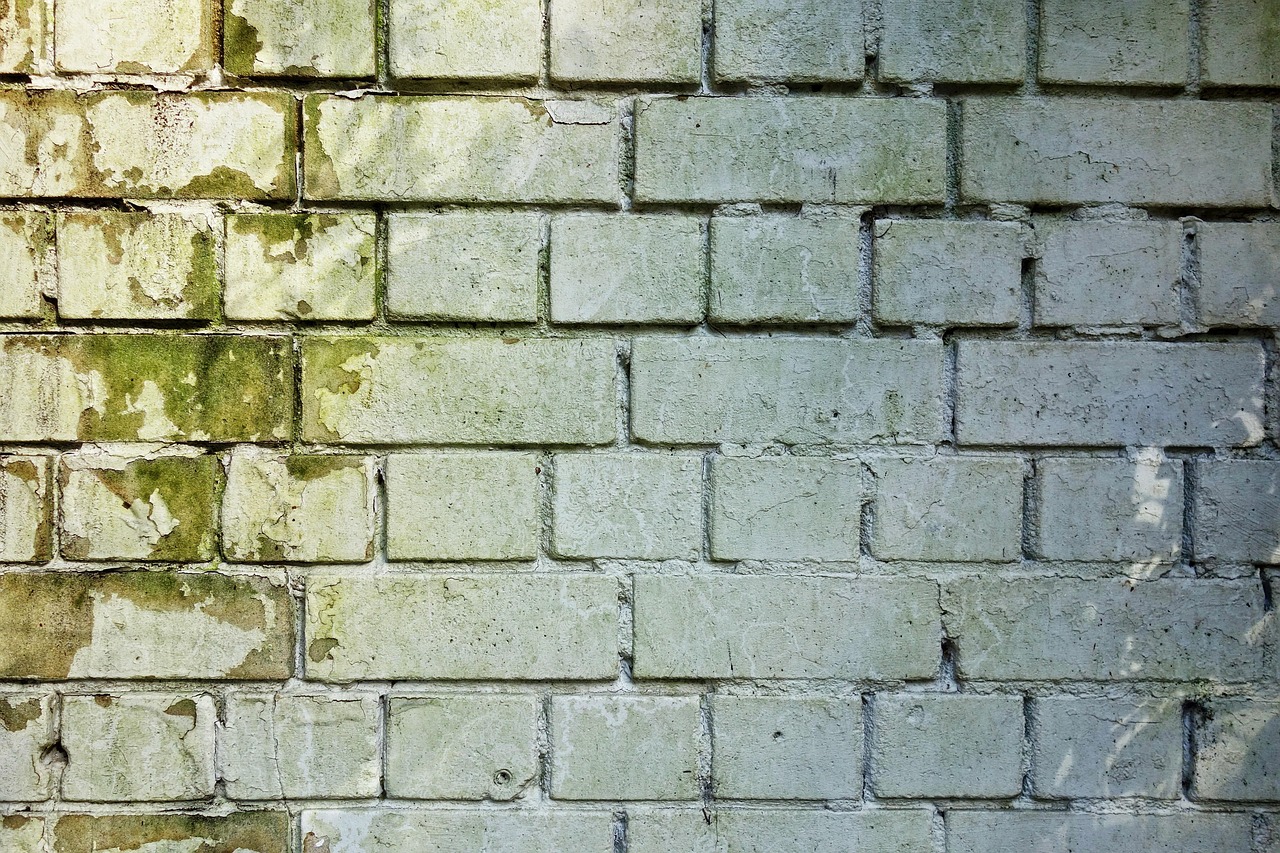
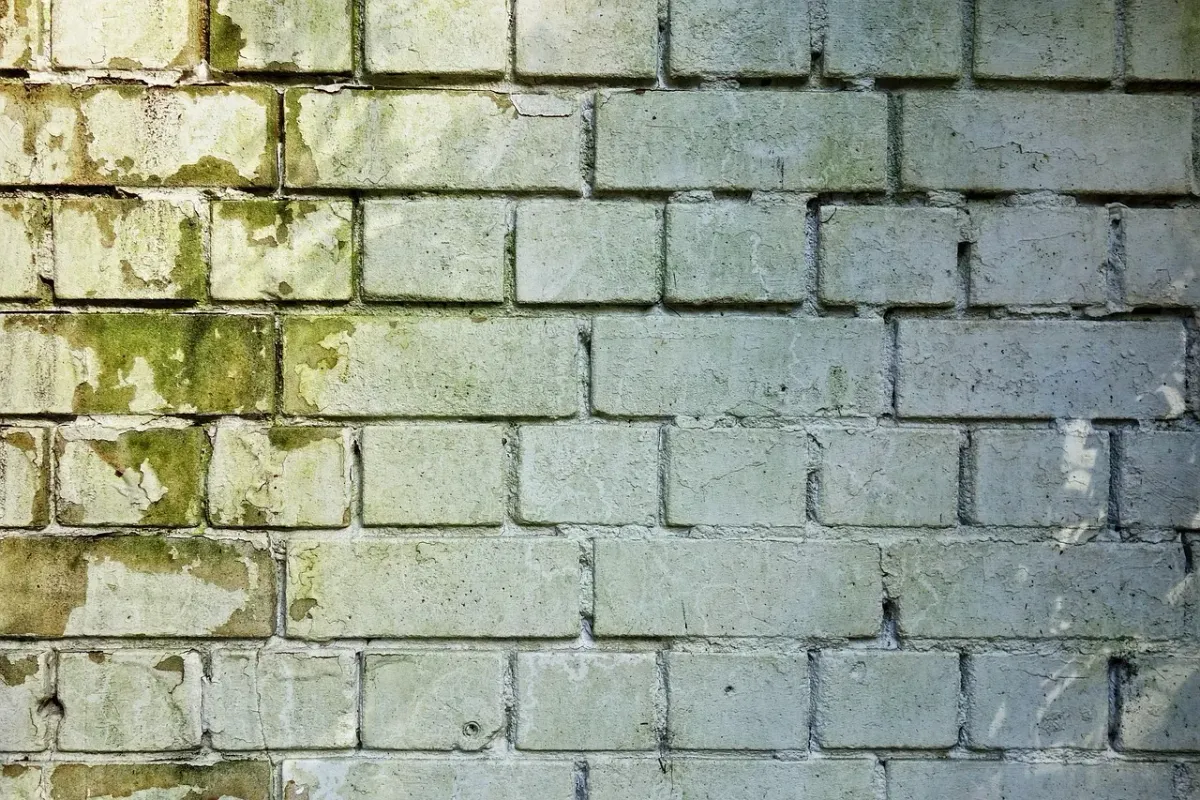
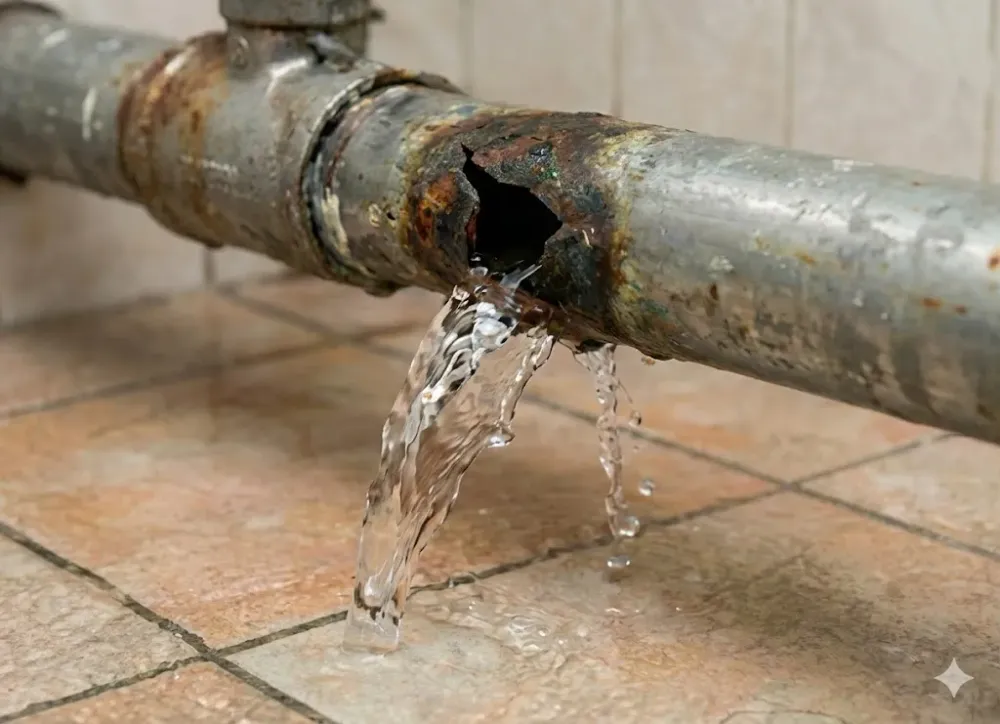
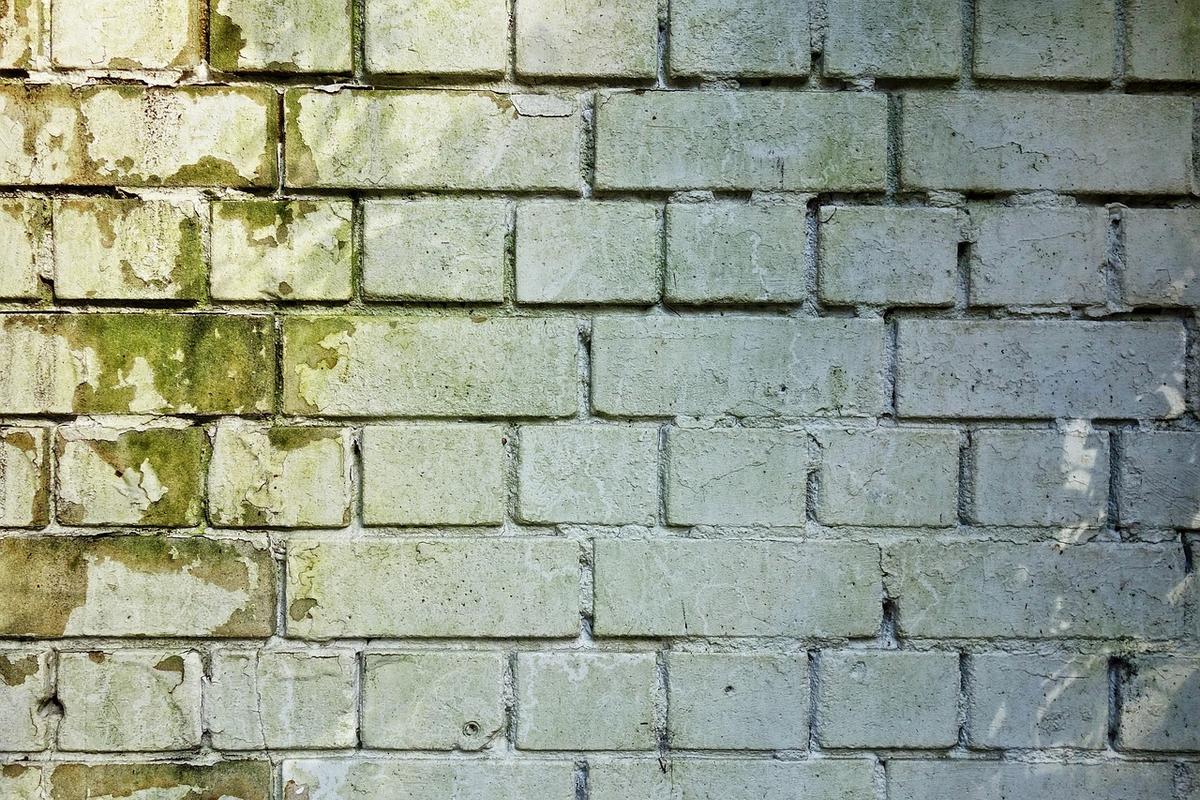
Taiwan has a subtropical island climate: hot, rainy and with frequent earthquakes. Walls in older homes very often show paint film that bulges and peels, cement mortar that turns to powder and falls off, and white needle-like or powdery crystals on the surface. This is popularly called wall efflorescence and peeling (壁癌, literally "wall cancer"); in building engineering and materials science it is called efflorescence (白華現象). Many homeowners pay a painter to scrape the damage off, re-skim the wall with putty and apply an expensive anti-mold paint, only to see the wall blister and peel again in less than half a year. The reason is that paint is only the outermost decorative coating, while efflorescence is in essence the combined chemical and physical result of liquid water seeping into the wall, dissolving the soluble salts in the concrete or cement mortar (such as calcium hydroxide, sodium sulfate and calcium carbonate), carrying them to the wall surface as moisture evaporates toward the room, where they crystallize out, while the high humidity triggers heavy growth of mold spores. As long as the water source is not cut off, the efflorescence cannot be cured for good.
Wall Efflorescence in Old Taiwan Homes: Causes and Repairs
This article is compiled from publicly available online sources for general reference only; readers should independently verify and judge its accuracy, and it is not legal, tax, medical or engineering advice. Rules, fees and subsidies change; check the latest notice from the responsible authority before acting. For electrical, gas, structural or health risks, consult a qualified professional.
This is the English edition of a Chinese article, adapted with AI assistance and checked against the original. Where the two differ, the Chinese version and the official sources it cites prevail.
I. Diagnose the Water Source First, Then Choose the Method: 4 Common Treatments for Efflorescence and Seepage Compared
The key first step in treating efflorescence is to pinpoint the water source and block the water path, not to put blind faith in one miracle coating or a single method. If the seepage is confirmed to come from structural cracks in the exterior wall of a multi-unit residential building or from a leaking shared riser pipe, then under Article 10, Paragraph 2 of the Condominium Administration Act, the repair costs for common areas should in principle be paid from the public fund or shared by the unit owners in proportion to their co-owned share. A resident should not quietly bear the full cost of exterior wall repairs alone without notifying the management committee (管委會).
Different seepage sources (structural cracks in the exterior wall, ruptured supply or drain pipes inside the wall, a failed bathroom waterproofing layer, or condensation from high indoor humidity) call for engineering methods whose capabilities, limits and costs differ completely:
| Treatment method | Main applicable situation | Pricing factors and contract points to avoid being overcharged (NT$) | Characteristics, applicable limits and restrictions |
|---|---|---|---|
| Surface scraping + primer + anti-mold topcoat | Instruments have confirmed there is no external seepage source at all, and the localized paint peeling is caused only by short-term winter dampness and condensation | Depends on the wall area and the number of putty-and-sanding passes; indicatively about NT$2,500 - NT$4,500 per ping (1 ping ≈ 3.3 m²) | If the moisture content inside the wall is still high, a paint film that seals too tightly will instead stop moisture from breathing out normally, so the moisture pushes from behind the film and speeds up blistering |
| High-pressure injection leak sealing (commonly called "injections", 打針) |
Cracks around window frames, basement diaphragm walls, or localized active seepage points in RC floor slabs (as a localized method for blocking the water path in a crack) | A common basic call-out charge starts at about NT$8,000, with a single injection point indicatively about NT$350 - NT$800 per point. Overcharging warning: to prevent some dishonest contractors from attracting customers with a low unit price and then adding injection points without limit during the work (easily over a hundred points, making the bill balloon), before signing you should require a fixed lump-sum price or set in writing a maximum number of billable injection points | A high-pressure injection machine drives polyurethane (PU) foaming agent into structural cracks to plug the water path; this method can only temporarily block the water path of a single crack. It provides no structural reinforcement and cannot remove the efflorescence salt crystals that have already penetrated the cement mortar layer (if the powdered layer is not chipped away as well, the remaining salts and the uninjected capillary pores may continue to produce efflorescence) |
| Chipping the plaster back to the substrate + crystalline waterproofing (negative-side method) |
The exterior wall cannot be scaffolded (for example, the neighboring building sits tight against it with no gap), or the wall behind a bathroom is seeping, and the wall has to resist capillary seepage and low-pressure moisture from the indoor side | Depends on the chipping depth, the wall area in ping and the material system; indicatively about NT$12,000 - NT$22,000 per ping (including demolition and debris removal, crystalline waterproofing application, and restoration with a troweled waterproof mortar finish) | The cement mortar layer that has been broken down and powdered by salt crystals must be completely chipped away until the red brick or bare RC is exposed, and a crystalline waterproofing material is then brushed on (such as a silicate-based material, which penetrates the capillary pores and reacts with free calcium to form needle-like crystals that block water). Applicable-limit reminder: negative-side crystalline waterproofing mainly resists capillary seepage and low-pressure moisture. If there is sustained high water pressure or a large flowing leak behind the wall (for example, a concealed pipe that keeps spraying water or an exterior wall with long-term standing water), an indoor negative-side coating alone still risks being broken through by the water pressure |
| Positive-side waterproofing repair + replacement of the leaking pipes | A concealed supply or drain pipe inside the wall has ruptured, or water is entering through exterior tile joints or a rooftop waterproofing layer that has aged over a large area | Quoted per project according to the method of high-level exterior wall work (rope-access workers or a crane) or the extent of chiseling for the pipes (indicatively about NT$35,000 - NT$120,000+) | Cutting off the water completely from the water-facing side (the positive-pressure side) or at the source of the damaged pipe, then restoring the indoor side after it has dried, is the most thorough and most fundamental way to solve a persistent leak |
II. Preliminary Clues to Observe: 3 Checks That Help You Communicate With a Leak Detection Technician
The following at-home observations can help a homeowner sort out the situation and shorten the diagnosis time before contacting a professional leak detection team, but note that they cannot replace professional instrument testing (such as an infrared thermal imager, a non-destructive moisture meter, or a pipe pressure test):
- Check whether the water meter's low-flow indicator (the red triangular star wheel) is turning abnormally: First confirm that every faucet, water purifier, washing machine inlet valve and every toilet tank in the home has stopped refilling (you can temporarily close the angle stop valve (三角凡爾) under the toilet to rule out interference from a slight leak at the tank's flapper seal). Then go to the water meter box on the rooftop or the ground floor and watch whether the red triangular pointer (the low-flow indicator) on the meter keeps turning. If the pointer still turns slowly or continuously when you have confirmed that no equipment in the whole unit is using water, this strongly suggests a possible leak in a concealed water supply pipe. It is advisable to close the zone valves inside the unit one by one to narrow down the leaking section, and to have a plumbing and electrical technician carry out a pipe pressure test.
- Compare the timing of rainfall with changes in the dampness of the efflorescence: If the wall surface is relatively dry after several weeks of continuous sunny weather, with only white powder left behind, but within 1 to 3 days after every typhoon or spell of heavy rain the wall's moisture content rises noticeably, dark water stains appear, or water droplets even seep out, then the seepage source is more likely related to cracks in the exterior wall tiles, poorly filled joints around aluminum window frames, or poor drainage on the rooftop.
- Distinguish intermittent seepage from condensation caused by high indoor humidity: When a winter cold surge arrives or southerly winds blow in spring, if cold wall surfaces (especially windward north-facing walls, walls next to a bathroom, or areas around an air conditioner outlet) are covered with fine water droplets and the wall corners turn black with mold, the surface temperature, indoor relative humidity (dew point calculation) and moisture meter readings must be considered together to judge whether it is condensation at the air's dew point. *(Note: if many foliage plants are kept indoors, regular watering and transpiration from the leaves will also raise the humidity of the immediate space; it is advisable to refer to this site's guide to the home plant environment and watering care and to strengthen ventilation and dehumidification.)*
III. Judging Wall Dryness After Repair, the Workmanship Warranty, and Indoor Humidity Management
- Confirm the cement substrate's moisture content meets the standard before applying putty and paint: After the wall waterproofing work and the troweled cement mortar restoration are finished, never rush to apply putty and paint before the wall has dried sufficiently. It is advisable to let the wall dry naturally, or with the help of a dehumidifier, for at least 1 to 2 weeks or more, and to use a non-destructive building moisture meter to actually measure that the cement substrate's moisture content has fallen below the safe threshold set in the coating manufacturer's technical data sheet. In practice, ordinary water-based latex paint and putty work commonly require the cement substrate's moisture content to be below 10% to 12%, or the wall's relative humidity reading to fall into the dry safe range, before work may begin; otherwise the residual moisture sealed inside the paint film will break through the coating again.
- Sign a written warranty undertaking and maintain a healthy indoor humidity: When signing a waterproofing and leak detection contract, you should require the contractor to issue a written warranty undertaking (in practice a localized warranty of 1 to 3 years is commonly agreed) that clearly records the scope of work, the brand and model of the materials, and that "if seepage recurs at the same location during the warranty period because of a defect in the original work, the contractor shall repair it unconditionally and free of charge" (and that clarifies the warranty does not cover structural cracks newly caused by future strong earthquakes or new leaks arising elsewhere). In everyday living afterward, it is advisable to use a dehumidifier or the air conditioner's dehumidifying function to keep the indoor relative humidity steady within the healthy and comfortable range of 50% to 60% RH, which not only effectively suppresses the reproduction of mold spores but also extends the service life of interior paint and woodwork finishing materials.
---
Related reading: Taipei Wall Efflorescence: Debunking PU Injection Myths · Basement Waterproofing: PU Injection vs Crystalline Sealant