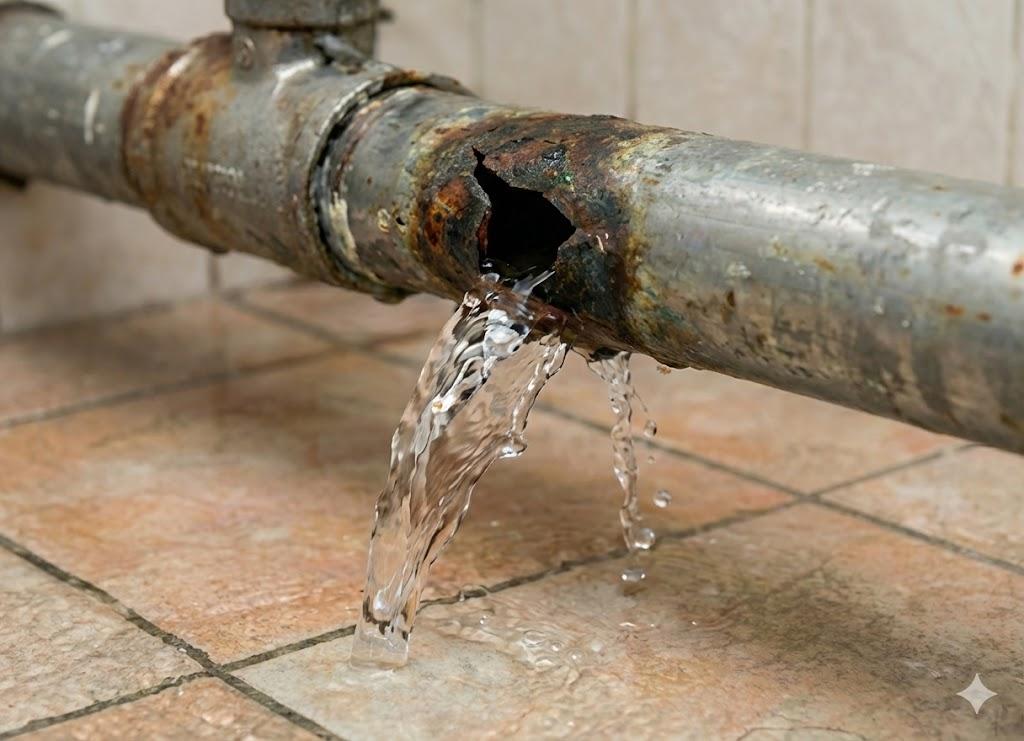
Among neighbor disputes in multi-unit housing, the worst nightmare for an owner is this one: water from the upstairs bathroom or piping seeps into the ceiling below, the woodwork goes moldy and the paint peels, yet the two sides are deadlocked over who is responsible for the repair and how much compensation is owed. Owners of the damaged unit downstairs are often told by real estate agents, relatives or friends that "the upstairs owner can claim on the residential fire insurance tied to the mortgage". In actual claim reviews, however, this is frequently a serious misunderstanding. One core legal and insurance concept has to come first: "daily-life liability insurance" is not a leak warranty, and it does not pay automatically just because a neighbor's unit leaks.
Upstairs Leak in Taiwan: Insurance Claims and Appraisals
This article is compiled from publicly available online sources for general reference only; readers should independently verify and judge its accuracy, and it is not legal, tax, medical or engineering advice. Rules, fees and subsidies change; check the latest notice from the responsible authority before acting. For electrical, gas, structural or health risks, consult a qualified professional.
This is the English edition of a Chinese article, adapted with AI assistance and checked against the original. Where the two differ, the Chinese version and the official sources it cites prevail.
1. When can the upstairs owner's liability insurance actually pay a claim?
The basic "residential fire and basic earthquake insurance" that mortgage borrowers are required to take out when applying for a bank mortgage mainly covers losses to the insured's own building caused by specific accidents such as fire, lightning strike, explosion or total loss from an earthquake. It does not include liability for compensation when "aging and leaking water pipes or waterproofing in one's own home affect the neighbor downstairs". It depends on whether the upstairs owner has additionally bought a commercial "comprehensive home insurance" policy or added "daily-life liability insurance (or a water damage clause related to third-party liability)", and the following three strict review conditions must all be met at the same time before the non-life insurer will start the claim process:
- The upstairs owner must be confirmed to bear civil liability for damages under the law: Liability insurance works by "bearing, in place of the insured, the civil compensation liability the insured owes under the law". The insurer's claims staff must therefore first confirm that the cause of the leak really is attributable to the upstairs owner (for example, damaged waterproofing in the upstairs unit's exclusive bathroom, or a burst hot or cold water pipe belonging to the upstairs unit). If professional testing shows that the cause is in fact "a burst main pipe in the building's shared pipe shaft" or "water seeping through structural cracks in the building's exterior wall" (where the law places responsibility on the community's management committee (管委會) or all unit owners), then the upstairs owner personally has no fault and no liability to compensate, the upstairs owner's daily-life liability insurance will naturally not pay, and the damaged household should turn to the management committee and ask it to use the public fund for repair and compensation.
- The event must fit the policy's "covered accident" and "exclusion" clauses: Comprehensive home insurance policies from different non-life insurers do not define coverage and exclusions in the same way for "long-term gradual seepage from natural aging of pipes" and "sudden accidental pipe bursts". Some policies list "gradual seepage caused by an old house in long-term disrepair" as an excluded item and cover only sudden accidents. Even within the scope of cover, the actual payout still depends on the compensation limit agreed in the policy, the deductible per accident, the "depreciation calculation" for the damaged interior finishes and furniture, and the result of the on-site inspection and review by the insurer's claims staff. It is not the case that whatever renovation quote the downstairs owner presents will be paid in full.
- The upstairs owner's own demolition and repair costs are outside liability cover: Daily-life liability insurance covers "compensation for bodily injury or property damage to a third party (the downstairs neighbor)". The cost of removing the bathroom tiles in the upstairs owner's own home, redoing the waterproofing layer or replacing the burst pipe is "maintenance and wear of the insured's own property". It is entirely outside the scope of third-party liability insurance and must be paid out of the upstairs owner's own pocket.
| Damaged and repaired item | Legal principle for assessing responsibility (under the Condominium Administration Act and the Civil Code) | Key points of the insurance claim review (the actual policy terms prevail) |
|---|---|---|
| Stopping the leak and demolition costs for a burst exposed pipe or exclusive water supply or drainage pipe in the upstairs "exclusive section" | Under Article 10, Paragraph 1 of the Condominium Administration Act, the repair, management and maintenance of an exclusive section are carried out by the respective unit owner, who also bears the cost (testing must first establish that the pipe really belongs to the exclusive section and is not a common main pipe inside the floor slab) | These are maintenance and repair costs for the insured's own property and are not within the scope of third-party liability insurance |
| Damage to a "shared wall or floor slab" or to the piping inside it | Under Article 12 of the Condominium Administration Act, in principle the repair cost of a shared wall or floor slab of exclusive sections, or of the piping inside it, is borne jointly by the unit owners on both sides of the shared wall or above and below the floor slab. Exception in the proviso: only where the repair cost arises from a cause attributable to a unit owner (for example, upstairs renovation that damaged the waterproofing layer, improper pipe alteration, or a finding in court practice that the upstairs owner failed the duty to maintain aging waterproofing in the exclusive bathroom) is it borne solely by that attributable unit owner | In practice, the legal nature of the piping (an exclusive pipe or a shared pipe inside the floor slab) and whether there is an attributable cause must be established first. If it is natural aging of shared piping not attributable to either side, the upstairs and downstairs owners share the cost under the main text of Article 12 |
| Leak damage to the downstairs ceiling woodwork, paint, interior finishes and furniture | If it is established that the damage is attributable to damaged exclusive piping or waterproofing upstairs, the upstairs owner bears tort liability for damages under Article 184 of the Civil Code. If the upstairs occupant is a tenant (lessee), the damaged household, besides claiming against the landlord, may also rely on Articles 432 and 433 of the Civil Code (the lessee's duty of care of a good administrator and responsibility for the acts of co-residents or third parties) to clarify the joint or separate compensation liability of the landlord and the tenant | If the upstairs owner holds liability insurance covering the accident, the non-life insurer will review and pay the claim based on proof of the cause of the leak, the list of damaged items, the depreciation rate, and the policy deductible and limit |
2. The neighbor refuses entry for inspection and repair? Lawful coordination and types of appraisal
The most common difficulty in a leak dispute is an upstairs occupant who is passive, refuses to open the door for the leak detection technician to run tests, or even blocks all contact. The downstairs owner must stay calm here and must never force entry, pick the lock or break down the door, or risk committing the offense of trespass into a dwelling under Article 306 of the Criminal Code. The correct and legally effective procedure is as follows:
- The different powers of management committee coordination, administrative guidance by the competent authority, and a civil court judgment: Article 6, Paragraph 1, Subparagraph 2 of the Condominium Administration Act states clearly: "When another resident must enter or use the exclusive section or the section agreed for exclusive use in order to maintain or repair an exclusive section or to install piping and wiring, entry or use may not be refused." Paragraph 3 of the same article also provides that when a resident breaches the duty in the preceding paragraph and still does not perform after coordination, the resident, the managing officer or the management committee (管理委員會) may, according to the nature of the matter, ask the competent authority concerned (such as the county or city government's public works department or building administration office) or petition the court to take the necessary measures.
* Clarifying powers in practice: Owners must understand that the "necessary measures" power of an administrative agency (public works department or building administration office) is limited by administrative regulations. In practice it mostly means sending a written notice to coordinate, giving administrative guidance or ordering improvement within a deadline. An administrative agency cannot send staff to break down the door and enter a private home to carry out repairs in place of the resident. Therefore, after asking the management committee to coordinate and sending a post office legal attest letter as a formal demand, if the upstairs occupant still stubbornly refuses to cooperate, the route that truly carries compulsory enforcement power and can lawfully force the other side to tolerate entry for inspection and repair is still to apply for mediation at the township, city or district mediation committee (with court approval), or to file a civil court action for "toleration of entry for repair" together with damages. - Understanding the standing and cost differences of the three kinds of "leak test and appraisal reports":
* Test report from an ordinary technology-based leak detection contractor: A preliminary test using an infrared thermal imager, a non-destructive moisture meter, a pipe endoscope or a dye water test. The advantages are fast scheduling and a relatively affordable cost (commonly about NT$5,000 to NT$15,000, depending on the test items), which makes it well suited to early neighbor communication, mediation committee negotiation or preliminary supporting evidence for a non-life insurer's claim. Its legal standing, however, is that of a "privately commissioned test". If the case goes to civil litigation and the other side's lawyer disputes the report's impartiality, the court will usually not directly accept a leak detection report commissioned by one side as the sole basis for judgment.
* Appraisal by a professional association commissioned by a party on its own: The cost and schedule follow the case size and fee rules of the respective architects association, civil engineers association, structural engineers association or waterproofing technology association (usually starting from tens of thousands of NT dollars). Although it carries a high level of professional credibility, if it is commissioned by one side before litigation, the other side may still apply for a fresh appraisal once litigation begins, leading to duplicated spending.
* Court-commissioned appraisal (the highest evidentiary weight in litigation): After civil proceedings begin, a professional appraisal institution designated by the presiding judge or agreed by both sides is formally commissioned by letter from the court to inspect the site and issue an appraisal report. The appraisal fee (commonly about NT$50,000 to NT$120,000+, depending on the complexity of the case) is usually advanced to the appraisal institution by the party applying for the appraisal (mostly the plaintiff, the downstairs resident). Which side finally bears the litigation costs (including court fees and the appraisal fee) and in what proportion is decided by the court in the main text of the judgment according to how far each side wins or loses.
3. 4 key preparations for supporting a compensation or insurance claim
- Take full photos and video at the first moment (keep the original digital files): Before the damaged ceiling is removed or the paint is redone, be sure to film continuous video of the leak dripping (ideally capturing the drops falling and the position relative to the surrounding space), take wide shots of how far the water stain has spread and close-ups of damaged furniture and appliances, and carefully keep the original photo files taken on the phone (which contain EXIF time and device information) as preservation of evidence.
- Keep all records of communication and written demands: Keep complete LINE chat screenshots with the upstairs owner, the tenant, the real estate agent or the community management committee, the minutes of management committee coordination meetings, and the original post office legal attest letter with the double-registered mail return receipt. If the case goes to litigation, these records can prove that you fulfilled the duty to communicate in good faith and that the other side delayed without proper reason.
- Strictly separate quotes for "stopping the leak and restoring the original condition" from "renovation upgrades": In civil damages and insurance claims, the compensation principle is "restoring the condition before the damage occurred" (and depreciation may be calculated on the materials portion under the law). When asking a qualified renovation contractor or plumbing and electrical contractor to issue an estimate, require it to list clearly the necessary items of the "leak damage restoration work" (for example, removing the damp calcium silicate board ceiling, anti-mold treatment, and re-boarding, puttying and painting). If the owner takes the opportunity to upgrade the original flat ceiling to a styled ceiling with indirect lighting, or to replace ordinary latex paint with expensive decorative coating, the difference for the upgrade cannot be claimed from the upstairs neighbor or the insurer.
- Make good use of the free mediation mechanism at the township, city or district office: Applying for mediation to the mediation committee of a township, city or district office (區公所) is entirely free, and most mediators have experience in local coordination and legal practice. Once both sides reach agreement and a mediation statement is drawn up, after court approval that mediation statement has exactly the same legal enforceability as a final civil judgment (if the other side later goes back on its word and does not pay the compensation, you can take the mediation statement directly to the court and apply for compulsory enforcement). It is a route that saves more time and money than spending a year or two on a lawsuit.
---
Related reading: Condo Building Shared Pipe Leak Repair Rights & Cost Guide · Climate Home Insurance: Disaster Claim Disputes in Taipei