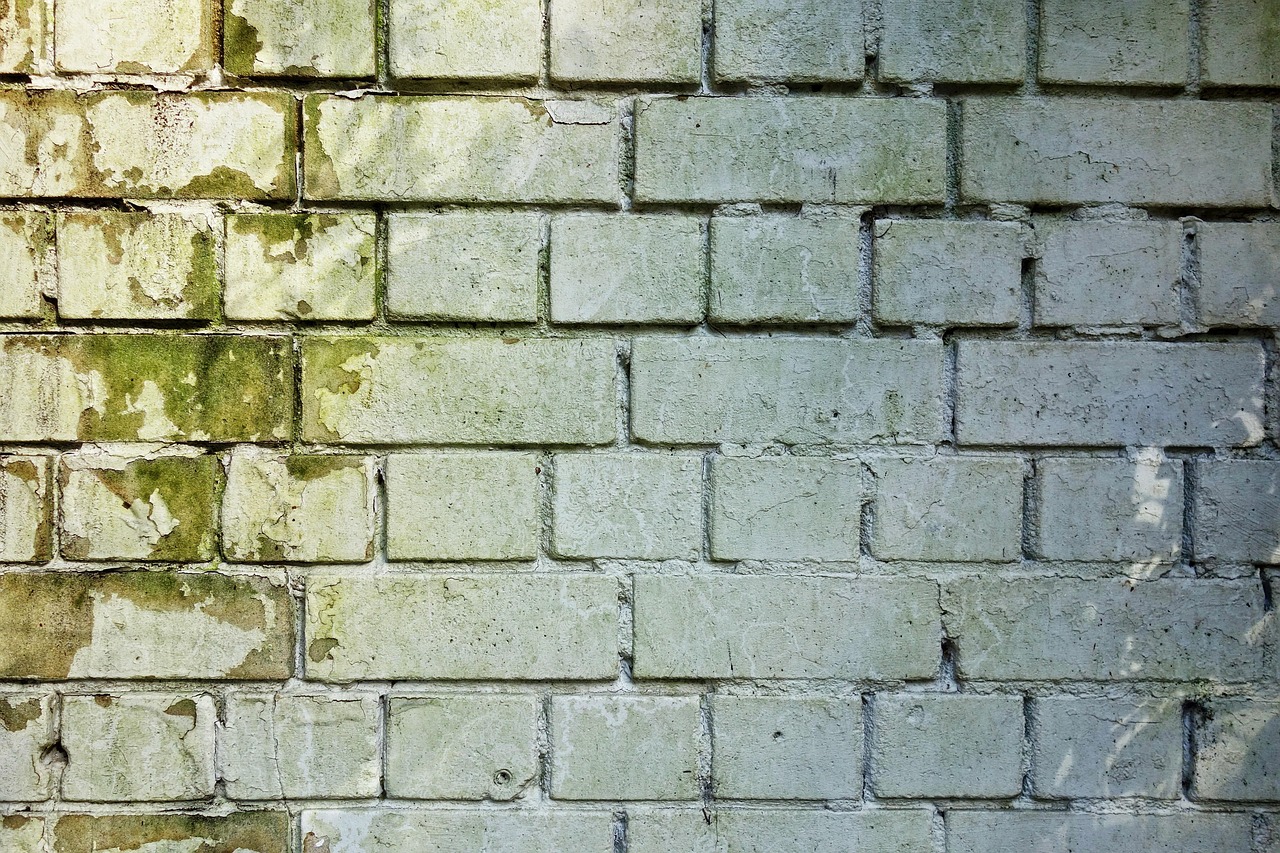
Party walls shared between semi-detached and terraced townhouses frequently suffer from internal supply pipe ruptures, failed bathroom waterproofing, or facade masonry crack ingress, causing efflorescence salt blooms and peeling paint on both sides; because ownership is shared and liability is contested, party wall leaks routinely escalate into bitter neighborhood litigation. Resolving party wall disputes requires non-destructive scientific diagnostics using infrared thermal imaging and high-frequency moisture meters, coupled with pressure-decay pipe tests to identify the precise leak source, followed by fair cost allocation under statutory neighbor relation laws.
Looking for the Chinese version of this article?切換至繁體中文版 →
Terraced Party Wall Leak Detection and Repair Cost Sharing
This article is compiled from publicly available online sources for general reference only; readers should independently verify and judge its accuracy, and it is not legal, tax, medical or engineering advice. Rules, fees and subsidies change; check the latest notice from the responsible authority before acting. For electrical, gas, structural or health risks, consult a qualified professional.
This is the English edition of a Chinese article, adapted with AI assistance and checked against the original. Where the two differ, the Chinese version and the official sources it cites prevail.
Party Wall Leak Diagnostic Challenges and Non-Destructive Testing Workflow
Terraced party walls typically measure merely 15 centimeters to 20 centimeters in reinforced concrete (RC) or solid masonry thickness, with domestic piping, water heaters, and sanitary wastes embedded back-to-back within the same partition. Traditional destructive demolition with sledgehammers risks severing innocent neighbor conduits and destroying neighborhood goodwill. Professional forensics utilizes a 3-tier non-destructive testing methodology:
Tier 1 employs a high-definition thermal imaging camera with NETD under 0.04 degrees Celsius. Evaporative cooling drops surface temperatures in moisture-saturated zones by 1.5 to 3.0 degrees Celsius compared to dry zones, whereas active domestic hot water leaks present vibrant high-temperature radiant thermal blooms. Tier 2 uses a pinless radio-frequency moisture meter mapped in grid arrays across partition surfaces, penetrating 30 millimeters to 40 millimeters into the concrete matrix (dry substrates measure below 6%, whereas saturated capillary zones spike past 18%).
Tier 3 conducts a closed-system hydrostatic pressure decay test on supply piping. Plumbers cap all fixtures on the suspected network, pressurizing lines to 8 kgf/cm² via manual test pumps and sustaining pressure for 30 to 60 minutes. A gauge pressure loss exceeding 0.5 kgf/cm² confirms hidden micro-leaks in embedded pressurized copper or PVC piping; conversely, perfectly stable gauge readings eliminate supply lines from suspicion, redirecting focus toward waste traps, failed floor membranes, or driving rainwater.
When hydrostatic pressure remains stable, technicians initiate drain dye tracer and flood tests. Non-toxic food-grade dyes in red and blue are poured into toilets, floor wastes, and basins on adjacent sides. Monitoring across 12 to 24 hours provides indisputable physical proof: if color-tinted effluent seeps through affected walls, the culprit fixture or cracked P-trap is identified objectively, ending speculative arguments.
Civil Code Neighbor Relations and Party Wall Repair Cost Apportionment
Legally, party walls represent shared property jointly owned by adjacent proprietors. Under Taiwan Civil Code Article 774 (Duty to Prevent Neighbor Damage), Article 799-1 (Common Property Maintenance), and Article 822, maintenance expenditures for common partitions are apportioned equally (one-half 50% each) unless private cause is proven. Forensic responsibility falls into 3 discrete legal tiers:
- Natural Structural Aging: If leakage stems from normal waterproofing degradation of the joint party wall or settling cracks along common roof box gutters, repair expenditures are apportioned equally (50% each).
- Single-Party Dedicated Failure: If forensics proves water originates from Party A's private pressurized water supply, hot water pipe, or renovated bathroom drain, Party A bears 100% of all diagnostic and remediation costs plus compensation for Party B's interior property damage (Civil Code Article 184 Tort Liability).
- Statutory Duty to Permit Access: Under Civil Code Article 796 and Article 767, neighbors have an affirmative statutory obligation to permit reasonable access for diagnostic inspections and scaffolding; access cannot be arbitrarily refused.
Dual-Barrier Party Wall Waterproofing Engineering and Remediation Standards
If party wall forensics points to shared shower moisture saturation or exterior masonry fissure seepage, merely painting thick topical waterproofing on the interior dry side is futile. Trapping hydrostatic pressure behind interior coatings causes moisture to migrate laterally, blowing out baseboards or adjacent wall plaster within months. Permanent remediation requires dual-barrier positive and negative waterproofing:
The positive water side (the wet bathroom) requires chipping tiles down to raw RC substrate, fairing the surface with fiber-reinforced mortar, and applying 2 coats of elastomeric polyurethane or acrylic membrane reinforced with fiberglass mesh carried up to full ceiling height. The negative dry side (interior efflorescence wall) requires stripping degraded plaster and applying deep crystalline capillary waterproofing. Active chemical catalysts penetrate concrete micro-capillaries over 50 millimeters, reacting with free calcium hydroxide to form insoluble dendritic crystals that permanently seal moisture pathways.
Party Wall Forensic Diagnosis and Legal Apportionment Benchmark Matrix
| Diagnostic Focus | Forensic Instrument and Testing Method | Threshold Benchmark Criteria | Legal Responsibility Determination | Financial Cost Allocation Principle |
|---|---|---|---|---|
| Concealed Pressure Pipe Rupture | Manual hydrostatic pressure drop test | Charged to 8 kgf for 30 min, drops over 0.5 kgf | Dedicated owner of the pressurized line | Private pipe owner bears 100% of costs |
| Failed Bathroom Floor Membrane | Ponding flood test with food-grade dye | Pond water 3 cm deep for 24 hours until seepage | Owner of the flooded bathroom fixture | Bathroom owner funds complete remediation |
| Natural Party Wall Settling Crack | Infrared thermography and moisture grid | Broad low-temp anomaly with moisture over 15% | Shared common building structural partition | Both parties split costs equally at 50% |
| Neighbor Access Refusal | Formal postal legal certification notice | Demands inspection access within 7 to 14 days | Breach of statutory neighbor relation duties | Injunctive relief motion filed in civil court |
To quantify hidden financial waste from chronic plumbing leakage, calculate expenses using our Home Water Leak Expense Calculator, and consult our diagnostic manuals on Indoor Wall Leakage Detection Practice and Home Water Leak Detection and Repair Practice.
Frequently Asked Questions
What legal recourse exists if an uncooperative neighbor refuses inspection access?
Engage a diagnostic firm to draft a preliminary inspection report, serving a formal registered legal certification letter granting 7 to 14 days to cooperate; if refused, file for district court mediation or an injunction enforcing statutory access rights.
Who should advance upfront diagnostic inspection fees for a party wall leak?
Best practice dictates both neighbors splitting upfront diagnostic costs 50% under written agreement: if testing proves leakage originates entirely from one party's private pipe, that party reimburses the advance and covers all repair bills.
Is applying topical damp-proof wall paint on the living room wall effective?
Topical paints offer only fleeting cosmetic relief. Topical coatings do not halt incoming hydrostatic pressure; trapped moisture builds behind the film, causing blistering, paint peeling, and structural efflorescence within 3 to 6 months.
References and Sources
Statutory neighbor relation legal frameworks and building standards:
- National Laws and Regulations Database: Taiwan Civil Code Property Law Provisions
- National Land Management Agency: Condominium Administration Act and Shared Property Practice
Disclaimer: This technical analysis is synthesized from public engineering publications and statutory standards. Site conditions vary by architectural design and building age; readers should exercise due diligence and consult certified master technicians for actual execution.
Related reading: Wall Leaks: Pipes, Outer Walls or Efflorescence? · Rooftop and Exterior Wall Leak Inspection and Thermography