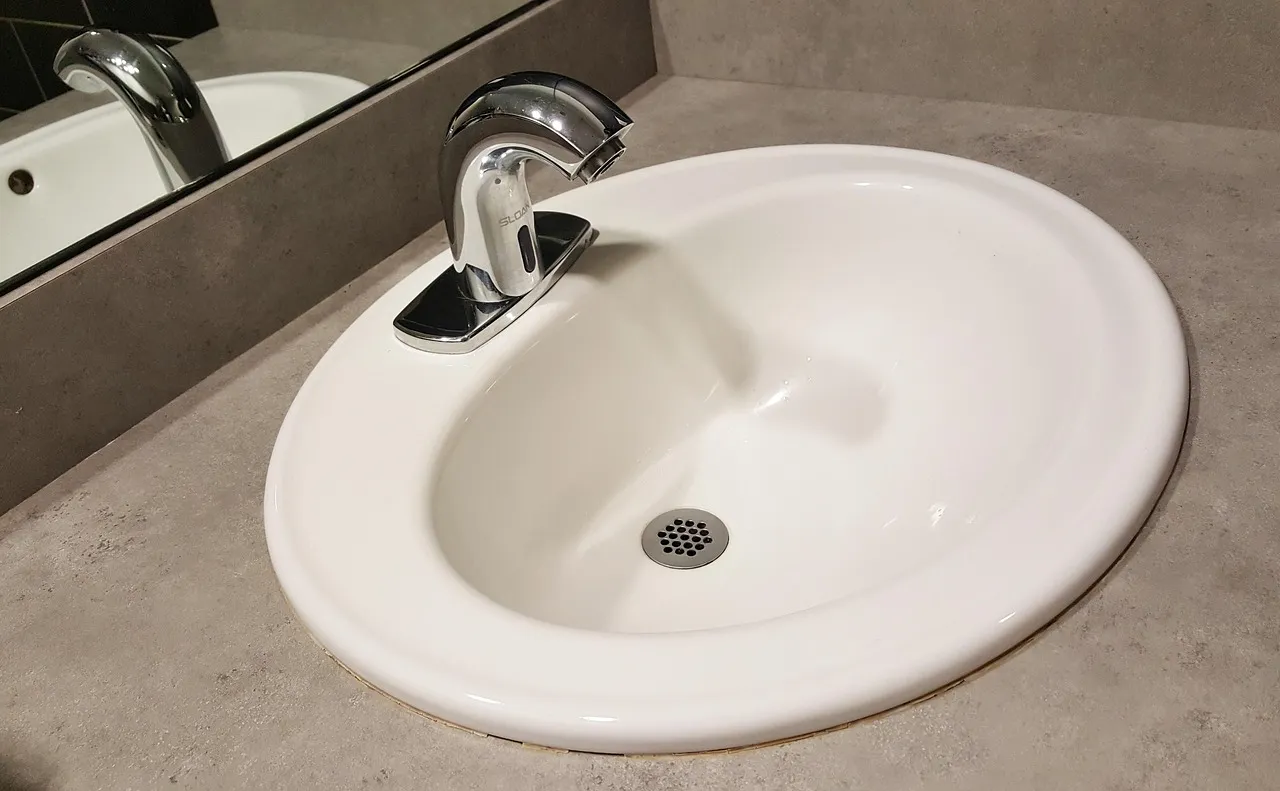
After several years of use, push-button (pop-up) bathroom sink drains commonly suffer from brass core springs seizing up, failing to hold standing water in the basin, or seeping water around the large locknut beneath the vanity. The primary cause is calcium carbonate limescale and hair soap scum infiltrating spring guides into hard sludge, or drain overflow windows failing to align with internal ceramic basin channels, letting water seep along tailpiece threads.
Looking for the Chinese version of this article?切換至繁體中文版 →
Sink Pop-Up Drain Stuck: Replacement and Overflow Guide
This article is compiled from publicly available online sources for general reference only; readers should independently verify and judge its accuracy, and it is not legal, tax, medical or engineering advice. Rules, fees and subsidies change; check the latest notice from the responsible authority before acting. For electrical, gas, structural or health risks, consult a qualified professional.
This is the English edition of a Chinese article, adapted with AI assistance and checked against the original. Where the two differ, the Chinese version and the official sources it cites prevail.
Warning: When removing the large lower locknut under the old drain, never wrench violently against ceramic porcelain with pipe wrenches if threads are seized by corrosion. Concentrated force cracks or shatters fragile ceramic basins. Spray penetrating lubricant first, and hold the upper drain body firmly from above.
1. Operating Mechanisms of Pop-Up vs Lift-Rod Drains and Overflow Structures
Traditional bathroom sinks used lift-rod linkages behind faucets; because complex pivots collect grime and break easily, modern basins predominantly utilize push-button pop-up drains. The mechanism relies on a stainless steel or brass pop-up cartridge core with internal ratchets and springs to toggle between sealing and draining with each press.
When selecting a replacement drain, the most essential specification is whether the basin features an overflow hole (Overflow Hole):
- Basins with overflow holes: Feature one or two small overflow openings near the upper ceramic rim leading into hollow double-wall cavities. When full, water cascades through internal channels to the bottom. The metal drain tailpiece must feature rectangular overflow windows on both sides aligned with the ceramic cavity.
- Basins without overflow holes: Common in vessel bowl sinks with single-wall solid ceramic rims. These require smooth drain bodies without side overflow slots; installing slotted drains on solid bowls causes wastewater to squirt out of slots directly into vanity cabinets.
2. 4 Common Pop-Up Drain Failures and Degradation Mechanisms
- Brass spring core jammed with limescale: Hair strands and fatty acid soap scum accumulate inside the sliding spring cylinder, seizing springs in compressed positions so they cannot pop open.
- Top silicone sealing gasket hardened or moldy: The circular silicone washer beneath the pop-up cap loses flexibility after long-term exposure to hot water and cleansers, failing to seal against metal flanges and draining water within minutes.
- Beveled rubber compression gasket aged and leaking: The black or white conical rubber gasket under the ceramic basin leaks beneath the sink if tightened unevenly or hardened over years.
- Zinc alloy tailpiece threads corroded and fractured: Inexpensive drains molded from low-grade zinc alloys suffer intergranular corrosion from acidic and hot wastewater, snapping off at thread roots.
3. 3-Minute Quick Repair Without Full Replacement: Cartridge Descaling
- Unscrew top round cap by hand: Grasp the metal cap at the drain top and turn counterclockwise with your fingers to detach the cap from the cartridge core.
- Unscrew brass core counterclockwise: Grip the exposed brass hexagonal stem with needle-nose pliers and rotate counterclockwise to remove the cartridge core (or pull straight up on tool-free models).
- Soak in 1:10 citric acid warm water: Submerge the cartridge core in a 1:10 warm citric acid solution for approx 15 minutes, brushing away white calcium carbonate crusts and soap scum with a soft toothbrush.
- Apply food-grade waterproof silicone grease and reinstall: Dab high-viscosity silicone grease into spring clearances, verify crisp spring action, and screw the core back in. If springs are broken, purchase a universal replacement core (approx NT$ 50 to 100) at hardware stores.
4. 5-Step DIY Standard Procedure for Replacing Solid Brass Pop-Up Drains
- Disconnect waste pipes and drain residual water: Place a bucket under the basin, disconnect P-trap or S-trap waste lines, and loosen the lower locknut counterclockwise with an adjustable wrench.
- Clean porcelain drain opening margins: Remove the old drain assembly, scraping aged silicone, mineral deposits, and grime off both top and bottom porcelain surfaces.
- Insert new drain flange with upper sealing washer: Seat the upper soft washer (or neutral silicone) under the drain flange and insert the brass tailpiece downward into the ceramic basin opening.
- Align overflow windows and tighten lower beveled gasket: Beneath the sink, slide the beveled rubber gasket (narrow taper pointing upward into the porcelain socket), verify that side overflow ports align with the internal ceramic cavity, thread on the brass friction washer and locknut, and tighten securely without over-torquing.
- Reconnect P-trap / drain trap and test water retention: Reattach waste piping, close the stopper to fill the basin to the overflow hole, inspect for leaks, and pop open to verify rapid flood discharge without leakage.
5. Drain Types, Materials, and Installation Cost Comparison Table
| Drain Assembly Type | Material Construction | Expected Lifespan | Key Features | DIY Component Cost (TWD) | Professional Plumber/Electrician (水電師傅) Rate (TWD) |
|---|---|---|---|---|---|
| Heavy-duty brass pop-up (Recommended) | H59 brass body + stainless steel core | 8 to 12 years | Corrosion resistant, durable, easy hair cleaning | $350 - $600 | $1,200 - $1,800 |
| Zinc alloy pop-up (Budget) | Plated zinc alloy + iron spring | 2 to 4 years | Cheap, but threads corrode and snap under hot water | $120 - $200 | Not recommended |
| Traditional lift-rod drain | Brass alloy body + metal linkage rod | 5 to 8 years | No cartridge failure, but under-sink pivot arms rust | $250 - $450 | $1,500 - $2,000 |
6. Official Inspection Codes and Sanitary Plumbing Standards
Ceramic washbasins and drain hardware must comply with Bureau of Standards, Metrology and Inspection (BSMI) under the Ministry of Economic Affairs standard CNS 3220 Sanitary Ceramic Water Closets and Basins and CNS 2334 corrosion specifications. Water trap and sealing rules must adhere to Article 29 of the Building Technical Regulations (建築技術規則) enforced by the National Land Management Agency of the Ministry of the Interior, and Taiwan Water Corporation standards.
Related drainage and leak prevention guides: National Land Management Agency Building Codes, Sink P-Trap and S-Trap Installation and Apis Sealing Guide, and Bathroom Floor Drain Backflow Preventer Guide.
7. Frequently Asked Questions FAQ
Q1: The basin holds standing water fine, but leaks underneath as soon as it drains; why?
This occurs when drain overflow ports fail to align with internal ceramic channels, or the lower beveled rubber compression gasket is installed upside down. When water rushes out during draining, wastewater surging through overflow passages bypasses unsealed threads and leaks downward.
Q2: Must under-sink locknuts be coated with silicone or Teflon tape?
Coarse locknut threads do not require Teflon tape because waterproofing relies entirely on the beveled rubber gasket compressed upward into the ceramic opening. If the ceramic underside is rough, a thin film of neutral silicone on the gasket upper rim aids sealing; never substitute Teflon tape for gaskets.
Q3: Can I hammer or clamp a seized pop-up core with pliers?
Never do this! Pliers gouge decorative chrome caps, while hammering breaks internal brass stems or fractures ceramic basins. If seized with limescale, pour warm white vinegar or citric acid into the basin to soak for hours; once scale dissolves, rotate open wearing rubber gloves.
Q4: Are pop-up drains with built-in hair strainer baskets worth installing?
Highly recommended! Modern drains with removable filter baskets intercept long hair at the basin opening. Simply lifting out the basket weekly prevents hair from washing into downstream P-traps or S-traps, drastically minimizing deep drain blockages.
Related reading: Fixing Corroded Sink Wall Drain P-Trap and Seals · AC Condensate Pump Overflowing or Buzzing: Clean or Replace · Metal Roof Gutter Overflow Leaking Indoors: Cleaning Guide