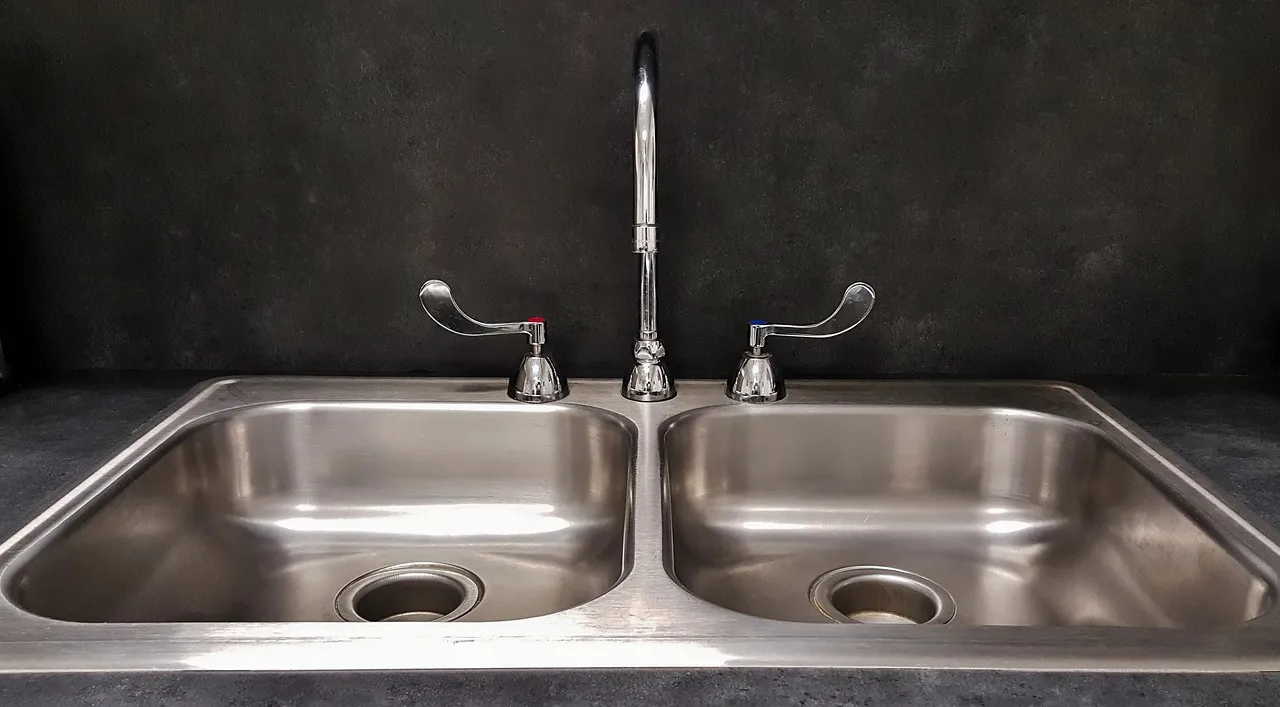
Many households notice dampness and swelling on cabinet baseboards or a musty odor deep inside kitchen cabinetry while faucets and main drain pipes remain completely dry. The overlooked culprit is often the overflow corrugated hose system on the side of the stainless steel kitchen sink. Prolonged exposure to dishwashing hot water, grease, and detergents causes the rear rectangular or circular rubber gasket to harden and shrink, while plastic corrugated tubing loses plasticizers, turns brittle, and cracks. Whenever water splashes into the overflow port, water runs silently down the cabinet backboard.
Looking for the Chinese version of this article?切換至繁體中文版 →
Kitchen Sink Overflow Pipe Leaks: DIY Hose Replacement

This article is compiled from publicly available online sources for general reference only; readers should independently verify and judge its accuracy, and it is not legal, tax, medical or engineering advice. Rules, fees and subsidies change; check the latest notice from the responsible authority before acting. For electrical, gas, structural or health risks, consult a qualified professional.
This is the English edition of a Chinese article, adapted with AI assistance and checked against the original. Where the two differ, the Chinese version and the official sources it cites prevail.
Warning: When removing overflow port hardware screws, use one hand inside the sink to hold the overflow cover plate steady while supporting the rear collection cup with your other hand deep inside the cabinet. Never use high-torque cordless screwdrivers without support on one side to prevent thin stainless steel sink walls from twisting, deforming, or scratching the finish.
1. Stainless Steel Sink Overflow System Structure and Reverse-Slope Ponding
To prevent water damage if someone forgets to turn off the faucet, kitchen sinks feature slotted or circular overflow ports on their upper interior walls. Behind the wall, a plastic overflow collector head uses a long bolt or clip passing through the stainless steel wall to clamp the front decorative grate, with an elastic rubber gasket sandwiched in between to maintain a watertight seal.
Below the collector head, a slender corrugated hose (typically 20mm to 25mm in diameter) meanders down into the sink's main basket drain strainer. If this corrugated hose is cut too long, forming a U-shaped sagging dip (reverse slope), stagnant wash water ponds inside permanently. Beyond rotting and smelling foul, free fatty acids in grease accelerate the deterioration of PVC corrugated tubing, leading to longitudinal brittleness cracks and leaks.
2. Four Primary Causes of Overflow Corrugated Hose System Leaks
- Collector head foam rubber gasket aging, hardening, and chalking: Factory-supplied gaskets are mostly standard black foam rubber. After 3 to 5 years of hot dishwashing steam condensation and repeated detergent soaking, the rubber loses rebound elasticity, shrinks, and hardens, allowing water to weep along the sink wall.
- Rusted long clamping screws losing grip tension: Budget kitchen units frequently employ zinc-plated iron screws. Long-term humidity causes thread corrosion and fracture, letting the overflow head pull loose from the sink wall and creating gaps.
- Displaced O-ring seals on the corrugated hose tee adapter: Where the lower end of the corrugated hose inserts into the main strainer drain tee, small silicone O-rings that become twisted or rolled during insertion allow back-pressure from large sink discharges to force water out through the joint.
- Excess hose length forming an ineffective stagnant water trap: Failing to trim redundant hose length causes it to sag into an unintended trap at the cabinet base, accumulating smelly grease sludge and pulling downward on the upper overflow mounting head.
3. Three Steps for Quick Self-Inspection: Spotting Concealed Overflow Leaks
- Place dry paper towels inside the kitchen cabinet: Position clean sheets of dry colored tissue or paper towels directly beneath the rear overflow collector head, under the corrugated hose bend, and around the strainer tee junction.
- Perform targeted low-volume water spray testing: Use a cup or pull-out spray wand to pour water directly into the upper sink overflow grate continuously for 1 to 2 minutes (without filling the sink basin, eliminating main basket drain interference).
- Inspect paper towels for dampness and discoloration: If towels directly under the collection box become soaked immediately, the overflow gasket has failed or screws are loose; dampness on the middle towel confirms hose wall micro-fissures; water dripping below indicates tee seal failure.
4. DIY Replacement and Watertight Installation SOP for Overflow Fittings
- Disassemble old components and measure opening dimensions: Loosen the central stainless steel bolt on the front overflow faceplate, removing the old collector head and corrugated hose. Use calipers or a steel ruler to measure the opening shape (standard rectangular 65mm×35mm or circular 30mm/45mm) to buy exact matches.
- Scrape adhesive residues and degrease surfaces: Clean both sides of the stainless steel sheet with rubbing alcohol, thoroughly wiping away grease, mineral scale, and old silicone caulk to maintain dry, clean metal.
- Install a new high-temperature silicone gasket: Seat the new thickened silicone gasket (rated to 120°C) into the perimeter groove of the overflow collector head. For double protection, apply an ultra-thin bead of neutral anti-mildew silicone sealant on both gasket faces.
- Align backing and tighten the long bolt vertically: Have one person align the 304 stainless steel insect-proof overflow grate from inside the basin while another presses the collection head firmly from inside the cabinet, threading in the 304 stainless bolt with a hand screwdriver. Stop when the compressed gasket protrudes slightly by 1mm, avoiding overtightening.
- Trim corrugated hose length and ensure a smooth downward slope: Pull the corrugated hose straight, trim off excess length with a utility knife, and ensure the hose forms a natural straight incline from top to bottom (with zero sagging U-bends). Coat the tube tip with water-based lubricant, push it fully into the strainer tee socket, and tighten the compression nut.
5. Kitchen Sink Overflow Hose Material and Hardware Durability Comparison
| Assembly Specification | Material Composition | Thermal & Chemical Resistance | Expected Service Life | DIY Part Price (TWD) |
|---|---|---|---|---|
| High-quality complete assembly (recommended) | 304 stainless steel bolt + silicone ring + thick PP hose | Heat resistant to 120°C, withstands all detergents | 8 - 10 years | $280 - $450 |
| Standard factory-supplied assembly | Galvanized iron bolt + foam rubber + thin PVC hose | Heat resistant to 60°C, easily softened and brittle | 2 - 4 years | $120 - $180 |
| Integrated anti-odor basket strainer kit | Complete antibacterial anti-odor strainer with built-in overflow duct | Heat resistant to 100°C, fully sealed against pests and odor | 10+ years | $800 - $1,500 |
6. Official Standards and Kitchen Fixture Safety Regulations
Thermal endurance and seal integrity of domestic stainless steel sinks and drainage accessories must comply with Bureau of Standards, Metrology and Inspection (BSMI) CNS 8088 Faucets and Sanitary Kitchen Fittings and CNS 10839 food container standards. For residential plumbing leak-prevention manuals, refer to the Architecture and Building Research Institute, Ministry of the Interior Aged Building Piping and Wiring Renewal Guide.
Further reading: 廚房水管油脂硬化堵塞怎麼通?通管劑燒管風險、熱水小蘇打用法, and 流理台下方一直發霉?廚房櫃體滲水與水槽排水防漏排查重點.
7. Frequently Asked Questions (FAQ)
Q1: Can unused sink overflow ports simply be sealed up with silicone caulk?
Strongly discouraged! Overflow ports serve not only as the final safeguard against overflow floods, but also as essential air-balance vent pipes. When a full sink basin is unstopped, high-speed drainage creates negative pressure within lines; the overflow port draws in air to break hydraulic vacuum resistance, allowing rapid drainage. Sealing it slows drainage noticeably and triggers frequent gurgling bubbles.
Q2: Why does the cabinet still smell sour after replacing the overflow hose?
Verify whether the corrugated hose sags into an unintended water trap, or whether the tee adapter connection lacks an anti-odor check valve core. If the kitchen main waste pipe lacks a P-trap / drain trap water seal, sewer air travels directly up through this overflow hose into the kitchen. Straightening the hose or adding a check valve eliminates odors.
Q3: What should I do if the front overflow grate cracked during screw tightening?
Many economy cover plates are molded from thin chrome-plated plastic that breaks under stress. If fractured, never patch it with superglue, as cured cyanoacrylate turns brittle and leaks immediately. Replace it with a stamped 304 stainless steel overflow grate, which offers superior structural rigidity and distributes clamping pressure evenly across the rubber gasket.
Q4: If the corrugated hose diameter doesn't match the tee, can I wrap electrical tape around it?
Strictly prohibited! Black PVC electrical tape dissolves its adhesive within weeks when exposed to hot water and grease. The resulting slippery sludge will cause the connection to slip out and trigger severe flooding. If diameters mismatch, purchase a specialized stepped rubber adapter bushing at a plumbing and electrical shop (水電行) and secure it with a stainless steel hose clamp.
Related reading: Removing Water Stains on Stainless Steel Sinks