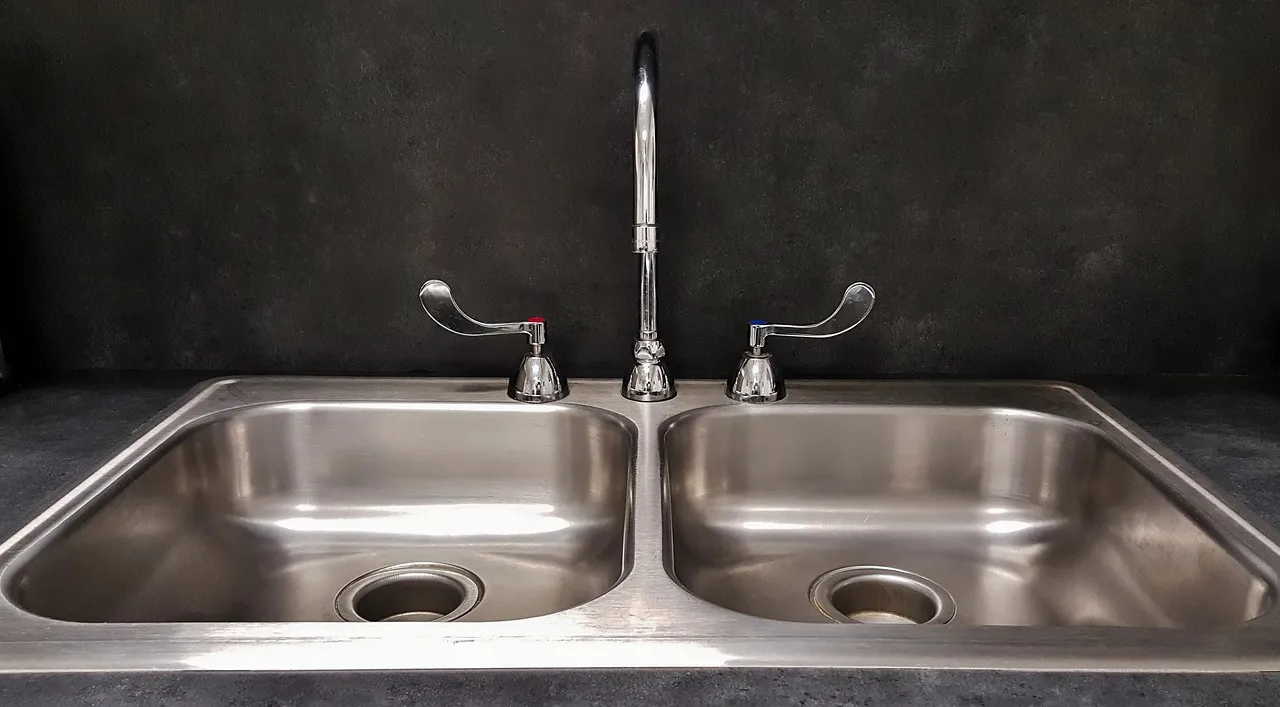
When kitchen sink drain pipes drain sluggishly or back up, the root cause is almost always daily animal fats, food residues, detergent surfactants, and tap water calcium/magnesium minerals cooling and solidifying along cold pipe walls into concrete-hard fatbergs (saponified grease stones). When a drain is completely blocked with zero water passing through, never blindly pour in granulated chemical drain cleaners (caustic soda / sodium hydroxide); strong alkalis react violently with water, generating heat exceeding 90°C that easily melts thin PVC corrugated hoses, while undissolved granules recrystallize at the pipe bottom into rock-hard obstructions. This article outlines safe remedies for minor grease buildup alongside technical comparisons and market pricing between motorized drain augers and hydro-jetting.
Kitchen Drain Grease Clogs: Snake vs Hydro-Jetting Costs
This article is compiled from publicly available online sources for general reference only; readers should independently verify and judge its accuracy, and it is not legal, tax, medical or engineering advice. Rules, fees and subsidies change; check the latest notice from the responsible authority before acting. For electrical, gas, structural or health risks, consult a qualified professional.
This is the English edition of a Chinese article, adapted with AI assistance and checked against the original. Where the two differ, the Chinese version and the official sources it cites prevail.
Safety Warning: If strong acidic or alkaline chemical cleaners have already been poured into the drain, inform the arriving plumber/electrician (水電師傅) immediately! Corrosive chemical residues inside the pipe can violently splatter when rotating steel cables are withdrawn, risking blindness and severe chemical skin burns. Technicians must wear protective safety goggles and acid-resistant rubber gloves. For sink basket and P-trap / drain trap leaks, see 廚房水槽排水孔堵塞疏通全指南.
Comparison of Drain Clearing Methods: Safety, Efficacy, and Best Scenarios
| Clearing Method | Principle and Advantages | Critical Drawbacks and Hazards | Severity Level |
|---|---|---|---|
| Warm Water + Dish Soap | Warm water (60°C) melts fats while dish soap emulsifies oil; zero pipe damage and completely safe | Effective only on fresh soft grease films; cannot break hardened saponified stones | Slightly slow drainage, weekly preventive maintenance |
| Baking Soda + Citric Acid | Acid-base neutralization generates carbon dioxide foaming bubbles to loosen surface grime | Minimal bubble expansion pressure, unable to penetrate thick aged grease calcifications | Pipe odor removal, light grease scum cleaning |
| Granular Chemical Cleaner (High-Purity Caustic Soda) | Strong alkali hydrolyzes fats and hair proteins rapidly and aggressively | Extreme Risk: Violent exotherm melts flexible hoses, causes solid crystallization, splashes corrosive liquid | Use with extreme caution on rigid PVC; banned when pipes are fully blocked |
| Motorized Steel Cable Auger | Rotating steel cable cutting head pierces grease blocks to quickly create a flow hole | Only punches a center hole; hardened grease clinging to pipe walls remains, recurring in months | Moderate to severe blockages, standard household emergency rescue |
| Hydro-Jetting Pipe Scouring (Hydro-Jetting) | 150 to 200 bar high-pressure rear-facing micro-jets scrape off 360-degree grease like new pipes | Higher service cost; fragile aged pipes require precise pressure regulation by skilled technicians | Aged hardened fatbergs, building main stack clogs, permanent recurring clog solutions |
The Truth About Chemical Cleaners: Melting Hoses and Solidifying Stones
Commercial heavy-duty granular or flake cleaners primarily consist of solid sodium hydroxide (NaOH), which generates tremendous heat of solution when contacting standing water:
- Thin-wall PVC flexible corrugated hoses withstand maximum temperatures of only 60°C: Under-sink white or gray corrugated hoses have thin walls. When concentrated chemical reactions generate temperatures of 85°C to 95°C inside traps or elbow joints, PVC softens, deforms, and perforates, causing caustic black chemical sludge to flood cabinet flooring.
- Undissolved granules form "in-pipe concrete": When a drain is fully obstructed, cold standing water cannot circulate. Pouring excess granules leads to settling in bends; chilled by standing water, the unreacted chemical cools and binds with pipe grease and minerals into concrete-like blocks that even motorized steel augers struggle to drill through, often forcing full pipe replacement.
Safe Routine Clearing and Preventive Maintenance
If drainage is merely sluggish but still slowly clears, follow these safe maintenance steps:
- Boil water and cool to 60°C to 70°C: Never pour boiling 100°C water directly into drains to prevent damaging PVC pipe cement joints. Allow boiling water to sit for 5 minutes or blend with cold water to roughly 65°C.
- Inject concentrated neutral dish soap: Squirt approximately 50ml to 100ml of degreasing liquid dish soap into the drain opening, waiting 5 minutes for surfactants to penetrate grease layers.
- Flush continuously with large volumes of warm water: Pour the full pot of 65°C water directly into the drain opening in a swift, steady flow, utilizing thermal energy and hydraulic head to emulsify softened grease down the main stack.
- Perform regular warm-water flushes: Households frequently cooking stir-fries or hot pots should perform warm soapy flushes every 1 to 2 weeks to stop oil layers from building into stubborn fatbergs.
Professional Methods: Motorized Augers vs High-Pressure Hydro-Jetting
When warm water flushes fail and drains back up completely, professional plumbing and electrical work technicians are required. The two dominant approaches differ substantially:
- Traditional Motorized Drain Snake (Spring Steel Cable):
A motor rotates a flexible spring steel cable measuring 10 to 20 meters long with an attached cross-cutter or bulb auger head. It bores through obstructions and extracts rags or fibrous debris. However, in a 50mm (2-inch) diameter pipe, the cable only punches a 15 to 20mm pilot hole through the center of hardened fatbergs. Peripheral grease crusts remain on the walls, often causing clogs to reappear within 6 to 12 months. - Hydro-Jetting Pipe Scouring:
Importing advanced sewer cleaning technology, hydro-jetters utilize high-pressure pumps operating at 100 to 200 bar (1,500 to 3,000 psi) with slim, abrasion-resistant hoses and specialized micro-orifice rotating nozzles. Rear-facing high-pressure jets propel the hose forward while scouring pipe walls 360 degrees, pulverizing and flushing calcified grease out to city sewers, leaving interior walls as clean as brand-new pipes.
Drain Clearing Market Prices and Warranty Comparison
| Service Category | Price Range (NTD) | Pricing Model and Warranty Scope |
|---|---|---|
| Standard Technician On-Site Inspection Call-Out Fee | approx. 500 to 800 NTD | Charged if work cannot proceed due to collapsed piping or building main stack failures |
| Manual / Short Cable Clearing | approx. 1,200 to 1,800 NTD | Applicable for shallow branch clogs within 5 meters; typically no warranty or 7 days |
| Motorized Spring Machine Deep Clearing | approx. 2,000 to 3,500 NTD per pipe | Base price covers 5 to 10 meters, with 100 to 200 NTD per additional meter; warranties typically span 14 to 30 days |
| Dedicated Kitchen Hydro-Jetting Deep Clean | approx. 4,500 to 8,000 NTD per service | Includes borescopic inspection footage and 360-degree grease scouring; reputable firms offer 3 to 6 months warranty |
| Building Common Stack / First-Floor Main Line Jetting | approx. 8,000 to 18,000 NTD | Paid by condominium management committee (管委會) for basement or ground-floor mains based on run length |
Frequently Asked Questions
Can food waste disposer grinders be used to grind and flush kitchen waste into drains?
Strongly discouraged! Residential plumbing slopes in Taiwan are generally shallow (frequently below a 1/50 drop slope) with numerous elbows. Grinding greasy food waste deposits finely pulverized fat that settles into pipe dips, blending with starch and fibers to accelerate solidification—making disposers a leading cause of premature drainage clogs in older communities across Taipei and New Taipei.
Who is liable if a plumbing technician punctures a pipe during clearing?
Generally, if pipes are already fragile from age or if the homeowner previously poured strong acid cleaners that eroded pipe walls paper-thin, rotating steel augers can puncture elbow bends. Qualified technicians explain pipe risks before beginning work. If punctured, plumbers cut away damaged sections in ceilings or floor cavities to glue in replacement pipe sleeves.
Does pouring rice wash water or baking soda prevent grease clogs?
Rice water contains starch with minimal grease-binding capability; stagnant starch ferments and smells foul. Baking soda (sodium bicarbonate) is a mild base with little ability to break down solid mutton or beef tallow. The only effective daily measures are using disposable sink strainer mesh bags, scraping grease into waste bins, and flushing regularly with warm water.
Will high-pressure hydro-jetting burst residential PVC pipes?
No. Certified hydro-jetting machines utilize adjustable pumps where technicians keep pressures between 80 and 120 bar for residential PVC pipes (standard Class O or Class W walls). Water jets spray at specific backward angles cushioned by water films to shear grease rather than striking walls perpendicular, ensuring high safety.
Last updated: 2026-11-03
This article compiles public information by SOSfix for general reference; consult official agencies or manufacturers for specific inquiries.
Sources
- Ministry of Environment: Kitchen Wastewater Grease Interceptor and Main Sewer Maintenance Manual (Verified 2026-11-03): Explaining fat saponification with calcium and magnesium ions under low water temperatures, pipe narrowing rates, and grease trap standards.
- Bureau of Standards, Metrology and Inspection (BSMI): CNS 1298 Unplasticized Polyvinyl Chloride (PVC-U) Pipes for Water Supply and Sewerage (Verified 2026-11-03): Specifying maximum continuous heat tolerance (60°C), impact strength, and chemical corrosion standards for PVC drainage pipes.
- Occupational Safety and Health Administration, Ministry of Labor: Safety Guidelines and Chemical Burn Protection for Chemical Drain Cleaners (Verified 2026-11-03): Warning against exothermic caustic hazards of sodium hydroxide and mandating protective gear and neutralization procedures for plumbing technicians.
Related reading: Kitchen Drain Clog Prevention & Biological Enzyme Care Guide