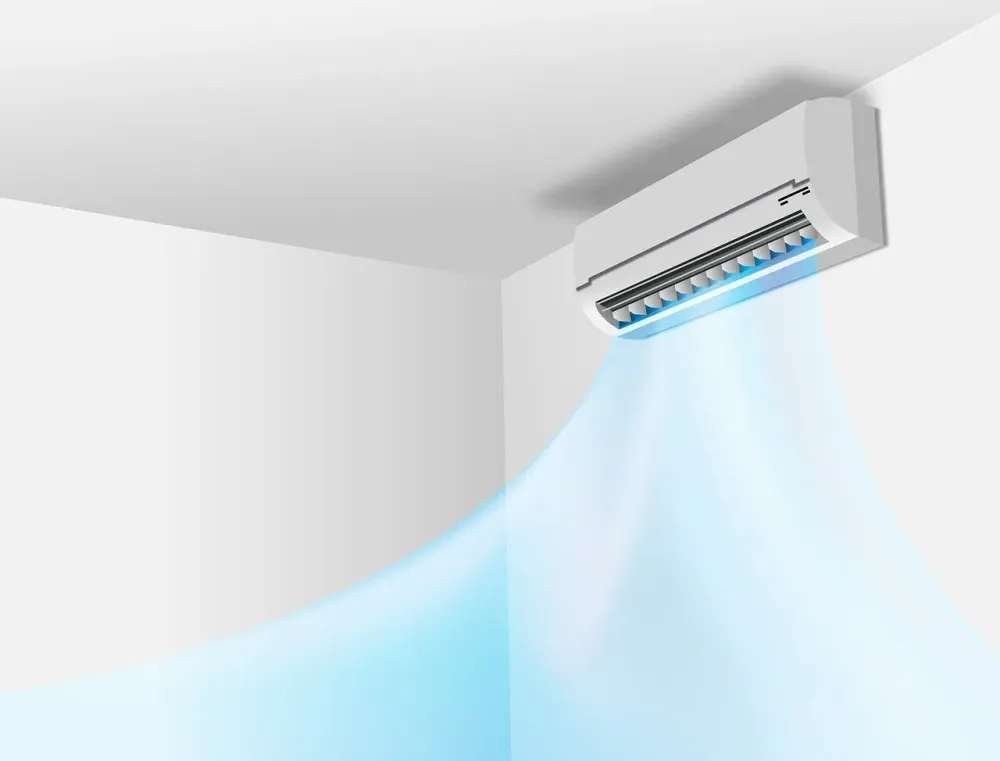
When turning on split air conditioners after six months of winter dormancy, homeowners frequently encounter sour odors, stale musty air, and sluggish cooling; this signals that indoor "evaporator aluminum fins" and "cylindrical cross-flow blower wheels" have become choked with black mold, dust mite allergens, and bacterial biofilm. Many assume seasonal maintenance involves merely rinsing plastic dust filters, unaware that filters capture only 30% of airborne particles while over 70% of fine dust, cooking grease, and skin flakes pass through to settle on chilled heat exchangers. Mastering professional disassembly procedures, using neutral non-corrosive coil cleaners that preserve hydrophilic blue-fin coatings, and running fan mode prior to shutdown eradicates sour odors while recovering 15% to 25% of lost cooling efficiency and lowering utility bills.
Seasonal AC Deep Cleaning Evaporator Mold and Odor Guide
This article is compiled from publicly available online sources for general reference only; readers should independently verify and judge its accuracy, and it is not legal, tax, medical or engineering advice. Rules, fees and subsidies change; check the latest notice from the responsible authority before acting. For electrical, gas, structural or health risks, consult a qualified professional.
This is the English edition of a Chinese article, adapted with AI assistance and checked against the original. Where the two differ, the Chinese version and the official sources it cites prevail.
Chemical and Biological Origins of AC Odors: Three Contamination Hotspots
Air conditioners recirculate indoor air across internal heat exchangers; foul odors represent microbial metabolic byproducts:
1. Evaporator Biofilms: Operating in cooling mode, evaporator coils sit at 5°C to 7°C (dropping below 8°C), condensing moisture rapidly. Chilled crevices trap bacteria, skin proteins, and aerosolized VOCs. During idle periods at ambient temperatures, Aspergillus and Penicillium molds proliferate, releasing volatile organic acids (butyric and isovaleric acids) and geosmin that create classic sour smells.
2. Cross-Flow Blower Wheels: Blower wheels rotate at high speeds with tight blade gaps. Moisture and dust consolidate under centrifugal force into sticky grime along blade edges, spewing mold spores while unbalancing the wheel to cause low-frequency vibrations.
3. Drain Pan Jelly Slime: Condensation drip trays collect standing water. Psychrophilic bacteria secrete extracellular polysaccharides, forming thick, gelatinous slime that smells foul and clogs 16mm drain lines, triggering indoor water leaks.
Impact of Coil Contamination on Power Consumption and Cooling Capacity
Neglected air conditioners suffer severe thermodynamic efficiency losses:
| Operational Metrics | Clean or Serviced Air Conditioner | Three Years Uncleaned Machine | Thermodynamic Degradation Impact |
|---|---|---|---|
| Airflow Volume Through Coils | 100% rated capacity (approx 550 CMH) | Drops to 60% to 75% rated airflow | Restricted airflow delays room cooling severely |
| Evaporator Pressure and Load | Stable evaporation at 5°C to 7°C | Drops below 0°C, causing coil icing | Inverter compressors run at maximum frequency, spiking bills |
| Hourly Power Draw (5.0kW Unit) | Cruises at low frequency (0.65 to 0.85 kWh) | Locks at full load (1.45 kWh hourly) | Adds NT$1,200 to NT$2,000 to bimonthly bills |
| Airborne Microbial Counts (CFU/m³) | Meets air quality standards (< 1,000 CFU) | Spikes to 8,000 to 15,000 CFU | Triggers allergic rhinitis and asthma attacks |
Standard Five-Step Deep Cleaning Procedures and Safety Controls
Thorough air conditioner servicing requires structured execution:
Step 1: Power Isolation and Site Protection
Always isolate the dedicated circuit breaker (NFB) in the service panel before cleaning; remote controls leave 220V live at the motherboard. Install waterproof floor sheeting beneath the indoor unit and attach an air conditioning wash bib with a drain hose leading to a collection bucket.
Step 2: Disassembling Casings, Filters, and Louvers
Carefully unclip the front panel, dust filters, and horizontal and vertical louvers. Enclose the right-side control box (PCB board) securely with plastic wrap to shield sensitive microcontrollers from water ingress.
Step 3: Applying Specialized Neutral Aluminum Coil Cleaners
Select certified neutral coil cleaners (pH 6.5 to 8.0). Spray foaming cleaner across aluminum evaporator fins and into the blower wheel, letting the foam dwell 5 to 8 minutes to dissolve grease, fungal hyphae, and biological slime.
Step 4: Pressure Washing Coils and Blower Wheels
Using adjustable pressure washers set to 35 to 50 kg/cm² (3.5 to 5.0 MPa), spray perpendicular (90 degrees) to evaporator fins from top to bottom. Angled spraying bends fragile aluminum fins, permanently obstructing airflow. Continue washing blower wheels until runoff clears from black to transparent.
Step 5: Sanitizing and Forced Drying
Vacuum excess moisture and reassemble casings. Re-energize the circuit breaker and run the unit in Fan Only mode on high speed for 60 to 90 minutes. This dries coil crevices thoroughly, preventing mold from reforming in lingering moisture.
Chemical Precautions: Avoiding Caustic and Acidic Wash Solutions
Unqualified contractors frequently use caustic sodium hydroxide (lye) or hydrofluoric acid for rapid foam generation:
1. Stripping Protective Blue Fin Coatings: Aluminum fins feature hydrophilic blue or golden anti-corrosion coatings that ensure condensation sheets smoothly without forming bridging water droplets that restrict airflow. Strong acids and bases strip these coatings within 1 minute, causing aluminum oxidation and pitting that leads to indoor water spitting and refrigerant leaks.
2. Daily Anti-Mold Operation: Activate the Auto Clean feature on remotes or run Fan Only mode for 20 to 30 minutes before shutting down after cooling. Drying internal coils eliminates sour odors without extra costs.
When verifying dedicated circuits and branch breaker sizes for air conditioning units, use our wire gauge ampacity and breaker matching calculator to confirm conductor gauges, calculate electrical demand with our appliance electricity cost calculator, and examine our interactive home inspection checklist calculator for residential electrical safety.
Frequently Asked Questions
Are inexpensive retail aerosol "no-rinse" coil sprays genuinely effective?
No, and they often worsen problems. Aerosol sprays contain surfactants and perfumes claiming condensation washes away grime. However, they lack pressure to dislodge deep biofilms and cannot reach the blower wheel where mold is heaviest. Foaming residues mix with dust into a sticky paste that clogs drain lines, causing leaks and pungent odors.
How frequently should indoor air conditioner units receive professional deep cleaning?
Standard households should deep-clean units every one to two years. Properties in humid mountain zones, homes with shedding pets, open kitchens subject to cooking oils, or smoking environments accumulate grime twice as fast, warranting professional cleaning every spring before cooling season begins.
Why do sour odors sometimes return two weeks after a professional cleaning?
This indicates incomplete cleaning: either the technician washed only fin surfaces without flushing the drain pan's bacterial slime, or the unit was shut off damp without forced drying. Incomplete cleaning allows surviving bacteria to multiply quickly. Drain lines with insufficient slope also trap standing water, radiating sour smells back into the room.
Sources and References
Indoor air quality regulations and ventilation standards consulted:
- Ministry of Environment: Indoor Air Quality Management Regulations for HVAC Systems
- ASHRAE Standard 62.1: Ventilation for Acceptable Indoor Air Quality
Disclaimer: This technical guide is compiled from public engineering references and building standards. Actual on-site conditions vary across individual properties; readers should evaluate technical applicability carefully and consult qualified trade professionals.
Related reading: Air Conditioner Deep Cleaning Guide vs Spray Cans · Rental AC DIY Cleaning: Filter & Evaporator Coil Guide