The temptation and pitfalls of DIY air conditioner cleaning
As summer approaches, temperatures in the greater Taipei area have hit record highs. When the air conditioner emits an unpleasant musty smell when it is turned on, or the coldness is not as good as before, many budget-conscious homeowners and landlords of rental apartments will be attracted by the dazzling array of "DIY air conditioner cleaning spray" advertisements on the Internet. The advertisement claims that you only need to spray the detergent onto the internal fins of the air conditioner, and the dirt will be automatically discharged along the drain pipe, saving time and thousands of dollars in hiring a technician. However, in the water and electricity repair practice in Shuangbei, we often receive such calls for help:OrWhat on earth is going on?
Fact check: Potential risks and misunderstandings of DIY cleaning sprays
Commercially available air conditioner cleaning sprays are mainly composed of surfactants, solvents and flavors. They are designed to dissolve trace amounts of dust on the surface of aluminum fins. However, in practical use, there are the following physical blind spots that are difficult to overcome:
- Detergent residue and chemical corrosion: The spray pressure of the aerosol spray can is extremely small, and it is impossible to wash away the dissolved sticky dirt. The detergent remaining in the gaps of the aluminum fins (heat exchanger) will mix with dust and lint to form a jelly-like sticky substance. This sticky layer will not only block the air path and cause the air conditioner to not be cold, but its chemical acidity and alkalinity will corrode the aluminum fins, shortening the life of the air conditioner.
- Clogged drain holes cause indoor water dripping: The dissolved jelly-like dirt flows into the drain pan along with the water flow, and it is easy to get stuck at the insect-proof drain hole. When the drain holes are clogged and the drain pan is overflowing, the air conditioner will begin to drip water into the room, damaging the wooden floor and decoration underneath.
- The core dirty area that cannot be touched - behind the air drum and water tray: The most serious places for mold in air conditioners are actually the high-speed rotating and the dark corners behind the water collection tray. DIY spray cannot clean the air drum at all. The black mold blocks and heavy dust stuck on the air drum will still be continuously blown into the room.
Professional on-hook deep cleaning: standard construction methods and reasonable market prices of water, electricity and air-conditioning technicians
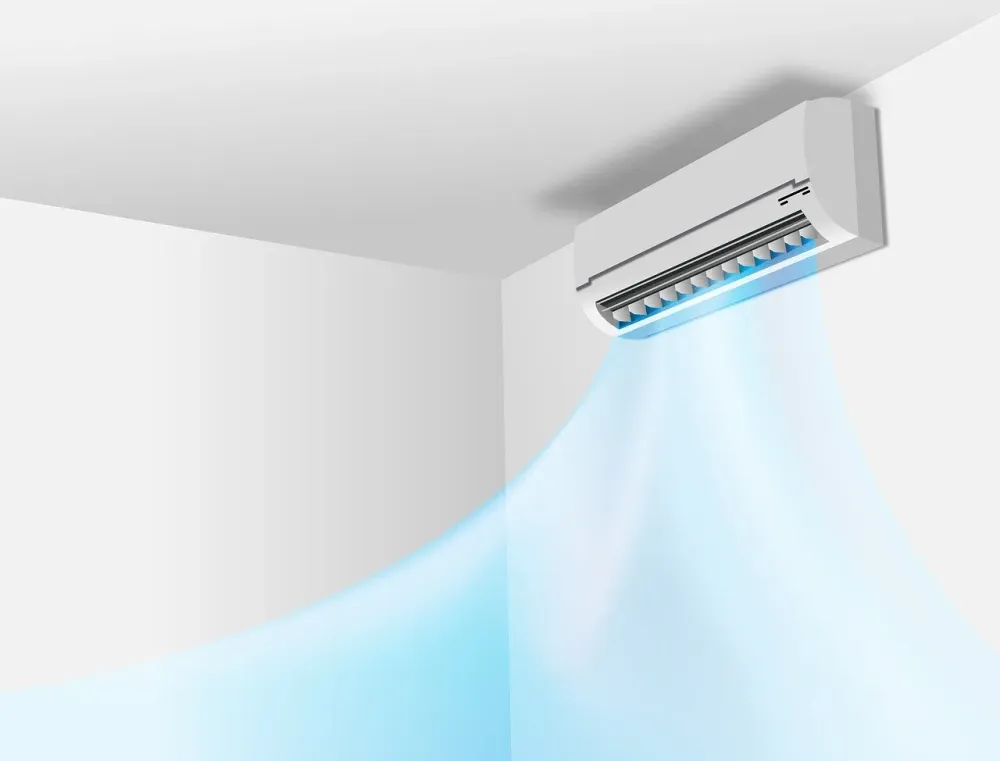
Compared with DIY's treatment of symptoms but not the root cause, professional water and electricity air-conditioning technicians will follow extremely strict physical and chemical protection methods when performing "hook-up deep cleaning (hung washing)" of separate air-conditioners:
- Comprehensive coverage and protection: Use a special "air-conditioning cleaning cover (water-bearing plastic cover)" to tightly cover the indoor unit, and use waterproof tape to protect the main board and other weak current parts to ensure that water splashes will not spread to the customer's walls and furniture.
- Chemical reaction and high-pressure washing: Spray a mild professional weakly alkaline aluminum cleaner and let it sit for a few minutes to allow the chemical to emulsify with stubborn dirt. Then, use a specialto thoroughly wash away the black mold, hair and chemical residues accumulated in the aluminum fins, air drum and water collection tray from the inside out. The flushing water volume is usually as high as 10 liters or more to ensure that there is no chemical residue.
- High-temperature steam sterilization and anti-mold and anti-bacterial agent spraying:After cleaning, use 100°C high-temperature and high-pressure steam for secondary physical sterilization of the air outlet, and finally spray a long-lasting anti-mildew coating to slow down the regrowth of mold.
[Reasonable market price in the greater Taipei area] Currently, the reasonable market price for deep cleaning of detached air-conditioning units in Taipei City and New Taipei City is about NT$ 2,500 to NT$ 3,500 (depending on the size of the machine and the difficulty of disassembly, the ceiling-mounted unit is about NT$ 3,500 to NT$ 4,500).
Financial considerations of asset management: ROI analysis of air-conditioning deep washing
For charter operators or real estate flipping investors, regularly arranging professional cleaning is not a superfluous expense, but a scientific decision to control asset depreciation and reduce operating expenses (OpEx):
[Depreciation and Energy Efficiency Analysis] An air conditioner stuck with dust will cause the evaporator heat exchange efficiency to be reduced by more than 20%, and the compressor must be overclocked for a long time. This will not only increase the monthly electricity bill by 15% - 25% (passed on to the tenant or increase the vacancy rate), but will also accelerate the aging of the compressor and fan motor. An air conditioner that can be used for 8 years may be reimbursed in 4 years. Spending NT$2,500 per year for deep cleaning can ensure that the air conditioner is maintained at the first-level energy-saving state and preserves the life of the compressor. It brings long-term equipment depreciation savings and tenant renewal rates, and its business return on investment (ROI) far exceeds the initial cleaning cost.
Conclusion: Leave it to professionals to ensure equipment and air quality
Commercially available DIY cleaning sprays can only be used as an auxiliary deodorizer when removing and cleaning the filter, and can never replace professional deep physical cleaning. Faced with problems such as sluggish air conditioners and musty smells, owner-occupiers and savvy property investors should avoid making small sacrifices. Entrusting water, electricity and air-conditioning technicians with professional equipment and construction warranty to perform standard high-pressure deep cleaning once a year or every two years is the most worry-free and compliant commercial maintenance model to preserve the value of air-conditioning assets and protect indoor air health.
🇹🇼 Expat Living Note: Home Repairs in Taiwan
If you are an international resident renting an apartment in Taipei, New Taipei, or anywhere in Taiwan:
- Voltage & Electrical Safety: Taiwan standard household voltage is 110V (60Hz). Do not plug 220V imported European/UK appliances directly without a certified step-up transformer.
- Plumbing Terminology: Local plumbers are called 水電 (Shuǐdiàn) and handle both water and electrical repairs.
- Landlord Obligations: Under Article 429 of Taiwan Civil Code, landlords are legally responsible for repairing natural wear and tear (such as hidden wall pipe leaks, water heater faults, or booster pump failures) unless explicitly waived in your lease.
Legal Disclaimer
The information provided on this website is for general educational and reference purposes only. For hazardous repairs involving live 220V electrical circuits, main gas lines, or structural wall drilling, always consult certified, licensed technicians. SOSfix disclaims any liability for personal injury or property damage resulting from DIY repair attempts.

![[Air Conditioner Cleaning and Anti-Pit] Is the spray air conditioner cleaner a deodorizer or a fin killer? Why do you need a professional dry cleaning once a year?](/_next/image?url=%2Fimages%2Fhome-963347_1280.webp&w=1200&q=75)