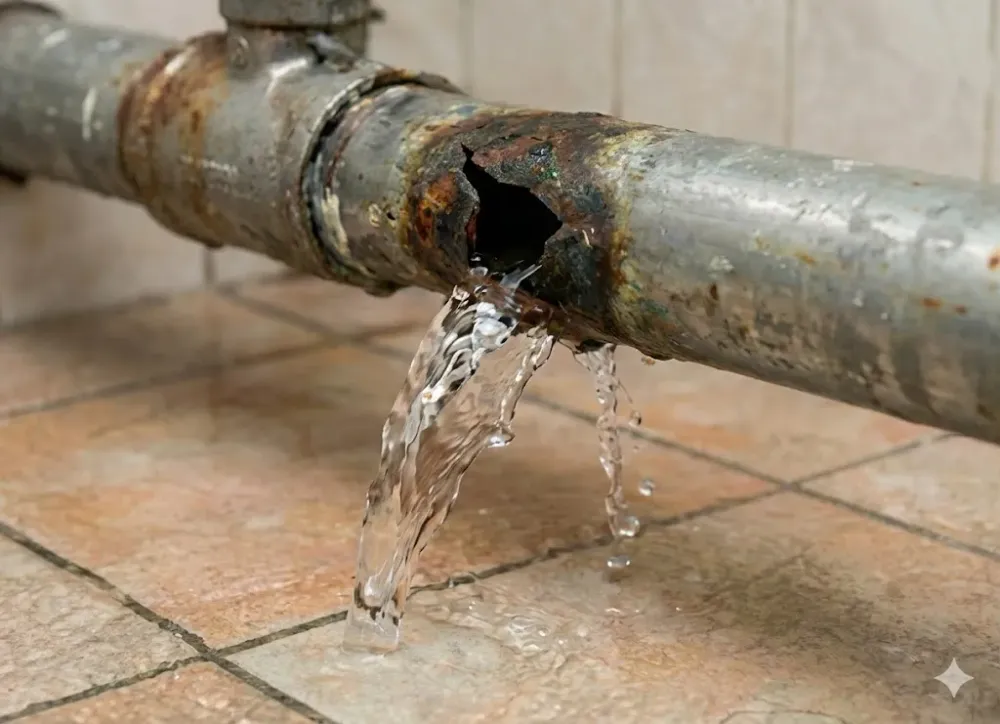
Across walk-up apartment rooftops in Taipei and New Taipei and urban centers across Taiwan, corrugated metal rooftop additions are ubiquitous. Many additions have reached a building age of 30 to 40 years or more. Enduring sun, rain, and fierce typhoons, corrugated sheets are heavily rusted with holes, metal frames are corroded, and interiors leak like sieves during downpours. Many homeowners want to hire metal fabricators to tear down the structure and rebuild with sturdy H-beam steel frames and airtight windows, only to face immediate photo reports by neighbors on day 1 of construction, prompting construction management building inspectors to order halts and designate the structure for mandatory demolition. Can existing unauthorized rooftop additions be repaired under Taiwan law, and where is the legal boundary for replacement?
Rooftop Addition Leak Repairs: Taiwan Rules and Limits
This article is compiled from publicly available online sources for general reference only; readers should independently verify and judge its accuracy, and it is not legal, tax, medical or engineering advice. Rules, fees and subsidies change; check the latest notice from the responsible authority before acting. For electrical, gas, structural or health risks, consult a qualified professional.
This is the English edition of a Chinese article, adapted with AI assistance and checked against the original. Where the two differ, the Chinese version and the official sources it cites prevail.
Legal Boundaries: Under the Unauthorized Building Handling Regulations and Existing Unauthorized Building Repair Rules of Taipei City, New Taipei City, and local governments: existing unauthorized buildings completed prior to January 1, 1995 (Republic of China year 84; or June 25, 2009 / year 98 in New Taipei) are permitted routine safety repairs only within their original scale, original area, and original height. Replacing over half of structural frames (such as replacing more than one-half / 2 of beams and columns) or rebuilding after full demolition is strictly prohibited. Violators are classified as new illegal additions without deferred status, subject to immediate mandatory demolition.
1. 2 Statutory Categories of Unauthorized Additions in Taiwan: New vs Existing
In municipal building administration systems, additions face two distinctly separated legal paths:
- New unauthorized additions (Subject to immediate demolition): Taking Taipei City as an example, additions constructed after January 1, 1995 (year 84). Regardless of floor area or purpose, once verified through neighbor reports or satellite aerial photography, building inspectors issue mandatory demolition notices with prioritized teardown and no deferrals.
- Existing unauthorized additions (Recorded on file, deferred demolition): Structures existing in Taipei City prior to December 31, 1994 (year 83) backed by aerial survey photos, property tax records, or utility plumbing and electrical work payment receipts. Categorized for phased handling, these are granted deferred enforcement provided they do not obstruct fire passages, threaten public safety, or operate as commercial subdivided rental rooms.
2. Legal Boundaries for Repairing Existing Additions: Permitted vs Prohibited
To repair aged rooftop additions and prevent water leakage, homeowners must heed strict regulatory limits:
- Permitted scope of repair (Structural overhaul under one-half / 2):
- Local replacement of cracked and rusted corrugated sheets, with replaced surface area not exceeding one-half (1/2) of original roof or wall area.
- Interior ceiling spackling, painting, and replacing waterproofing consumable sealants.
- Replacing damaged window frames within original window opening dimensions (enlarging window openings or punching new windows is strictly prohibited).
- Critical violations triggering immediate demolition (Treated as brand-new additions):
- Full teardown and rebuilding: Demolishing old metal or timber structures completely and erecting new steel columns. Building inspectors rule: once the original structure ceases to exist, re-erecting steel columns constitutes a brand-new illegal addition subject to instant teardown.
- Replacing over one-half (1/2) of primary structural beams and columns: Swapping out rusted angle iron or C-channel purlins entirely for heavy H-beam steel.
- Increasing height, width, or extending onto balconies: Raising rooftop ridge heights, or enclosing previously open parapets and balconies outward.
3. Avoiding Neighbor Reports: 3 Standard Reporting and Filing Steps
If an aged rooftop addition poses imminent collapse or falling hazard risks, follow official procedures for legal protection:
Step 1: Obtain historical aerial photography evidence:
Apply to the Aerial Survey and Remote Sensing Branch for black-and-white orthophoto maps prior to the end of 1994 (Republic of China year 83) to verify that the addition qualifies as existing unauthorized construction.
Step 2: Photograph conditions and file repair notice with building authorities:
Compile photo records of rust holes and leaks, prepare repair project plans specifying partial replacement of corroded sheet metal, and submit filings to building administration departments to secure formal acknowledgment before breaking ground.
Step 3: Communicate with neighbors and post official permits on-site:
Communicate proactively with downstairs neighbors prior to construction, promising dust control, noise suppression, and leak mitigation; post building filing approvals outside the building entrance to prevent false reports.
4. Addition Repair Risk and Regulatory Assessment Matrix
| Proposed Construction Item | Regulatory Assessment | Report Inspection Outcome | Building Authority Action |
|---|---|---|---|
| Full frame demolition and re-erecting steel frame | Treated as newly built unauthorized addition | 100% violation subject to demolition | Immediate stop-work order and mandatory excavator demolition |
| Replacing rusted corrugated sheets (under half / 2) | Compliant (safety maintenance) | Filing approved as lawful | Verified against historical records and permitted to proceed |
| Applying exterior roof thermal waterproofing coatings | Compliant (surface maintenance) | Zero risk | Routine maintenance; no filing required |
| Replacing damaged airtight windows within openings | Compliant within existing opening dimensions | Retain original photos | Approved provided window opening area remains unchanged |
| Subdividing addition into multiple rental suites | High-risk public safety violation | Priority targeted demolition | Violates fire escape safety; dismantled forcefully |
5. Official Building Regulations and Supervisory Agency Guidelines
Verification, repair restrictions, and mandatory demolition procedures for unauthorized additions must strictly follow the Regulations for Handling Illegal Structures enforced by the National Land Management Agency under the Ministry of the Interior, and the Taipei City Unauthorized Structure Handling Regulations. For lawful leak-prevention canopies, refer to Ministry guidelines on waterproofing facilities atop older walk-up apartments.
Further reading on rooftop waterproofing and maintenance: Canopy Leak Repair, Waterproof Screws, and Silicone Guide, and Load-Bearing Wall Identification in Older Home Renovations.
6. Frequently Asked Questions FAQ
Q1: Can I lawfully build an open sloped leak-prevention canopy without walls?
Completely lawful without building permits! To resolve rooftop leaks on older walk-ups, Taipei, New Taipei, and many counties established rules exempting leak canopies on buildings with a building age of 20 or 30 years or more. Homeowners may install open pitched canopies atop roof slabs subject to 3 conditions: 1. Surrounding perimeters must remain completely open without walls or windows (ensuring ventilation); 2. Ridge height must not exceed 2.1 meters to 1.5 meters depending on local codes; 3. Obtain consent from all co-owners and file notices with building authorities prior to work.
Q2: Can I install an extra foam insulation layer when replacing rusted sheets?
Yes, provided exterior panels utilize compliant fire-resistant materials. Crucially: the exterior roof height and slope must never change. Raising sheet roofs by 20 cm causes aerial drone surveys and inspectors to designate the alteration as an unauthorized vertical addition, issuing immediate demolition citations.
Q3: A contractor claims H-beams covered by black netting will go unnoticed; is this credible?
This is fraudulent sales rhetoric. Contractors walk away after pocketing hundreds of thousands of dollars in fees, leaving 100% of financial losses on homeowners. Urban neighbors utilize rapid reporting channels (1999 hotline, mayor mailboxes, mobile photos), while inspectors deploy regular drone comparative surveillance. Once black mesh is removed or drone cameras spot fresh paint, demolition crews arrive within days.
Q4: Are existing additions exclusively owned by top-floor owners or shared co-ownership?
Under Taiwan property law, rooftop slabs 100% constitute common elements shared by all building unit owners. Unless top-floor owners hold explicit registered exclusive-use agreements from original sales contracts, downstairs neighbors may file civil lawsuits under Civil Code Article 767 (property claim rights) and Article 818 (co-ownership use rights) to demand demolition of illegal additions and restitution of common rooftop spaces, with extremely high success rates.