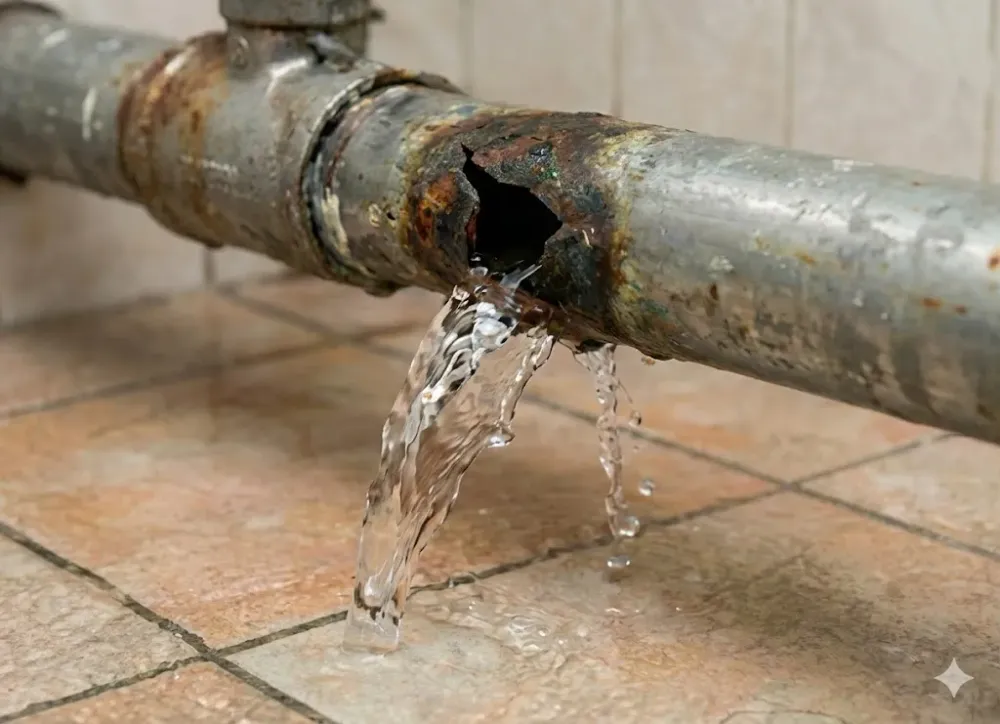
Many homeowners living in 30 to 40 year-old apartments notice that when opening faucets in the morning, the initial tap water runs light yellow or cloudy reddish-brown rust water, leaving tiny black and red particles at the bottom of cups, while hot water flow decreases year after year. This indicates that early galvanized steel pipes (鍍鋅鋼管) concealed inside concrete walls have suffered severe internal corrosion and tuberculation. Rushing into high-pressure pipe cleaning under these conditions risks triggering sudden burst pipes and indoor flooding!
Looking for the Chinese version of this article?切換至繁體中文版 →
Rusty Tap Water: Galvanized Pipe Risks and Repiping Guide
This article is compiled from publicly available online sources for general reference only; readers should independently verify and judge its accuracy, and it is not legal, tax, medical or engineering advice. Rules, fees and subsidies change; check the latest notice from the responsible authority before acting. For electrical, gas, structural or health risks, consult a qualified professional.
This is the English edition of a Chinese article, adapted with AI assistance and checked against the original. Where the two differ, the Chinese version and the official sources it cites prevail.
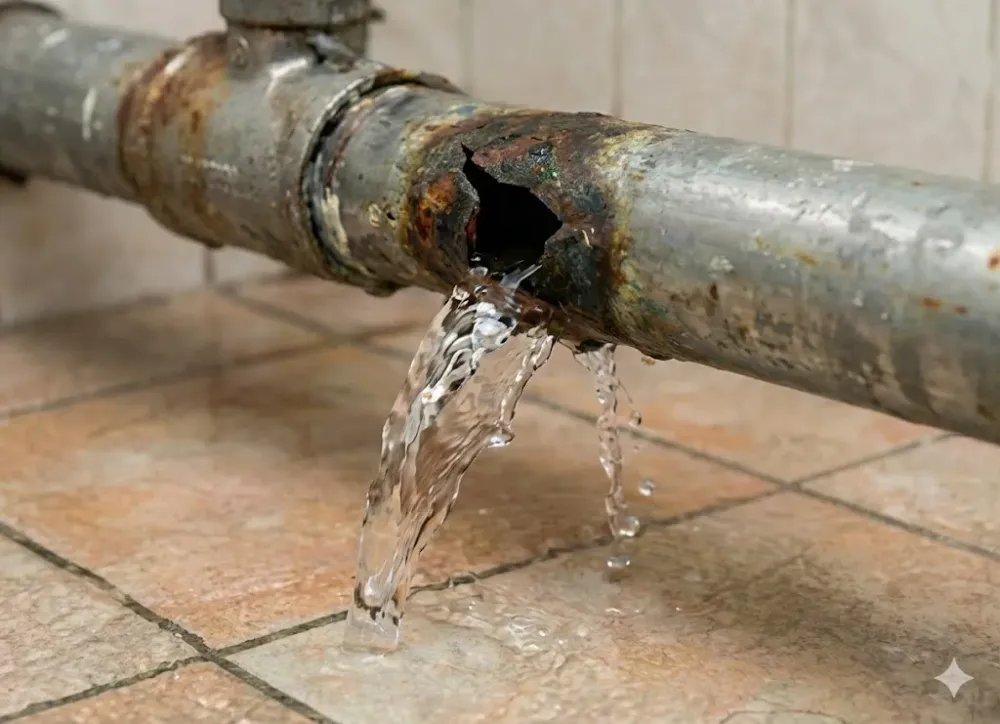
Warning: In older homes with a building age over 30 years where plumbing has never been renovated, if concealed pipes are galvanized iron, high-pressure pulse cleaning without pressure reduction is strictly prohibited! Corroded pipe walls may have less than 1 mm of thickness remaining; high-frequency water hammer vibrations can easily fracture threaded elbow joints, causing concealed in-wall leaks costing hundreds of thousands of dollars to repair.
1. Evolution of Plumbing in Taiwan: Why Galvanized Steel Pipes Corrode
Between the 70s and 80s of the Republic of China calendar (around the 1980s to 1990s), Taiwan construction projects widely utilized galvanized steel pipe (鍍鋅鋼管) for concealed cold and hot water lines.
Although steel pipes feature surface zinc galvanization for corrosion resistance, plumbers cut pipe lengths on-site and cut threads using pipe threading machines. This process completely shaves away 100% of the protective zinc coating at threaded ends, exposing unprotected raw iron. Over time, submerged in oxygenated water and high-temperature hot water, raw iron experiences severe electrochemical corrosion, forming ferric oxide (Fe₂O₃) and iron hydroxide. This creates hard tuberculation deposits that constrict original 1/2-inch (about 13 mm) pipes down to the diameter of a pen refill.
2. High-Frequency Hydro-Pulse Cleaning: Descaling Miracle or Burst Cause
Commercial pipe cleaning advertisements promote high-frequency citric acid pulse oscillations that flush out dark sludge. Here is an analysis of its actual mechanics and risks:
- Operational Principle: Microcomputer controllers inject food-grade citric acid to soften scale, then alternately inject pressurized air and water flow. This generates water hammer shockwaves, cavitation micro-bubble bursts, and forward-reverse pulses to dislodge deposits from pipe walls.
- Suitable Pipe Materials: PVC cold water rigid plastic pipes, stainless steel press-fit pipes, and copper pipes. These smooth-walled pipes accumulate biofilm, scale, and silt, where cleaning provides excellent results with zero rupture risk.
- Fatal Vulnerability of Old Galvanized Pipes: Ancient iron pipes become fragile and brittle; frequently, thick rust deposits are the only barrier keeping pinholes from leaking! Dislodging rust nodules with powerful pulses instantly exposes hidden holes, spraying water behind finished walls.
3. Three Steps to Identify Galvanized Iron Piping at Home
- Inspect Water Meter Outlet Fittings: Go to the rooftop or meter cabinet and examine the metal pipe running from the meter into the concrete floor. If it has a dull gray finish with large hexagonal cast-iron elbows covered in thick yellow-brown rust deposits, it is galvanized iron.
- Remove Vanity Angle Stop Valve to Check Pipe Interior: Shut off the main water shutoff valve, unscrew the angle stop valve (三角凡爾) beneath the basin with a wrench, and shine a flashlight into the wall elbow. If the internal diameter is choked by dark, irregular rust nodules leaving only a tiny opening, it is 100% heavily corroded iron pipe.
- Strong Magnet Test: Stainless steel 304 press-fit pipes are typically non-magnetic or weakly magnetic; if a strong neodymium magnet grips the metal pipe firmly, it proves the material is conventional carbon steel or cast iron.
4. Permanent Solutions: Exposed Repiping vs In-Wall Concealed Renovation
When aging galvanized pipes produce yellow water and low pressure, the only permanent, safe remedy is to abandon old concealed wall pipes and run new plumbing:
| Plumbing Renovation Option | Benefits and Advantages | Drawbacks and Trade-offs | 3-Bedroom 2-Bath Budget (TWD) | Construction Duration |
|---|---|---|---|---|
| Exposed ceiling or baseboard repiping (Recommended) | Avoids large-scale demolition, leaks are immediately visible, fastest completion | Pipes require surface decorative trunking or boxing | $45,000 - $85,000 | 2 - 3 work days |
| Full wall demolition with new concealed stainless pipes | Completely hidden aesthetic, completely new bathroom tiling | Massive demolition, heavy dust, requires re-plastering and waterproofing | $200,000 - $450,000 (including masonry) | 2 - 4 weeks |
| High-frequency pulse cleaning (High risk temporary fix) | Brief flow improvement, no masonry work needed | Extremely high burst risk; new rust deposits precipitate within 3 months | $4,000 - $8,000 | Half day |
5. Modern Quality Plumbing Standards: Insulated Stainless Steel Press Piping
Modern plumbing practices have replaced galvanized steel pipes with SUS 304 stainless steel pipe with double-crimp press fittings for main hot and cold water supplies. Hot water lines must be insulated with orange or green flame-retardant high-density PE foam insulation (5 mm to 10 mm thickness). This stops thermal energy loss, prevents sweating and condensation drips across ceilings or pipe chases, and provides a service lifespan exceeding 50 years without corrosion.
6. Drinking Water Standards and Waterworks Regulations
Heavy metal iron content in tap water (statutory upper limit is 0.3 mg/L) and turbidity must strictly comply with the Ministry of Environment Drinking Water Quality Standards. For building water pipe material standards, refer to Bureau of Standards, Metrology and Inspection (BSMI) CNS 13392 Stainless Steel Pipes for General Piping and CNS 6445 carbon steel pipes for piping specifications.
For more plumbing leak prevention and renovation guides, see hot water pipe low pressure and rusted angle valve troubleshooting, and extracting broken angle valves from walls with reverse tap screw extractors.
7. Frequently Asked Questions
Q1: Can rusty water running from taps each morning be boiled and consumed?
It must never be consumed! Boiling only kills bacteria, but heavy metal iron ions and chemical sediments cannot be removed by heat; long-term consumption burdens liver and kidneys and risks digestive inflammation. If pipe replacement is delayed, flush standing water for 3 to 5 minutes each morning to flush toilets, and install a 5 micron PP sediment filter on taps.
Q2: What if we repipe our unit but the building main vertical riser is still rusted?
If building vertical risers are old iron pipes, occasional rust flakes may still enter from the meter. Install a whole-house pre-filter backwash filter (40 micron stainless steel mesh) downstream of the unit water meter at the main shutoff to intercept coarse sediment and rust outside your apartment.
Q3: The technician claimed food-grade citric acid is safe, so why did the pipe burst?
Citric acid itself is harmless and minimally corrosive to metal. The culprit is the cavitation micro-bubble shockwaves generated by the cleaning equipment! Under intense pulse oscillations, momentary dynamic pressure spikes across fragile, thinned elbow threads, tearing weakened metal apart.
Q4: Will exposed pipes routed across indoor ceilings produce loud rushing water noise?
Proper plumbing installations encase stainless steel pipes in acoustic vibration-dampening foam insulation sleeves, supported every 1.0 to 1.2 meters with stainless steel pipe clamps equipped with rubber vibration pads. Water velocity is engineered below 1.5 m/s, preventing disturbing water rushing sounds even during late-night use.
Related reading: Taipei Old House Rusty Water: Stainless Pipes vs Cleaning · Taipei High-Frequency Water Pipe Cleaning Risks Guide