
Whenever temperatures drop in autumn and winter, emergency calls from homeowners are very common: "家裡廚房浴室冷水出水強大有力, 但一轉到熱水端, 出水量卻小得可憐, 水流如涓涓細流, 甚至因為水壓不足導致瓦斯熱水器無法啟動, 洗澡凍得發抖." This kind of typical malfunction where "冷水正常, 熱水極小" is over 90% not due to a booster pump failure, but rather because the 熱水系統管路受到"水垢鈣化沉積"與老舊建築"鍍鋅鐵管生鏽結瘤 (鐵瘤) " severely sealed off the pipe diameter channel.
Looking for the Chinese version of this article?切換至繁體中文版 →
Fix Weak Hot Water Flow, Limescale and Rusted Pipes
This article is compiled from publicly available online sources for general reference only; readers should independently verify and judge its accuracy, and it is not legal, tax, medical or engineering advice. Rules, fees and subsidies change; check the latest notice from the responsible authority before acting. For electrical, gas, structural or health risks, consult a qualified professional.
This is the English edition of a Chinese article, adapted with AI assistance and checked against the original. Where the two differ, the Chinese version and the official sources it cites prevail.
警告: 在拆卸熱水器下方三角凡而或進出水金屬軟管前, 必須先關閉冷水進水總閥, 並拔掉熱水器電源 (若為瓦斯熱水器必須同步關閉瓦斯旋鈕) . 等待熱水器內部管路冷卻 10 分鐘以上方可拆解, 切勿在滾燙帶壓狀態下硬拆, 以免高溫熱水噴濺燙傷臉部.
1. Hot Water Pipe Diameter Reduction and Thermochemical Scale Precipitation Mechanism
Tap water dissolves invisible calcium bicarbonate ($Ca(HCO_3)_2$) and magnesium bicarbonate. When water flows through a gas water heater or electric water heater and is heated to 50°C–65°C or higher, the bicarbonates rapidly undergo a chemical decomposition reaction:
Ca(HCO₃)₂ (可溶性碳酸氫鈣)受到高溫加熱 ➜ CaCO₃↓ (不溶性碳酸鈣硬垢) + H₂O + CO₂↑
The precipitated 白色碳酸鈣 (CaCO₃) 微晶極具黏附性, and it is most easily attached and accumulated at water flow bends and pipe diameter narrowing points (such as the angle valve spool of the angle valve, the cold water inlet filter of the water heater, and the hot water outlet joint). As time passes, the hot water path with an original inner diameter of about 13mm (4-point pipe) gets reduced by thick limescale hard mud to less than 3mm, triggering a severe flow resistance pressure drop.
2. Analysis of the 4 Core Bottleneck Points for Weak Hot Water Flow
- 熱水器冷水進口三角凡而與濾網塞滿黃垢: The angle valve (triangle valve) in front of the cold water entering the water heater has a straight-slot or circular adjustment spool inside, where sediment and calcium bicarbonate crystals flowing down from the rooftop water tank can easily get stuck, causing water entry resistance to soar.
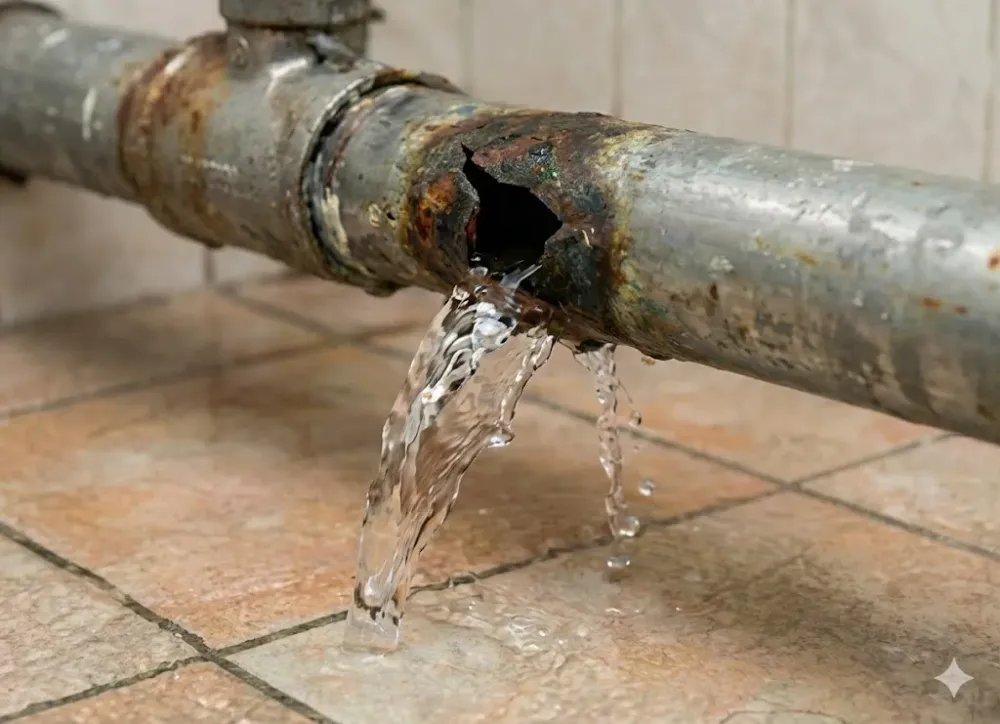
- 30 年以上老屋埋牆"鍍鋅鐵管"生鏽結瘤: In construction projects from the 70s-80s, hot water pipes often used galvanized steel pipes (iron pipes). When iron pipes contact high-temperature hot water, the galvanized layer peels off, and iron oxidation expands several times to form hard-as-stone "鐵瘤 (Rust Tubercles)", or even completely block the cross-section of the water pipe with rust.
- 熱水器內部銅水箱 (熱交換器) 水垢結石: The inner diameter of the heating copper pipes inside the water heater is extremely thin (usually only 9–11mm), and during high-temperature boiling, limescale directly sinters on the inner walls of the copper pipes, forming a thermal and flow resistance layer several millimeters thick.
- 熱水出水金屬編織軟管內部橡膠內膽吸熱軟化塌陷: Inferior rubber braided hoses, under years of hot water baking, have their inner rubber layers expand, decompose, and blister, causing the rubber bubbles to expand under water pressure and block the pipe opening.
3. 4-Step Segmented Troubleshooting Method: Quickly Locate Whether It Is the Angle Valve, Water Heater, or Concealed In-Wall Pipe
- 第一步: 拆卸熱水器下方"冷水進水軟管"測出水量: Close the cold water angle valve, disassemble the cold water corrugated pipe connected to the water heater, take a bucket aimed at the angle valve, and open it completely. If 噴出的冷水量非常澎湃強勁 at this time, it proves that "前端冷水給水完全正常" and the bottleneck is in the water heater itself or the subsequent pipeline.
- 第二步: 拆卸熱水器下方"熱水出水口軟管"測機體阻力: Reconnect the cold water pipe to the water heater, disassemble the hot water metal pipe on the left side of the water heater, place a bucket below, and turn on the water. If the water flow sprayed from the water heater outlet 依然強勁大水, it means "熱水器內部水箱暢通", and the blockage point is 100% in 牆壁內的熱水暗管或浴室水龍頭!
- 第三步: 若熱水出水口流出的水極其微弱: If the inlet water is large, but the water flowing out of the water heater is extremely small, it means 熱水器內部加熱水管嚴重結垢結石, and it is necessary to perform a dedicated citric acid circulation cleaning for the water heater or replace the water tank.
- 第四步: 拆卸浴室單槍龍頭熱水端進水孔: If the water heater outlet water is large, but the bathroom faucet hot water is small, remove the bathroom faucet body, and check the water-stop check filter inside the "青蛙腳偏心彎頭" behind the faucet, which is often jammed with white limescale particles.
4. 5 Steps for DIY Removal of Angle Valve, Limescale Removal, and Pipeline Upgrade
- 全關總閥並排空殘留水壓: Close the main tap water valve on the top floor and open the hot water faucet to vent residual water pressure.
- 拆下舊型鐵編織軟管更換為不銹鋼波紋管: Completely eliminate the old rubber braided hoses under the water heater, and switch to "304 不鏽鋼高流量波紋管 (內徑可達 12mm 以上)". Stainless steel corrugated pipes are all-metal with no inner tube, resistant to 150°C, and will never soften or shrink in diameter.
- 旋出三角凡而內部一字調節閥芯除垢: Use a flathead screwdriver to completely unscrew the slot bolt of the wall angle valve counterclockwise. At this time, large chunks of yellow-white calcium carbonate hard blocks can often be dug out. Insert a thin iron wire deep into the angle valve to confirm that the inner hole is unblocked.
- 熱水器進水口濾網白醋浸泡刷洗: Pull out the small round metal filter at the water heater inlet joint, soak it in edible white vinegar for 15 minutes, scrub off the rust and green slime with an old toothbrush, and reinstall it.
- 檸檬酸熱水管路低壓循環清洗 (若牆內暗管結垢): If it is copper pipe limescale embedded in the wall, professional plumbers can use a food-grade citric acid cleaning machine to perform safe low-pressure pulse cleaning of the pipeline in forward and reverse directions at 0.5 kg/cm², dissolving and peeling off the calcium carbonate limescale on the pipe wall, and the water output can immediately recover by 80%–95%.
5. Comparison Table of Anti-Scale, Temperature-Resistant Performance and Construction Costs for Hot Water Supply Pipes
| 管材種類 | 耐溫與耐水壓 | 結垢與生鏽風險 | 預期使用年限 | 每米施工成本 (TWD) |
|---|---|---|---|---|
| 304 不鏽鋼雙卡壓管 (推薦主流) | 耐溫 120°C, 耐壓 20 kg/cm² | 極光滑不生鏽, 極難結垢, 水阻極小 | 30 年以上 | $800 - $1,200/米 |
| 熱熔耐熱 PPR 管 (橘色/綠色) | 耐溫 95°C, 耐壓 16 kg/cm² | 完全不生鏽, 內壁光滑抗水垢 | 25 - 30 年 | $600 - $900/米 |
| 早期鍍鋅鋼管 (鐵管, 高風險) | 高機械強度, 但極易氧化 | 必生鐵瘤結石塞死, 嚴重黃水鐵鏽 | 10 - 15 年 (應淘汰) | 已全面停用禁用 |
6. Official Inspection Standards and Building Water Supply Pipeline Regulations
Residential hot water supply pipe materials should comply with the Bureau of Standards, Metrology and Inspection (BSMI) CNS 13392 《一般配管用不銹鋼鋼管》 and CNS 14594 《配管用雙卡壓式不銹鋼管件》 specifications. For water pressure and water output standards of residential building water supply equipment, please refer to the National Land Management Agency 《建築技術規則建築設備編》第 27 條規定.
Further reading references: 瓦斯熱水器點火狂響喀喀喀點不著?微動開關老化與感應針積碳清理指南, and 台北老屋水管清洗有用嗎?洗出黑黃水迷思, 爆管風險與水電行行情.
7. Frequently Asked Questions FAQ
Q1: Can strong alkaline or strong acidic chemicals used for unclogging toilets or pipes be poured into hot water pipes to clear limescale?
Strictly forbidden! The main components of pipe unclogging agents are sodium hydroxide or high-concentration sulfuric acid, which have extremely strong metal corrosiveness and violent exothermic reactions. Pouring them into hot water pipes will instantly corrode and puncture the water heater copper pipes, and completely melt the sealing rubber rings of the concealed pipe joints, triggering a major indoor water disaster. Cleaning water supply pipes can only use food-grade mild weak acid "食品級檸檬酸".
Q2: The iron tubercles in the hot water pipes of old houses are too serious. Will a pipe cleaning machine break the concealed pipes?
This indeed carries a risk! If the concealed pipes of an old house are galvanized iron pipes older than 30 years, the pipe wall of some corner bends has been corroded by rust to leave only a thin layer of iron skin. Plumbers must perform a "靜態水壓測漏" before cleaning. If the iron pipe is already severely corroded, forced high-pressure pulse cleaning may indeed cause leakage. The most fundamental and permanent solution is to abandon the old concealed pipes and directly reconfigure exposed 304 stainless steel insulated aesthetic pipes.
Q3: Why does changing to a booster showerhead make the water heater more prone to fluctuating hot and cold or extinguishing?
This is a typical "高流阻憋死熱水器"! The principle of the so-called booster showerhead is to shrink the water outlet hole to the extreme to spray out a fine high-pressure water column, which will generate huge "背壓 (Back Pressure)" on the hot water pipe, causing the actual water flow passing through the gas water heater to plummet below the startup threshold, causing the water heater to frequently extinguish. One should instead use a normal-aperture low-resistance showerhead combined with a front-end booster pump as the proper way.
Q4: Can the angle valve under the water heater be replaced with a regular faucet ball valve?
Completely yes! Plumbers even recommend upgrading and replacing the narrow angle valve under the water heater with "大流量全開式黃銅球閥 (Ball Valve, 俗稱大流量考克)". Inside the ball valve is a whole straight-through stainless steel ball core. When fully open, the pipe diameter has zero reduction and extremely low flow resistance, making it hard to accumulate limescale and significantly improving the water inlet flow of the water heater.
Related reading: Fixing Under-Sink Water Dispenser Faucet Leaks


