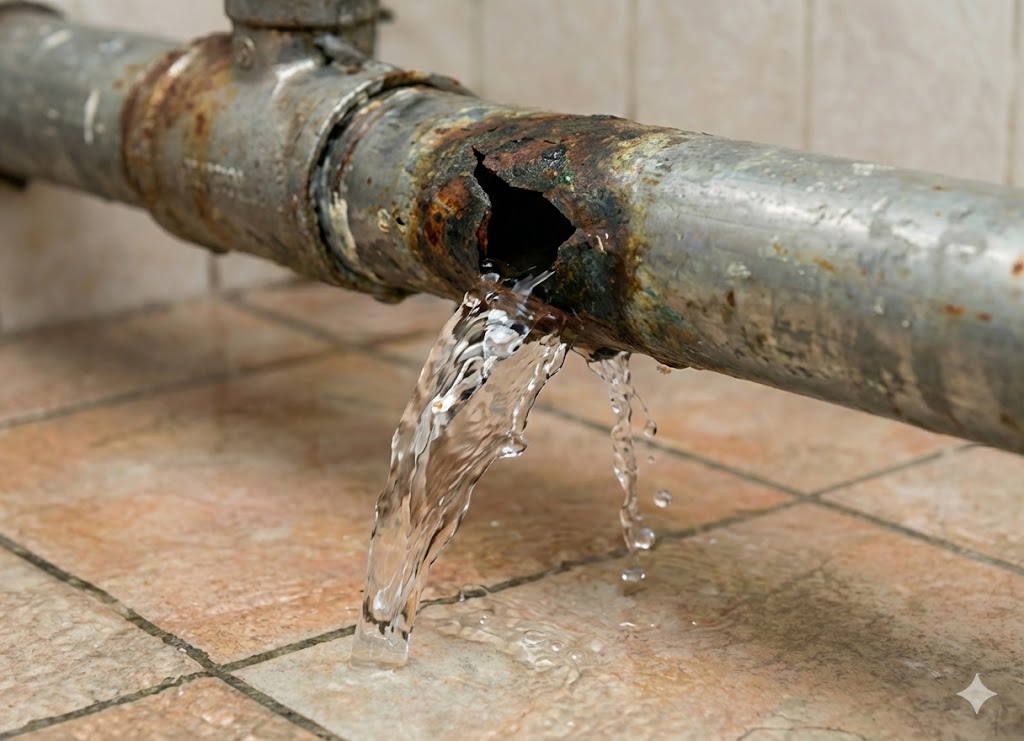
Short answer: when you add an automatic watering timer to a balcony faucet before going away, the two most common accidents are "on a top floor, water pressure is too low for the solenoid valve to close, so it keeps dripping" and "wrapping thread seal tape around a plastic union fitting cracks the threads, bursts the line and floods the home." The three-step on-site self-check: first, confirm the water pressure on your floor (top-floor homes with pressure below 0.5 kgf/cm² must choose a motorized ball valve timer); second, when the faucet's male thread is screwed into the timer's inlet union, the black rubber washer inside must sit flat and in place, and hand-tightening is enough — never force it tight with a pipe wrench; third, with the faucet left open, wipe the joint with tissue and watch for 15 minutes for any slight seepage. Only by matching standard hardware specifications and water pressure can you go abroad and water your plants without leaks. (Source verification date: 2026-11, i.e. November 2026)
Faucet Watering Timer: Choosing, Installing, Fixing Leaks
This article is compiled from publicly available online sources for general reference only; readers should independently verify and judge its accuracy, and it is not legal, tax, medical or engineering advice. Rules, fees and subsidies change; check the latest notice from the responsible authority before acting. For electrical, gas, structural or health risks, consult a qualified professional.
This is the English edition of a Chinese article, adapted with AI assistance and checked against the original. Where the two differ, the Chinese version and the official sources it cites prevail.
Solenoid Diaphragm vs Motorized Ball Valve Faucet Timers: Different Principles
Garden watering timers sold for faucets fall into two main types by valve drive principle, and choosing the wrong type easily causes faults:
- Pilot-operated solenoid diaphragm type (Solenoid Diaphragm Type): A small coil, when energized, releases a pilot pressure port, and the "pressure difference of the tap water inside the pipe itself" pushes open and presses shut an internal elastic rubber diaphragm. This mechanism is low-cost and switches quickly, but it has a strict physical threshold — the pipe water pressure must reach a minimum (per the product manual, commonly about 0.5 kgf/cm² or above). If a household lives in a top-floor unit on the 5th floor of an apartment building, with the rooftop water tank on the 6th-floor roof, the vertical drop is only 3 meters and the pressure is only about 0.3 kgf/cm², so the solenoid valve cannot close properly, producing the disaster of "time is up and the motor shuts off, yet the faucet keeps trickling."
- DC motor gear ball valve type (Motorized Ball Valve Type): A miniature gear-reduction motor inside rotates a solid metal or Teflon ball 90 degrees to open and close. This mechanism does not depend on line water pressure at all; it is a straight-through valve that "works at zero pressure (Zero-Pressure)." Whether in a low-pressure top-floor home or with an unpressurized, gravity-fed rainwater collection barrel, it opens and closes reliably, and it tolerates sediment and silt far better than a micro-orifice diaphragm.
Standard Plumber/Electrician (水電師傅) Installation: Why Fittings With a Rubber Sealing Washer Should Not Be Wrapped in Thread Seal Tape
Many beginners habitually wrap thick white Teflon thread seal tape around the faucet threads when installing a timer, and end up with more leaks the harder they tighten, even splitting the timer's plastic inlet nut. The core principle of plumbing and electrical work is: "Flat rubber-washer sealing surfaces must never be wrapped with thread seal tape."
The inlet female-thread fitting at the top of a faucet timer always contains a flat-bottomed "black EPDM rubber sealing washer" that includes a stainless steel strainer. Its leak-proof mechanism works when the plastic nut is tightened upward and the flat end face of the metal faucet presses directly on the rubber washer, creating an elastic seal. If too much tape is wrapped on the threads, the thread grooves are filled and the nut jams before reaching the bottom; the metal end face can never touch and compress the rubber washer, and high-pressure water sprays out through the gap. The correct procedure is to keep the faucet threads clean, make sure the washer sits flat on the base, hand-tighten until you feel resistance, then turn a further quarter turn. Only pipe-thread fittings with no rubber washer, which seal by the threads themselves, need thread seal tape (usually about 5 to 10 wraps, adjusted to thread coarseness).
Working Pressure and Structure Comparison of Three Automatic Watering Timer Types
Before buying a watering timer, compare the working parameters and suitable water pressure conditions below:
| Timer valve structure | Minimum starting pressure | Upper working pressure limit | Sediment and debris tolerance | Suitable floor and water source |
|---|---|---|---|---|
| Pilot-operated solenoid diaphragm type | Per the product manual (commonly ≥ 0.5 kgf/cm²) | As marked on the product | Very low (fine grit jams the pilot port) | Tap water on low-to-middle floors, homes with a booster pump installed |
| Motorized rotary ball valve type | 0 kgf/cm² (works at zero pressure) | As marked on the product | High (full-bore straight-through passage resists clogging) | Top-floor homes without a booster pump, gravity-fed rainwater barrels, ordinary balconies |
| Self-priming mini pump box unit | No faucet connection (self-priming suction) | As marked on the product | Medium (the inlet needs a gravity-sinking bottom strainer) | Balconies with no faucet, indoor rainforest plant cabinets, first choice for burst prevention |
4 Common Watering Timer Faults: Joint Spraying and Dripping That Won't Stop
When using watering equipment, troubleshoot faults in order:
- Water shooting out of the joint gap: Usually the black rubber washer at the inlet is missing, a cross-threaded fitting has deformed one side of the washer, or the flat end face of the faucet is rusted and uneven. Remove it and check that the washer is intact; if necessary, sand the faucet outlet end face flat with waterproof sandpaper.
- No water at all when the scheduled time arrives: Check the batteries. Timers mostly use two AA alkaline batteries; if the charge is below the critical level, the LCD may still look normal, yet there is not enough power to drive the solenoid coil or turn the motor. Also remove the inlet strainer and check whether it is blocked by rust and silt from the tap water.
- Still dripping after the off time has passed: For solenoid types, usually the pressure is too low to close tightly, or moss or debris in the pipe is stuck on the valve's rubber seat. The internal diaphragm must be disassembled and cleaned, or replaced with a ball valve timer.
- Piping coming loose and bursting in the middle of the night: Watering capillary tubing (4/7mm tubing) softens in daytime sunlight and is easily blown off when the tap water network pressure rises late at night. All main lines and micro-spray fittings must have locking fittings or metal pipe clamps.
Low Rooftop Water Tank Pressure and Burst-Proof Setup for High-Pressure High-Rise Buildings
Water pressure that is too high or too low is fatal for automatic watering equipment. If you live on a top floor with no booster pump on the balcony, the weak flow cannot drive sprinkler heads, so the irrigation piping should be changed to "pressure-compensating drip stakes" or use large-bore drip hose, supplying water drop by drop at low pressure. Conversely, on the lower floors (floors 1 to 5) of a 30-story building, the static pressure in the pipe network may be high. With the faucet left open, high pressure keeps the timer's plastic housing under extreme stress for long periods; once the solenoid valve suddenly closes and causes a "water hammer effect," the joint between faucet and timer can easily burst.
In very high pressure environments, plumbers/electricians recommend installing a metal miniature pressure reducing valve at the faucet outlet (lowering the pressure to within the range the product allows), paired with a metal braided hose of adequate pressure rating; never leave a plastic quick connector open and unattended. Homeowners can use the water leak cost calculator to estimate the cost of a leaking joint, see the booster pump constant-running troubleshooting guide if the pump makes abnormal noise, and for an emergency pipe burst follow the Taipei and New Taipei emergency plumbing and electrical on-site service immediately.
Frequently Asked Questions
My faucet is a traditional plain-mouth faucet with no threads. Is it safe to connect a timer with a universal adapter tightened by a metal clamp?
Extremely dangerous. A rubber universal adapter is held on the smooth copper pipe surface by a single metal clamp only. When the timer is closed, the section from faucet to timer is under full pressure; after sun exposure the rubber ages and loosens, and the whole fitting can easily blow off when pressure rises in the middle of the night, spraying tap water and flooding the home. You must replace the faucet with a standard 4-fen male-thread faucet before installing the timer.
Can a watering timer use rechargeable batteries (such as 1.2V NiMH batteries)?
Not recommended. Commercially available watering timers are designed to run on 1.5V alkaline batteries (two in series give 3.0V). A fully charged rechargeable cell is only about 1.2V (two give just 2.4V), so the system often misjudges it as low battery and refuses to operate, or even shuts down for lack of voltage while the valve is open and watering, leaving the valve stuck open and water running continuously.
If I am abroad for two weeks with the faucet left on and the timer connected, how do I prevent damage if the timer bursts and leaks?
There are three best lines of self-defense: first, keep the balcony floor drain clear of fallen leaves so that any leak drains away immediately and does not flow over the living room threshold; second, install a metal "burst-proof automatic water stop valve (automatic shut-off valve for a detached hose)" at the front of the timer, so that if the downstream hose bursts and flow surges, the internal valve core pops up instantly, closes and cuts off the water; third, if conditions allow, switch to a "standalone water barrel with a low-pressure pump," so even if the whole system fails, only the limited water in the barrel is pumped out, completely eliminating the risk of unlimited flooding.
Sources
- Wikipedia: Water hammer: Water hammer is the sudden pressure surge produced when flowing liquid is abruptly stopped, commonly seen when valves close quickly.
- Wikipedia: Thread seal tape: Thread seal tape should be wrapped in the same direction as the tightening direction, and wrapping too much prevents the threads from engaging fully.
- Wikipedia: Solenoid valve: Pilot-operated (diaphragm) solenoid valves need a sufficient pressure difference between inlet and outlet to operate normally.
Related reading: Balcony Faucet Splitter: Washing Machine and Garden Hose