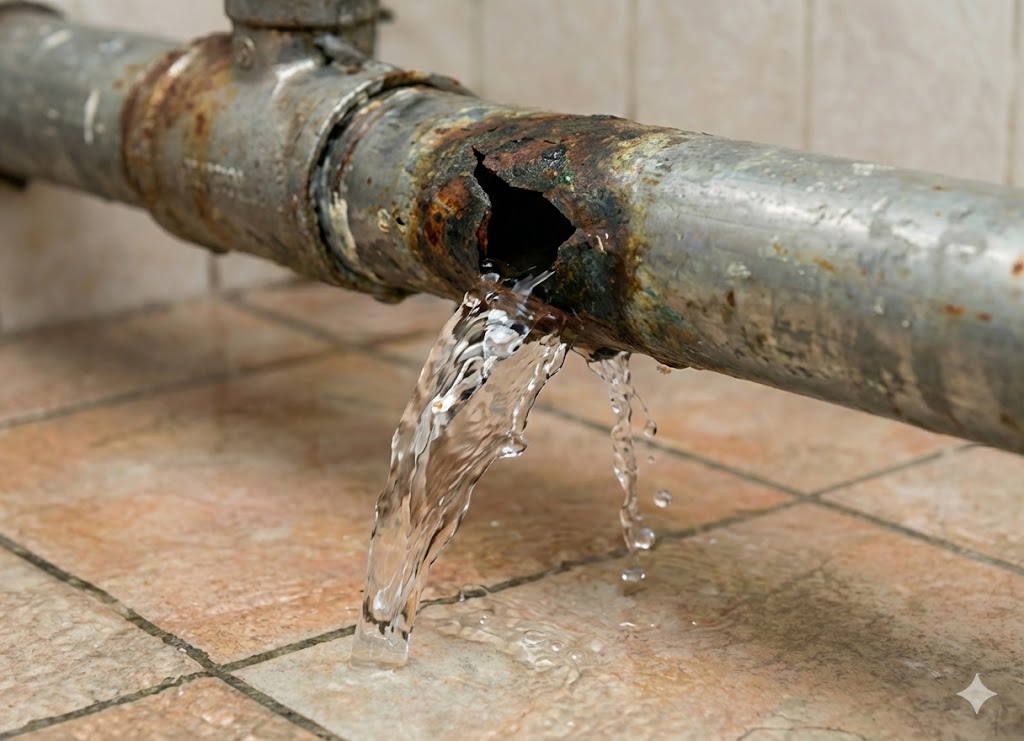
In Taipei and New Taipei (雙北), When a faucet twists off inside the wall, shut off the main water valve first. A broken thread left in the wall can usually be backed out with a broken-thread extractor tool, so the wall does not need to be opened. But if the in-wall elbow has cracked or its threads are stripped, the wall must be partly opened and the elbow replaced. A common scenario is a homeowner replacing a faucet alone: the old faucet is seized, snaps at the thread under force, and leaves a piece of thread inside the elbow in the wall. This article covers shutting off the water, working out where it broke, extraction methods and when the wall has to be opened. For ordinary dripping and replacement steps, see how to fix a leaky faucet.
Looking for the Chinese version of this article?切換至繁體中文版 →
Faucet Broken Off in the Wall: Shutoff and Repair Options
This article is compiled from publicly available online sources for general reference only; readers should independently verify and judge its accuracy, and it is not legal, tax, medical or engineering advice. Rules, fees and subsidies change; check the latest notice from the responsible authority before acting. For electrical, gas, structural or health risks, consult a qualified professional.
This is the English edition of a Chinese article, adapted with AI assistance and checked against the original. Where the two differ, the Chinese version and the official sources it cites prevail.
Step 1: Shut off the water and release the pressure
After the faucet breaks, the pipes in the wall are still under water pressure. Shut off the water before doing anything else, which also keeps water from running into the wall and floor.
- Close the nearest shutoff valve. If you are not sure where it is, close the main water valve.
- Open another faucet or a bathroom shower head so the remaining water and pressure drain out of the pipes.
- If the broken one is a hot water faucet, also close the water inlet to the water heater so it does not run without water.
- Catch the outlet with a towel or a bucket, and photograph the position of the break to help with the assessment later.
- Once the pressure is released, confirm the break is no longer dripping, then start assessing how to remove it.
Where the main valve and water meter are
In a detached house or a townhouse, a shutoff valve is usually installed near the water meter, often on the outside wall by the door, at the ground-floor entrance or inside the meter box. In apartments and high-rise buildings, the meters for each unit are often grouped in a utility shaft or stairwell. Operate the meter that belongs to your own address and do not shut off another household by mistake. The exact location differs between buildings; if you are unsure, ask the management committee or contact the customer service of your water utility.
Whole-home shutoff when there is no separate valve
If the broken faucet has no separate angle valve of its own (see how to choose a faucet angle valve size), the only option is to close the main water valve and temporarily cut water to the whole home. Prepare drinking water in advance, let the family know how long the water will be off, and avoid running the washing machine and water heater at the same time. If the main valve is also rusted and will not close, do not force it. Ask a plumber or the water utility to come instead.
Where did it break: faucet body, eccentric connector or in-wall elbow
The handling differs a great deal depending on the break point. First check whether the break is in the faucet body, in the eccentric connector, or deeper in the in-wall elbow.
| Break point | Can the wall stay closed? | How to handle it |
|---|---|---|
| Faucet body broken, eccentric connector still on the wall | Yes | Unscrew the eccentric connector, check the thread, then fit a new faucet |
| Thread of the eccentric connector broken inside the in-wall elbow | In most cases yes | Back it out with a broken-thread extractor tool, then clean the thread |
| Broken thread is stuck, elbow thread still intact | In most cases yes | Shut off the water first, back it out slowly, and call a plumber if needed |
| In-wall elbow cracked or deformed | No | Open the wall locally and replace the elbow |
| Internal thread of the elbow stripped, new connector will not tighten | Usually not | Replace the elbow, or consider other repair options |
How broken-thread extraction works and its risks
How the extractor tool works
A broken-thread extractor grips the inside wall of the broken thread and turns it out in the opposite direction (the unscrewing direction), with no need to hammer from the outside. Line the tool up with the center of the pipe and apply force slowly so that the tool only takes rotational force. Too much force at once can crack the broken thread further or pass the force into the pipes in the wall.
Why prying hard damages the thread inside the wall
Prying with a screwdriver or pliers concentrates the force on the edge of the thread, which can easily scratch or deform the internal thread of the elbow. A broken thread that could have been removed then turns into a case that needs the wall opened and the elbow replaced. The pipes in the wall may also be twisted loose, and water may only show up on the wall surface later.
Copper, stainless steel and plastic fittings
- Copper fittings: The material is softer and the thread is easily damaged by the tool, so control the force.
- Stainless steel fittings: The material is harder, so a broken thread is hard to grip, and when it is rusted or seized, backing it out takes more effort.
- Plastic fittings: They crack under stress and must not be twisted hard. It is usually best to let a plumber assess them.
The fitting material in the wall differs from home to home and cannot be fully judged from the outside.
Three situations that call for opening the wall
The in-wall elbow is cracked
If, after the broken thread is removed, the elbow body is found to have a crack, or the fitting came loose when it twisted off, it should not be used any more. The wall has to be opened locally and the elbow replaced.
The internal thread is stripped
When the internal thread is scratched or deformed, a new connector screwed in will sit crooked, and it may keep dripping even with thread seal tape. In this case the elbow usually has to be replaced.
Signs of water seeping inside the wall
- The wall near the faucet changes color, blisters or the paint peels.
- The water meter dial is still moving after all water use is turned off.
- The wall feels damper than other areas, or smells of mildew.
- Water stains appear on the neighboring wall or on the ceiling downstairs.
If you see these signs, shut off the water and ask a plumber to inspect, so the problem is not left to get worse. You can use the water leak cost calculator to estimate the water bill lost to a continuing leak.
After the repair: leak test and observation
- After fitting the new faucet, open the shutoff valve slowly instead of opening it fully at once.
- Check the joint for seepage by pressing a dry paper towel against the thread and looking for damp marks.
- Operate the faucet on and off several times, then look at the joint again.
- Turn off all water-using equipment and check that the water meter dial has stopped.
- Look at the wall and floor once more the next day and confirm there are no new damp marks.
Avoiding it next time you replace a faucet: thread seal tape, force direction and seized parts
When replacing a faucet, following the manufacturer's installation instructions is the safest approach, because they state how the connection is tightened and how leaks are sealed.
- Thread seal tape: Wrap it in the direction of the thread, wrap it before screwing in, and do not make it too thick, or it can split the internal thread.
- Force direction: Hold the in-wall connector or elbow with a wrench, then turn the faucet, so that torque is not passed into the wall.
- When it is seized: Do not keep adding force. Spray rust-removing lubricant and let it sit, then try turning with light force, and stop if it still will not turn.
- Shut off the water first: Before removing anything, confirm the water is stopped and the water left in the pipes has been drained.
| Item | What the homeowner can do | When to call a plumber |
|---|---|---|
| Shutting off water and releasing pressure | Close the main valve and drain the remaining water | When the main valve is rusted shut or cannot be found |
| Faucet body broken | Unscrew the eccentric connector and fit a new faucet | When the connector is seized and will not turn |
| Broken thread stuck in the wall | Forcing it out yourself is not recommended | When a broken-thread extractor tool is needed |
| Elbow cracked or stripped | Handling it yourself is not recommended | When the wall needs to be opened to replace it |
| Water seeping through the wall | Shut off the water and take photos first | Leak tracing, repair and wall restoration |
Frequently asked questions
Can I remove a faucet that broke off in the wall myself?
If a short piece of thread is exposed and the thread is intact, a homeowner with the tools and experience can try. But when the broken thread is deep, or the material is stainless steel or plastic, forcing it out easily damages the thread, so a plumber is recommended.
The faucet broke and is spraying water and I cannot find the valve. What do I do?
Use a towel and a bucket to limit the leak, and try closing the shutoff valve or the main valve near the water meter. If you cannot find it or it will not close, contact the management committee or the customer service of your water utility, and call a plumber to come at the same time.
Can extracting the broken thread damage the pipe in the wall?
It can. Too much force or poor alignment can damage the thread or pass torque into the pipes in the wall, so go slowly and line the tool up with the center of the pipe. After removal, run a leak test again to confirm there is no seepage.
What does the cost of repairing a broken faucet thread include?
Common items include the home inspection fee, the labor for extracting the broken thread, and materials such as a new faucet or connector. If the wall needs to be opened, there are also items for breaking it open, replacing the elbow, and patching and restoring the wall. The actual amount depends on the site; see how to read plumbing and electrical repair costs and how inspection fees, labor and materials are itemized, and check a quote with the quotation generator tool. SOSfix provides home inspections, and work starts only after you agree to the on-site quote.
Sources
- Taiwan Water Corporation (台灣自來水公司): customer shutoff valves, water meter locations and leak handling notes (checked 2026-11-11): confirms where shutoff valves and water meters are and the scope of the customer's responsibility for their own equipment
- Taipei Water Department (臺北自來水事業處): FAQ on customer water use and leak handling (checked 2026-11-11): explains water-use equipment and leak handling in the Taipei area
- Laws and Regulations Database of the Republic of China (全國法規資料庫): Standards for Customer Water Use Equipment (自來水用戶用水設備標準) (checked 2026-11-11): rules on customer water-use equipment and pipe materials