The legal boundary for natural gas pipeline maintenance and cost allocation is the gas meter: the piping before the meter and the vertical common riser belong to the "external piping (common areas)," with maintenance costs covered by the utility or the building's public fund. Piping from the meter to indoor appliances is "internal piping (private property)," maintained at the owner's expense. Clarifying these responsibilities prevents disputes over corrosion or safety inspections.
Looking for the Chinese version of this article?切換至繁體中文版 →
Natural Gas Pipeline Safety and Repair Cost Allocation
This article is compiled from publicly available online sources for general reference only; readers should independently verify and judge its accuracy, and it is not legal, tax, medical or engineering advice. Rules, fees and subsidies change; check the latest notice from the responsible authority before acting. For electrical, gas, structural or health risks, consult a qualified professional.
This is the English edition of a Chinese article, adapted with AI assistance and checked against the original. Where the two differ, the Chinese version and the official sources it cites prevail.
Gas Safety Regulation Warning:
Under Article 48 of the Natural Gas Enterprise Act, utilities must provide free periodic safety checks for internal piping. Users who refuse inspection despite severe leakage risks face fines of 10,000 to 50,000 TWD, and the utility may suspend service with approval. Do not refuse inspections due to sales concerns; verify the inspector's credentials with the 管理委員會.
I. Legal Boundaries and Maintenance Obligations for Gas Piping
According to the Ministry of Economic Affairs standards, ownership and maintenance boundaries are strictly defined:
- External Piping (Shared by Utility and Community): From the street supply line to the building exterior, basement valves, and vertical risers, ending at the gas meter inlet. This is owned by the utility or the community; corrosion or leaks are handled by the utility or the 管理委員會 using public funds.
- Internal Piping (Individual User Property): From the gas meter outlet through balconies and kitchens to appliances. This is private property; owners must maintain its airtight integrity at their own expense.
- Gas Meter: The meter is public property of the utility; the monthly "base fee" covers rental and depreciation. Per the Weights and Measures Act, the meter's certified lifespan is 10 years, after which the utility must replace it for free.
II. Free Periodic Safety Inspections and Identifying Scams
Every 1 to 2 years, legitimate gas companies (e.g., Taipei, Shin-Shin, Shin-Hu, Shin-Tao) conduct inspections. Residents should beware of private companies forcing high-priced sales:
| Inspection Item | Legitimate Utility Inspection | Private Scam Operator |
|---|---|---|
| Notification Method | Listed on gas bill; notice posted by security 7 days prior | Flyers in mailboxes labeled "Gas Safety Inspection" |
| Payment Method | No cash on-site; fees added to the next gas bill | Demands thousands in cash on-site; refuses billing |
| Inspector Identification | Official ID provided with utility verification phone number | ID shows "XX Gas Engineering Service," not a utility |
| Equipment Replacement | Issues notice for repairs by qualified technicians | Claims dangerous leaks to force purchase of valves |
III. Repair Procedures for Corroded Common Gas Risers
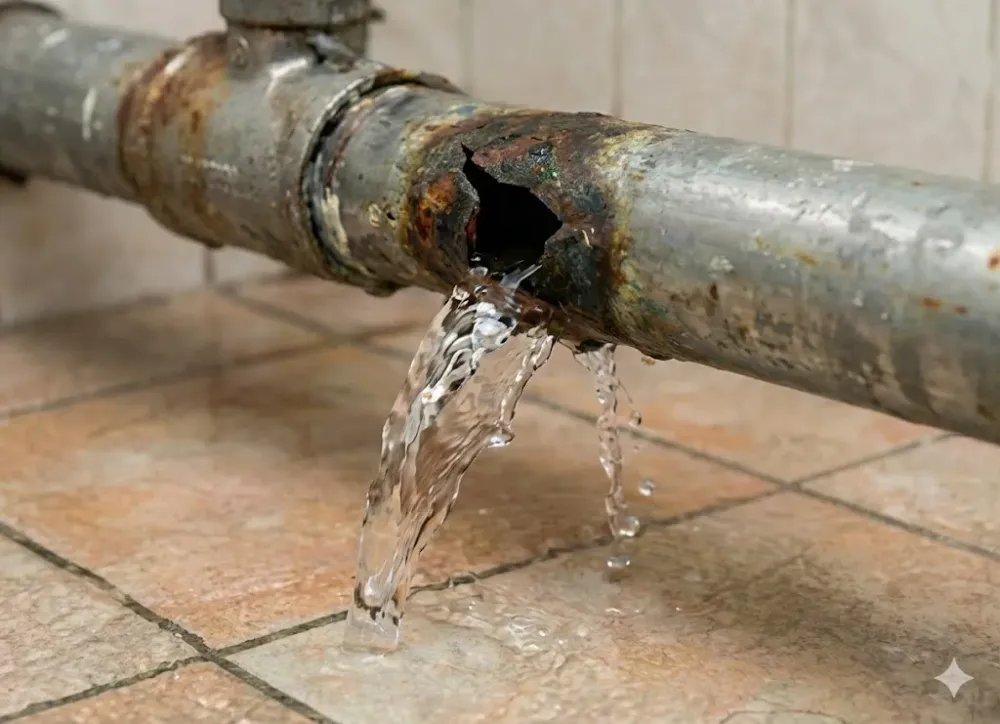
For buildings over 30 years old, galvanized steel pipes in ducts often corrode. The repair process is:
- Airtight Pressure Test: The utility uses a U-tube manometer; if pressure drops within 10 minutes, the riser is leaking, and the 管理委員會 must shut off the valve.
- Rerouting Assessment: Due to old ducts, modern methods often use "exposed exterior piping" with seamless galvanized steel or PE-coated metal pipes meeting CNS standards.
- Owners Meeting: Replacing common risers is a major repair under Article 10, Paragraph 2 of the Condominium Administration Act. Costs are paid from public funds or shared by owners per deed ratios.
- Branch Connection: The utility covers the connection from the riser to the meter; owners decide whether to replace old internal piping at their own cost.
IV. Risks and Regulations Regarding Unauthorized Modifications
Unauthorized modifications by unqualified 水電行 carry high risks:
- No Concealed Piping in Concrete: Per Article 77 of the Building Technical Regulations, pipes passing through structures must have protective sleeves. Direct burial in RC structures or floor screed is prohibited to prevent gas accumulation during seismic events.
- No Piping Through Bedrooms or Sealed Ceilings: Gas lines must not pass through bedrooms or unventilated storage. If passing through wooden ceilings, they must be seamless, corrosion-resistant metal hoses or ventilated sleeves.
- Must Use Certified Technicians: Internal piping must be installed by technicians with gas piping certification. Unlicensed work causing leaks or fires involves criminal liability for public endangerment.
V. Community Gas Pipeline Maintenance FAQ
Q1: Can I hire a local plumber if the utility says my internal piping is leaking?
Yes. If the utility issues a "Safety Inspection Failure Notice," you may hire the utility's engineering department or a licensed gas piping technician. After repairs, contact the utility for a free airtight re-inspection.
Q2: Does the whole building need to agree to install natural gas?
Not unanimous consent, but majority approval is required for common area usage under the Civil Code (Article 820) and Ministry of the Interior guidelines. Future users of the new riser must pay a share of the costs to the original investors.
Q3: Should I replace my gas meter with a microcomputer meter?
Highly recommended. These meters detect earthquakes (level 5+), pipe ruptures, or prolonged leaks, automatically shutting off the valve to prevent fires. It adds only a small amount to the monthly base fee.
Q4: What should we do if we smell gas in the building?
Follow the four rules: "No fire, no electricity, ventilate, evacuate." Do not touch light switches, fans, or plugs. Open windows gently, go outside to close the main gas valve, and call 119 or the utility's emergency line (820) immediately.
Related reading: Piped Natural Gas vs LPG Cylinders for Old Walk-Ups · Gas Utility Safety Checks: Real Inspections vs Scams · Townhouse Natural Gas Application: Process, Fees, Safety