The three primary clothes dryer types differ by heating mechanism: electric resistance dryers use heating elements to heat air, with Bureau of Standards, Metrology and Inspection (BSMI, 標準檢驗局) guides noting typical power draw of 1 to 2 kW requiring dedicated circuits; heat pump dryers use closed-loop refrigeration cycles to heat air and condense moisture, with US ENERGY STAR stating they use roughly 70% less energy than standard dryers without needing exhaust ducts; gas dryers burn natural gas or LPG, with Hong Kong Electrical and Mechanical Services Department (EMSD) guides noting exhaust must vent directly outdoors (no specific domestic Taiwan regulation was found). Taiwan currently has no mandatory energy efficiency rating labels for clothes dryers; only voluntary Energy Labels exist with an Energy Factor (EF) threshold exceeding 1.71 kg/kWh. When comparing electricity consumption, examine the catalog EF rating: higher numbers deliver greater energy efficiency.
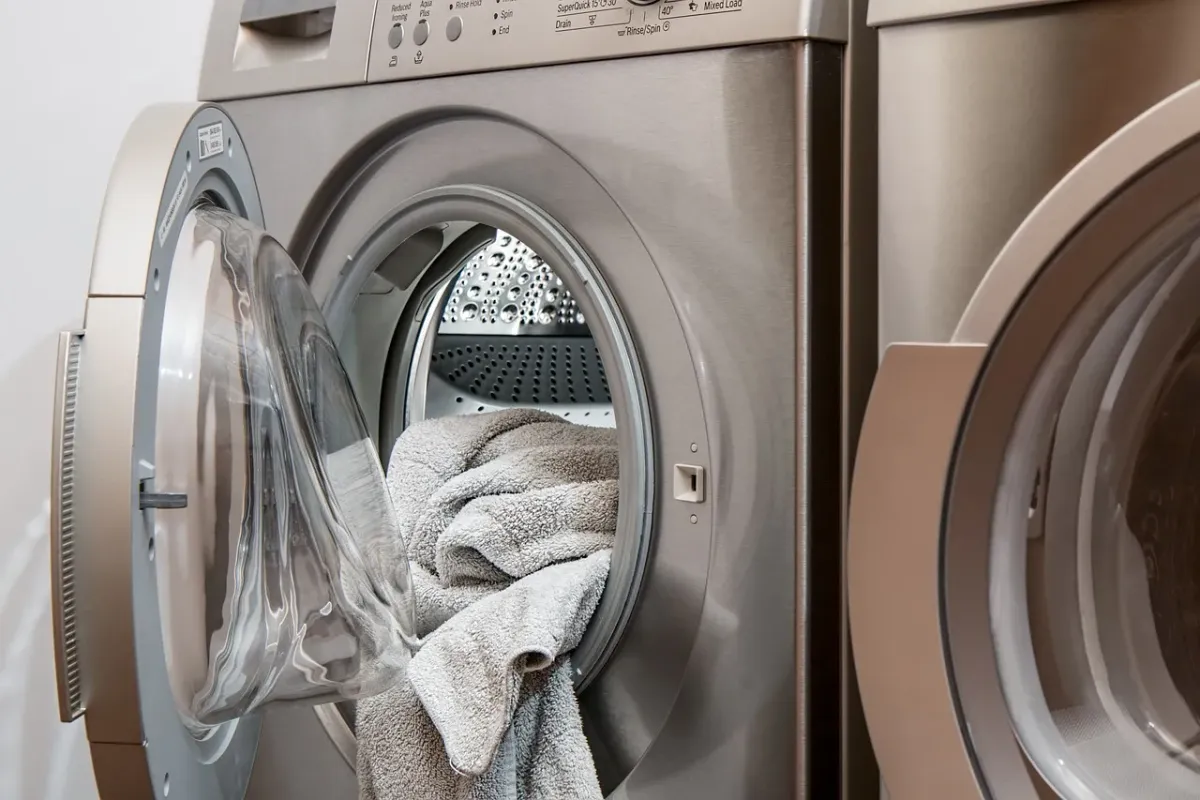
Clothes Dryer Comparison: Heat Pump vs Electric vs Gas
This article is compiled from publicly available online sources for general reference only; readers should independently verify and judge its accuracy, and it is not legal, tax, medical or engineering advice. Rules, fees and subsidies change; check the latest notice from the responsible authority before acting. For electrical, gas, structural or health risks, consult a qualified professional.
This is the English edition of a Chinese article, adapted with AI assistance and checked against the original. Where the two differ, the Chinese version and the official sources it cites prevail.
Safety Warning: Lint management is the top priority for dryer fire prevention: the U.S. Fire Administration warns that failing to clean lint filters and exhaust ducts significantly raises dryer fire risks. BSMI also cautions that lint filters must be cleaned after every drying cycle, and garments contaminated with volatile oils, kerosene, solvents, alcohol, or gasoline must never be tumble dried due to combustion risks.
Comparing Heat Pump, Electric Resistance, and Gas Dryers
| Dryer Type | Heating and Moisture Removal Mechanism | Energy Consumption Characteristics | Installation Conditions and Ventilation |
|---|---|---|---|
| Electric Resistance (Vented) | Electric coils heat intake air; hot moisture exhausts directly (BSMI guide structure) | Power draw approx. 1 to 2 kW (BSMI guide) | Requires dedicated outlet; BSMI notes non-condensing dryers exhaust moist air and need open windows for ventilation |
| Heat Pump Dryer | Closed-loop heat pump cycle warms air and extracts moisture without outdoor exhaust (US ENERGY STAR) | Uses approx. 70% less energy than conventional dryers (ENERGY STAR claim) | No exhaust duct needed; condensed water collects in tank or drain hose (guide notes) |
| Gas Dryer | Combusts natural gas or LPG to heat drying air | Consumes minimal electricity but incurs gas fuel costs (guide notes) | Hong Kong EMSD: install per manufacturer specs, exhaust directly outdoors with short ducting, maintain open windows for combustion air |
Note: The 70% heat pump savings is described by US ENERGY STAR, and gas installation guidelines cite Hong Kong EMSD; neither is a statutory Taiwanese benchmark. Official Taiwanese comparative energy data between heat pump and electric dryers was not identified.
Understanding Energy Consumption: Energy Label EF and Electricity Costs
The Energy Administration, Ministry of Economic Affairs (經濟部能源署) established voluntary Energy Label criteria for clothes dryers (promulgated Republic of China year 102, 11-20, November 20, 2013), rather than mandatory Tier 1 to 5 labels like those for air conditioners. At verification, the mandatory rating catalog does not list clothes dryers. Key Energy Label standards include:
- What is EF: Energy Factor, expressed in kg/kWh, representing kilograms of dry textiles dried per 1 kWh of electricity. Test protocols spin clothes to approx. 60% remaining moisture, drying in a 20°C and 65% relative humidity testing room.
- Threshold: EF must exceed 1.71 kg/kWh to qualify for the voluntary Energy Label.
- Labeling: Catalogs must state EF; nameplates must state internal drum volume.
Formula: kWh per cycle ≈ dry textile weight (kg) ÷ EF, multiplied by local electricity tariffs. Calculating for 5 kg laundry at NT$2.77 per kWh:
| Calculation Scenario | kWh Per Drying Cycle | Cost Per Cycle | Monthly Cost (12 Cycles) |
|---|---|---|---|
| EF 1.71 (Energy Label minimum) | 5 ÷ 1.71 ≈ 2.92 kWh | Approx. NT$8.1 | Approx. NT$97 |
| EF 3.0 (Assumed higher efficiency model) | 5 ÷ 3.0 ≈ 1.67 kWh | Approx. NT$4.6 | Approx. NT$55 |
| Estimated by wattage: 1,500 W for 1.5 hours | 1,500 × 1.5 ÷ 1000 = 2.25 kWh | Approx. NT$6.2 | Approx. NT$75 |
EF figures reflect standardized laboratory conditions; actual laundry load, textile weights, spin drying efficiency, and ambient room temperatures affect actual electricity use. BSMI recommends spinning clothes thoroughly before drying to shorten drying cycles and save electricity. The demonstration tariff of NT$2.77 per kWh derives from an Energy Administration press release dated Republic of China year 114, 09-19 (September 19, 2025), citing the average residential electricity tariff of 2.77 TWD/kWh before committee adjustments. That session adjusted residential rates under 700 kWh upward by NT$0.1 per kWh. In year 115 (2026), the March (month 3) tariff review held rates unchanged, while the September review deferred decisions to December (month 12) 115. Residential rates are tiered progressively; verify unit prices on utility bills. For calculations converting wattage into kWh, see How Many kWh Does an Appliance Consume Per Hour.
Pre-Purchase Installation Requirements Checklist
Synthesized from BSMI guidelines, USFA, and Hong Kong EMSD advisories:
- Electrical Power: BSMI reminds that dryers require dedicated wall outlets, never sharing circuits. Confirm nameplate voltage (110V or 220V) matches target receptacles; hire licensed electricians if new branch circuits are required.
- Exhaust Ducting and Drainage: Vented dryers require outdoor duct paths or openable windows; USFA cautions exhaust pipes must never be damaged, crimped, or blocked, and exterior backdraft dampers must open freely. For heat pump or condenser dryers, verify whether water empties into removable reservoirs or drain hoses.
- Gas Supply: Gas dryers require dedicated gas piping; Hong Kong EMSD specifies outdoor exhaust venting. Contact local utility gas suppliers for gas piping modifications, and install carbon monoxide alarms nearby; see Where to Install Carbon Monoxide Alarms and How Natural Gas Bills Are Calculated.
- Inspection Certification Mark: Dryers are mandatory inspection commodities under BSMI and must bear inspection certification marks alongside manufacturer name, address, model specifications, manuals, and warranties.
- Space Clearances: Measure doorway dimensions, installation footprints, and front door swing clearances; use brand-authorized stacking brackets when mounting over washing machines.
Fire Prevention and Routine Usage Practices
- Clean Lint Screen Every Cycle: BSMI cautions clearing lint screens after every load, as clogging lengthens cycle run times; USFA recommends cleaning before and after every load, never running without filters, and cleaning behind dryers.
- Prohibited Garments: Never tumble dry items soaked in volatile oil, kerosene, solvents, alcohol, or gasoline.
- Empty All Pockets: Matches, credit cards, and coins scratch drums and ignite fires.
- Never Spray Water: Never spray water into housings to prevent shocks.
- Grounding and Child Safety: Secure electrical grounding; keep toddlers away to prevent entrapment and suffocation risks.
- No Heat Sources on Top: Do not place candles or mosquito coils on dryer tops.
- Unloading Timing: Door rims are hot during operation; wait until cool-down cycles finish before removing laundry.
- Unsuitable Fabrics: Woolens and delicate knits shrink and shed excessive fuzz, making them unsuitable for dryers.
For rainy season laundry management, see What to Do When Laundry Won't Dry on Rainy Days.
Frequently Asked Questions
Are heat pump dryers genuinely more energy efficient?
US ENERGY STAR reports heat pump clothes dryers consume roughly 70% less energy than conventional electric dryers. Taiwan has no mandatory efficiency tiering; compare catalog Energy Factor (EF) ratings where higher EF indicates lower power consumption per kg dried.
How much does it cost to dry one load of laundry?
At Energy Label minimum EF 1.71 with a 5 kg load (5 ÷ 1.71 ≈ 2.92 kWh), estimated costs at NT$2.77 per kWh are approx. NT$8.1 per cycle; higher EF models cost less. Actual costs depend on your billing tier.
Must clothes dryers use dedicated electrical outlets?
Yes. BSMI dryer guidelines explicitly mandate dedicated electrical outlets without sharing receptacles with other appliances. Check nameplates for 110V vs 220V voltage requirements.
Can gas clothes dryers be installed indoors or on enclosed balconies?
No specific domestic Taiwan installation statute was identified. Hong Kong EMSD instructions mandate venting exhaust directly outdoors with continuous ventilation. Consult gas utilities before installation and install carbon monoxide detectors.
Last updated: 2026-11-01
Compiled by SOSfix from public technical references for general guidance. Inquiries can be directed to BSMI (0800-007-123), the Energy Administration, or local gas suppliers.
Sources
- BSMI Tainan Branch: Automatic Drum Clothes Dryer Buying and Usage Guide (PDF Created 2015-03-08, Verified 2026-11-01): Mechanics, 1 to 2 kW consumption, mandatory inspection commodity marks, dedicated circuits, room ventilation, thorough pre-spinning, per-cycle lint clearing, solvent fire risks, foreign pocket items, grounding, child safety, heat source bans, cool-down cycles, and woolen cautions.
- BSMI: Amendment Table for 63 Mandatory Inspection Commodities (PDF Created 2017-08-25, Verified 2026-11-01): Single-phase AC clothes dryers under 250V designated as mandatory inspection commodities.
- Energy Administration Energy Label: Clothes Dryer Energy Efficiency Standards and Labeling Criteria (Revised Republic of China Year 102, 11-20, Verified 2026-11-01): Test conditions, 60% moisture ratio, EF threshold exceeding 1.71 kg/kWh, catalog labeling, and Year 91 EF formula.
- Energy Administration Energy Efficiency Rating Management System: Promulgated Commodity Listing (Verified 2026-11-01): Official verification that clothes dryers are not listed under mandatory energy efficiency tiering.
- ENERGY STAR: Clothes Dryers (US, Verified 2026-11-01): Heat pump closed-loop cycle, 70% energy savings benchmark, ductless operation, and auto-sensing shutoff.
- U.S. Fire Administration: Clothes Dryer Fire Safety Flyer (PDF 2018, Verified 2026-11-01): Lint fire risks, professional servicing, pre/post cycle cleaning, rear lint clearing, and exhaust damper checks.
- Hong Kong EMSD: Q10 Safe Use of Domestic Gas Clothes Dryers (PDF 2011, Verified 2026-11-01): Manufacturer technical compliance, direct outdoor exhaust, short ducting, and combustion air supply.
- Energy Administration: Electricity Tariff Committee Adjusts Average Tariffs by 0.71% (Published 2025-09-19, Verified 2026-11-01): Baseline residential average tariff of 2.77 TWD/kWh and 0.1 TWD increase under 700 kWh.
- Energy Administration: Electricity Tariff Review Committee Holds Tariffs Unchanged (Published 2026-03-27, Verified 2026-11-01): Year 115 first review decision holding tariffs steady.
- Energy Administration: Tariff Committee Defers Rate Adjustment Decision (Published 2026-09-18, Verified 2026-11-01): Year 115 second session deferring tariff decisions to December (month 12) 115.
Related reading: Front Load vs Top Load Washing Machine Buying Guide · Dryer Lint Filter and Condenser Maintenance Guide · Damp Laundry in Taiwan: Dehumidifier Room vs Heat Pump Dryer · Heat Pump Dryer and Washer Combo Electrical Drainage Setup