Every time bi-monthly water utility invoices arrive, many consumers glance across dense line items for basic caliber fees, water consumption fees, sewage pipe usage charges, and clearance disposal fees, casually settling payments under several hundred dollars. That changes when an alarming invoice arriving in the thousands of dollars triggers panic: "Our household is empty during weekdays with zero lifestyle changes, so why did this billing cycle jump 5 times (5-fold)?" Behind water bills sits a progressive tiered tariff structure and statutory government surcharges. In over 90% (90%) of sudden billing spikes, the culprit is silent, concealed leakage from a toilet cistern flapper valve or subterranean piping. Understanding bill components and applying the red star indicator diagnostic method protects household budgets.
Taiwan Water Bill Calculation and Leak Detection
This article is compiled from publicly available online sources for general reference only; readers should independently verify and judge its accuracy, and it is not legal, tax, medical or engineering advice. Rules, fees and subsidies change; check the latest notice from the responsible authority before acting. For electrical, gas, structural or health risks, consult a qualified professional.
This is the English edition of a Chinese article, adapted with AI assistance and checked against the original. Where the two differ, the Chinese version and the official sources it cites prevail.
1. Four Core Components of Tap Water Bills: How Invoice Totals Are Calculated
Across Taiwan (served by Taipei Water Department and Taiwan Water Corporation), billing totals represent the sum of four discrete components:
| Water Utility Line Item | Calculation Basis and Benchmark | Taipei, New Taipei, and Taiwan Standard Details |
|---|---|---|
| 1. Water Meter Caliber Base Fee (Fixed Charge) | Fixed monthly fee determined by the intake pipe diameter of the installed water meter (in millimeters, mm) | Standard homes commonly install 20 mm (20mm, 4 fen pipe; 4) meters with base fees around NT$68 bi-monthly; luxury residences or townhouses with 25 mm (25mm, 6 fen pipe; 6) meters pay approximately NT$126 bi-monthly; charged even with zero consumption. |
| 2. Water Consumption Charge (Tiered Progressive Core) | Calculated progressively across volumetric tiers based on meter units read (1 unit = 1 cubic meter = 1,000 liters (1000L) of purified water) | Follows an escalating progressive tiered rate:
|
| 3. Public Sewerage Usage Fee (Statutory Surcharge) | Assessed proportionally per unit of water consumed to amortize municipal sewage treatment plants and underground sewer networks | Mandatory surcharge of NT$5.0 per water unit (5.0)! (Consuming 60 units of water adds NT$300 (300) in sewerage fees, explaining why bills escalate rapidly). |
| 4. Water Source Conservation / Refuse Clearance Fee | Statutory environmental surcharges collected alongside utility billing | Water source conservation is approximately NT$0.5 per unit; in Taipei and New Taipei where dedicated paid garbage bags are mandatory, refuse clearance in this field is completely waived (NT$0; 0), whereas other jurisdictions assess unit fees. |
2. Money Draining Away: 5 Culprits Behind Water Bill Spikes and Diagnostic SOP
If household consumption habits remain unchanged but meter readings surge, conduct systematic diagnostics in this priority order:
- Culprit #1 (Over 85% of cases; 85%): Toilet cistern flapper valve aging and silent seepage:
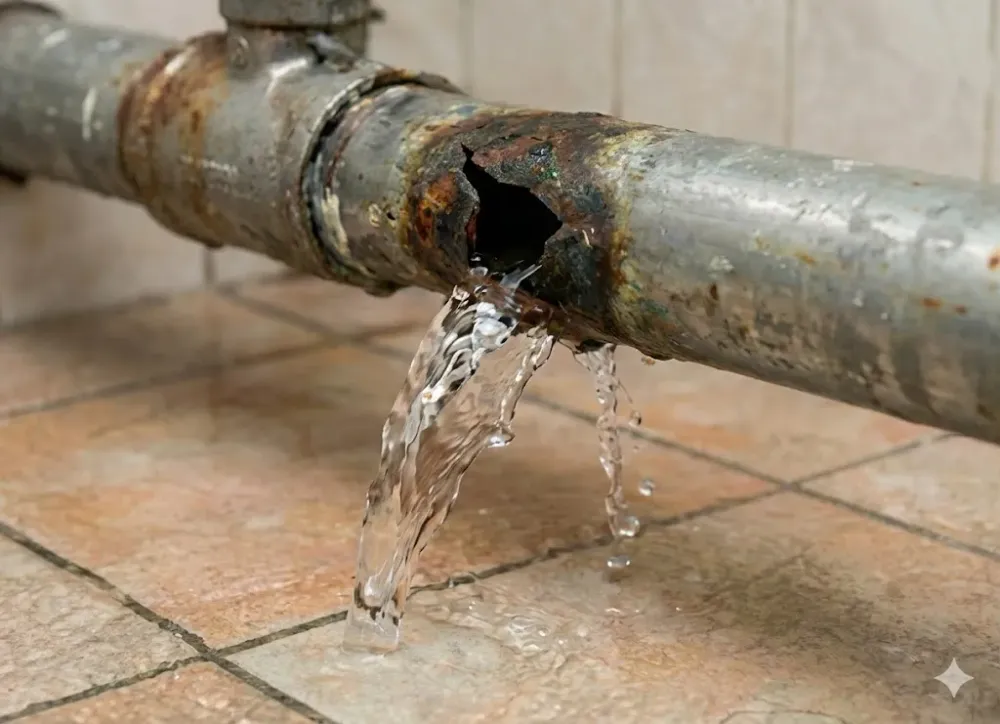
- Extreme concealment: The black rubber flapper seal inside the toilet tank submersed constantly in water hardens, deforms, or coats with limescale after 2 to 3 years (2-3 years), losing its seal. A thin, soundless stream slips continuously down porcelain bowl walls into sewers 24 hours daily without surface puddling.
- Enormous lost volume: A hairline gap as fine as a toothpick silently bleeds 1,000 to 2,000 liters (1,000-2,000 L; 1 to 2 units) daily, wasting 60 to 120 units (60-120) over two months, catapulting the bill into maximum progressive tiers and adding thousands in unneeded charges.
- Culprit #2: Rooftop water tower mechanical float ball valve failure and overflow:
- Mechanical brass or stainless steel float arm valves inside rooftop tanks jam or experience degraded internal rubber gaskets, preventing valves from shutting when tanks reach capacity. Booster pumps keep pumping water, continuously dumping excess supply through rooftop emergency overflow pipes into drains.
- Culprit #3: Rear balcony washing machine supply hoses and garden irrigation valves:
- Rubber compression washers at washing machine faucet bibbs loosen slightly, or high-pressure braided hoses develop pinhole misting sprays.
- Culprit #4: Ruptured concealed hot and cold plumbing inside kitchen or bathroom walls:
- Corroded galvanized iron hot water pipes develop pinhole punctures or seismic tremors loosen joints within concrete walls, leaking water straight into structural slabs.
3. Plumber Method: Zero-Cost Red Star Flow Indicator Water Meter Test
Suspecting water leaks does not require costly detection equipment; invest 3 minutes checking your water meter:
- Step 1 (Shut off all terminal water fixtures across the entire residence):
- Turn off all kitchen taps, shower heads, water heaters, and filtration faucets tightly; verify washing machines are not filling; confirm nobody is flushing toilets.
- Step 2 (Open the dedicated water meter utility box on the ground floor or roof):
- Match the meter serial number stamped in metal on the dial (typically an 8-digit code; 8) to your billing statement. Flip open the transparent protective acrylic cover to examine the face.
- Step 3 (Observe the tiny red star flow indicator needle closely):
- Near the center of the meter dial sits a tiny 1 cm red or black star/triangle flow indicator (梅花形/星芒狀微流動指示針). This mechanism is exceptionally sensitive, rotating under flow as minute as 100 ml per hour.
- Normal condition (zero leaks): With all fixtures closed, the red star indicator must remain completely stationary without movement over 3 continuous minutes.
- Leak alarm (confirmed concealed leak): If all faucets are tightly closed but the red star indicator spins slowly and steadily clockwise, an active concealed leak is guaranteed.
4. Toilet Leak Diagnostic: Food Coloring and Soy Sauce Test
To confirm whether your toilet is leaking, test with a simple kitchen condiment:
- Remove the ceramic toilet tank lid and add 4 to 5 drops (4-5 drops) of dark blue food coloring or 2 drops of dark soy sauce to dye the tank water deeply, making sure not to push the flush handle.
- Allow the water to stand undisturbed for 15 to 20 minutes (15-20 min) before inspecting the lower toilet bowl porcelain.
- Evaluation criteria: If colored dye streaks diffuse into the lower toilet bowl, the flapper valve has failed. Purchasing a universal chlorine-resistant silicone flapper for NT$50 at a hardware store immediately rectifies the leak and cuts bills.
5. Frequently Asked Questions About Water Utility Billing
Q1: Can households apply for water fee remissions if concealed pipe leaks caused bill spikes?
Remissions can definitely be applied for under utility relief policies. Under regulations from Taiwan Water Corporation and Taipei Water Department: if leaks occurred within concealed underground or concrete-encased piping (地下暗管漏水), residents can hire a licensed plumbing contractor to complete repairs, obtain an official repair invoice and before-and-after photo evidence, and submit an application for concealed pipe leak fee reduction. Once approved, the utility recalculates the surge based on historical baseline consumption, refunding excess sewage charges and top-tier rate surcharges to save up to several thousand dollars.
Q2: Why do landlords of rented rooms charge a flat rate of NT$100 to NT$150 per person monthly? Is this legal?
This falls under contractual bundled utility arrangements. Because older walk-up apartments usually share a single master utility water meter without individual municipal sub-meters for subdivided units, landlords charge NT$100 to $150 (100-150) per person. As average per-person monthly water and sewage usage ranges from NT$80 to $120 (80-120), flat-rate sharing agreements mutually stipulated in lease agreements without deceptive price gouging are legally binding and valid.
Q3: Exactly how large is 1 unit of tap water, and how long does it last?
In standard metric measurement, 1 unit of tap water equals 1 cubic meter (1 m³), containing 1,000 liters of water. This volume fills 1,666 standard 600 ml bottled water containers (1666, 600ml), or supplies 5 full bathtubs. At Tier 1 rates of NT$5 to $7 (5-7) per unit, 1,000 liters costs a single small coin, representing remarkably affordable resources that should be treasured and conserved.
Q4: Do water meter readers visit every month, and what if an estimated bill is incorrect?
Across Taipei, New Taipei, and Taiwan, water meters are read on site once every 2 months (bi-monthly). If meter boxes are blocked by debris or parked vehicles preventing physical access, billing systems generate provisional estimates based on average consumption from the prior 2 billing cycles. Residents can photograph the actual dial reading, contact the service branch number on the invoice or report online, and receive a corrected utility statement promptly.
Related reading: High Water Bill Leak Detection: Meter Test and Rate Relief · Midnight Water Leak DIY Emergency Response and Repair Guide