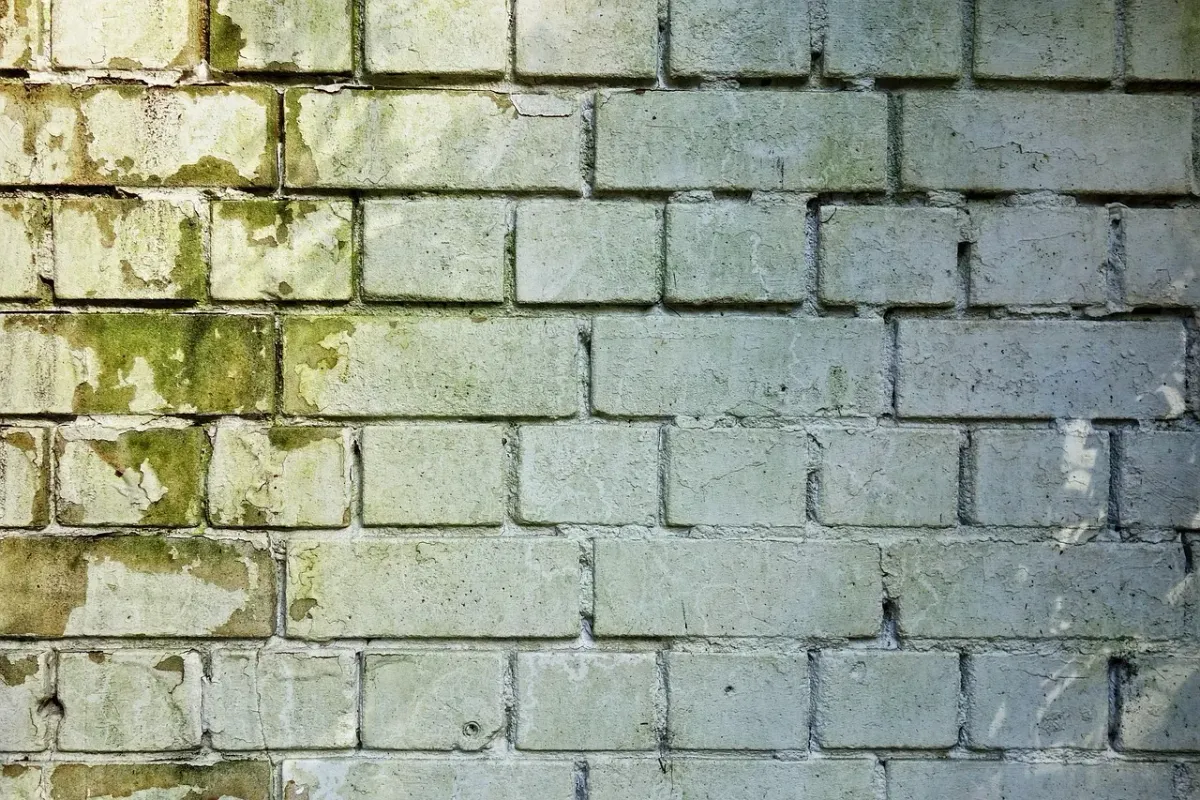
During Taiwan's prolonged late-spring plum rain season, indoor relative humidity consistently spikes past 85%, causing peeling paint blisters, powdery chalking, and white needle-like crystals recognized as "wall efflorescence (壁癌)." Many property owners mistakenly view efflorescence as mere surface mildew, sanding it flat and applying fresh paint, only to witness blisters bursting open within three months. Chemically, efflorescence occurs when free calcium hydroxide within concrete dissolves in migratory moisture and reacts with atmospheric carbon dioxide, precipitating expansive inorganic salts that tear through paint films. Penetrating and sealing concrete capillaries with water-based crystallization silicates prior to skim coating and painting represents the definitive engineering solution for permanent remediation.
Plum Rain Wall Efflorescence and Cement Pore Sealing SOP
This article is compiled from publicly available online sources for general reference only; readers should independently verify and judge its accuracy, and it is not legal, tax, medical or engineering advice. Rules, fees and subsidies change; check the latest notice from the responsible authority before acting. For electrical, gas, structural or health risks, consult a qualified professional.
This is the English edition of a Chinese article, adapted with AI assistance and checked against the original. Where the two differ, the Chinese version and the official sources it cites prevail.
Chemical Reaction Mechanisms of Efflorescence: How Wall Blisters Form
Efflorescence requires three simultaneous conditions: water, soluble alkaline salts, and capillary transmission pathways within concrete:
1. Primary Efflorescence: During cement hydration, tricalcium silicates react with water to release abundant free calcium hydroxide, Ca(OH)2. When migratory moisture travels through the wall, water molecules dissolve free calcium into calcium ions, drawing them via capillary siphon action toward drier indoor air surfaces.
2. Secondary Carbonation Reaction: As calcium hydroxide solutions reach masonry surfaces or paint undersides, water evaporates slowly while calcium reacts with atmospheric carbon dioxide (CO2):
Ca(OH)2 + CO2 → CaCO3↓ + H2O
Precipitated calcium carbonate (CaCO3) exhibits extremely low water solubility, forming white powders or crystalline needles. Furthermore, crystal hydration expands volume by 1.5 to 2.5 times, generating crystallization pressures of hundreds of kilograms per square centimeter that rupture latex and acrylic paints.
3. Secondary Mold Colonization: Efflorescence disrupts surface paint smoothness, creating rough porous salts that trap airborne organic dust. Under warm, humid plum rain conditions, these salts become breeding grounds for Aspergillus and Penicillium molds that release allergenic spores.
Conventional Surface Patching vs Deep Penetrating Silicate Crystallization
Evaluating standard repair methodologies clarifies the durability limitations of common cosmetic fixes:
| Methodology & Material Properties | Chemical Reaction and Sealing Mechanism | Weathering Service Lifespan | Primary Cause of Failure |
|---|---|---|---|
| Scrape + Standard Skim Coat & Paint | Superficial cosmetic coverage; pores remain open | 1 to 3 months (recurs during plum rain) | Free calcium continues leaching out with moisture |
| Single-Component Elastic Waterproof Paint | Forms impermeable elastomeric plastic skin | 3 to 6 months | Moisture vapor blisters behind membrane under solar heat |
| Deep-Penetrating Silicate Crystallization | Active silicates penetrate 3-5mm to form C-S-H crystals | 5 to 10+ years (autogenous healing) | Requires stripping down to bare structural concrete |
| Full Plaster Demolition to Red Brick | Excavates salt-laden cement render down to brick substrate | 10+ years (near permanent) | Demands extensive dust control and high labor budgets |
Standard Four-Step Remediation SOP: Scraping, Acid Wash, Silicate Sealing, and Putty
Executing permanent efflorescence restoration requires adhering strictly to four standardized steps:
Step 1: Expanding Demolition Beyond Blistered Boundaries
Scraping must extend 20 cm to 30 cm beyond visible efflorescence boundaries. Using steel scrapers or rotary wire wheels, technicians strip degraded paint films, crumbling putty, and powdery cement laitances down to bare, sound structural concrete.
Step 2: Acid Neutralization and Mold Eradication
Efflorescence represents strongly alkaline inorganic salts. Applying diluted oxalic acid solutions or specialized salt neutralizers breaks down deep mineral deposits. After reacting for 15 to 20 minutes, technicians rinse surfaces with clean water and dehumidify the wall until concrete moisture meters register under 8% (measuring 6% to 8%).
Step 3: Deep Application of Inorganic Silicate Primers
Applying high-penetration inorganic silicate primers (sodium or potassium silicate complexes) is the decisive step. Possessing low surface tension, silicates penetrate concrete capillaries under 0.1 microns, reacting with free calcium hydroxide to produce secondary hydration:
Na2SiO3 + Ca(OH)2 + H2O → C-S-H gel (calcium silicate hydrate)
Insoluble C-S-H crystals expand within capillary voids, sealing moisture channels and transforming porous concrete into impermeable stone.
Step 4: Water-Resistant Putty and Breathable Topcoats
After allowing 24 hours for silicate crystallization, technicians apply two coats of water-resistant resin putty. Following smooth sanding, an alkali-resistant primer and breathable, high-permeability latex or mineral silicate paint allow structural moisture to transpire safely without blistering.
Plumber and Leak Detection Protocol: External Infiltration and Concealed Pipe Checks
If efflorescence reappears within six months, technicians must investigate chronic water sources:
1. Exterior Facade Inspection: Inspect windward facade tiles for grout cracks and verify air conditioning drain anchor screws are properly sealed with silicone.
2. Concealed Pipe Pressure Testing: Pressure testing cold and hot water supply lines at 8 kg/cm² for 30 minutes confirms zero concealed plumbing leakage.
When reviewing concealed water piping and branch circuit safety, consult our wire gauge ampacity and breaker matching calculator to confirm wiring ampacities, calculate dehumidifier operating costs with our appliance electricity cost calculator, and examine our interactive home inspection checklist calculator for storm readiness.
Frequently Asked Questions
Do retail aerosol efflorescence waterproof sprays genuinely solve wall cancer?
No. Consumer aerosol cans contain single-component acrylic resins or silicone water repellents forming thin films under 0.05 mm. Sprayed over dusty substrates without acid neutralization, these coatings fail to bond. Moisture accumulating behind the film causes larger paint sections to detach.
Will running a room dehumidifier continuously stop wall efflorescence from spreading?
No, it can accelerate crystallization. While dehumidifiers reduce ambient humidity, they create a strong vapor pressure gradient that accelerates the evaporation of calcium-rich water from deep inside the wall, causing salts to crystallize faster behind the paint. Silicate crystallization is required to block pores.
Is inhaling powdery white efflorescence crystals dangerous to human health?
Calcium carbonate powder possesses low toxicity, though alkaline dust irritates nasal membranes. The primary danger comes from fungal and mold spores (Aspergillus, Cladosporium) colonizing the porous salts, which trigger asthma and allergic rhinitis in infants and the elderly.
Sources and References
National building pathology manuals and mortar testing standards:
- Architecture and Building Research Institute, MOI: Efflorescence Pathology and Silicate Protection Manual
- Bureau of Standards, Metrology and Inspection: Standard Test Method for Efflorescence of Hydraulic Cement Mortars (CNS 1238)
Disclaimer: This technical guide is compiled from public engineering references and building standards. Actual on-site conditions vary across individual properties; readers should evaluate technical applicability carefully and consult qualified trade professionals.
Related reading: Taiwan Paint Cost per Ping: Coverage, DIY vs Contractor · Paint Peeling, Wall Mold, or Water Leak: Diagnosis Guide