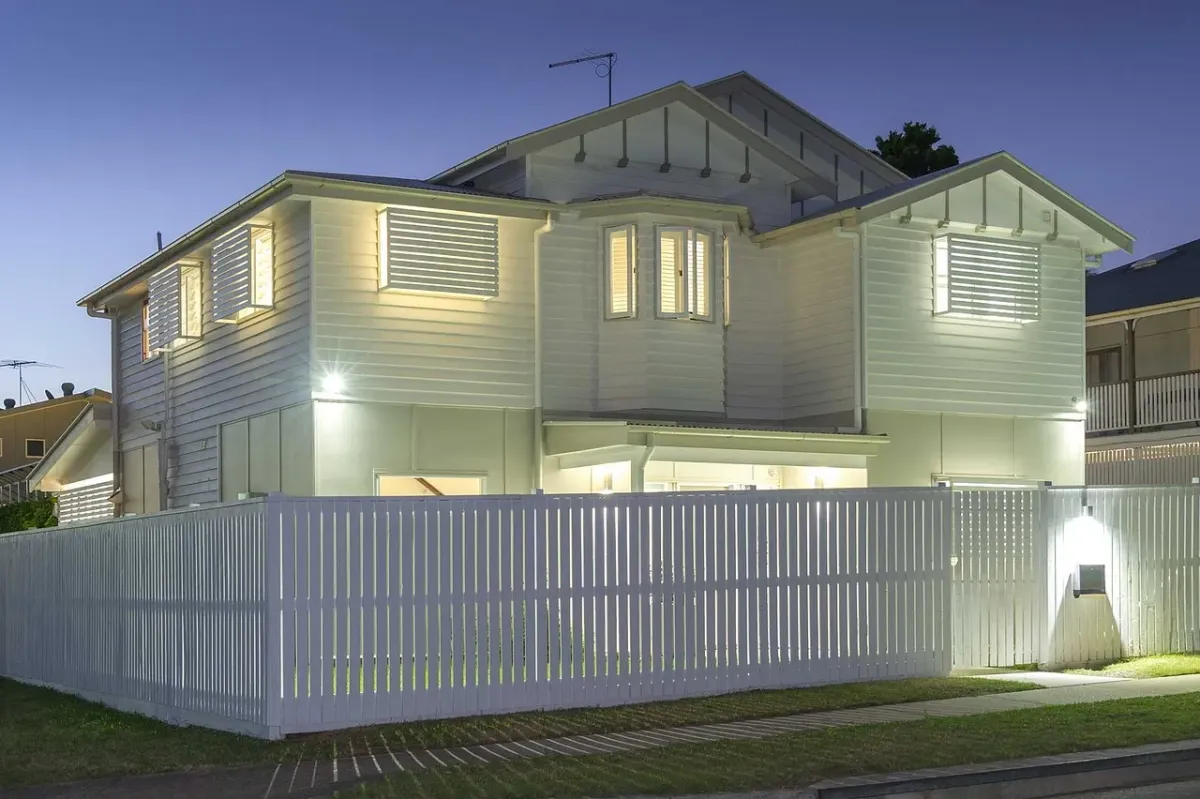
To apply for renovation subsidies under the National Land Management Agency (內政部國土管理署) Old-Home Functional Renewal Plan (老宅延壽機能復新計畫), a building must be a legal building aged 30 years or older (inclusive), and be either a 4-to-6-story multi-unit residential building or a townhouse of 6 stories or fewer; before submitting a renovation application, a "building structural safety performance assessment" (建築物結構安全性能評估) must first be completed. The plan runs until December 31, 2027 (民國 116 年 12 月 31 日), reimbursing actual expenses up to a maximum subsidy ratio of 65%. For exterior common areas, single-item subsidies are highest for adding an elevator at up to NT$4,000,000 and building facade renovation at up to NT$3,000,000, with a combined cap of up to NT$9,600,000 for an entire apartment building; interior safety optimization is capped at NT$200,000 per household for general households, and up to NT$300,000 per household where a resident is aged 65 or older or qualifies as disadvantaged. Based on public information from the National Land Management Agency and urban renewal offices in Taipei and New Taipei verified on 2026-11-07, this article summarizes eligibility, required item combinations, and application steps.
Who can apply for the old-home extension subsidy: building age, floors, and applicant eligibility
The Old-Home Functional Renewal Plan targets 30-year-plus older residences that have no immediate demolition-and-reconstruction plan, but urgently need improvements to common piping, exterior walls, stairwells, and interior safety. Because multi-unit residential buildings and townhouses have different ownership structures, the plan sets distinct rules for floor counts, residential-use ratios, and representative applicants; check your building registration transcript (建物登記謄本) and occupancy permit (使用執照) before applying.
| Building type | Building age and legality conditions | Floor count and residential-use ratio | Who submits the application |
|---|
| Multi-unit residential building (walk-up apartment, low-rise condo) | Building age 30 years or older (inclusive), with an occupancy permit, legal building certificate, or building registration transcript | 4 to 6 stories; at least 1/2 of the main building corresponding to the whole building's common areas must be used for residential purposes | A registered management committee (管理委員會), a management person-in-charge (管理負責人), or a representative designated by all owners |
| Townhouse (透天住宅) | Legal building aged 30 years or older (inclusive) | 6 stories or fewer; the entire building must be used exclusively for residential purposes | Requires consent from all owners, and the applicant must be a natural person (not a corporate entity) |
In principle, building age is counted from the issue date of the occupancy permit issued by the competent authority until it reaches 30 years on the application date; for older buildings built before building management was implemented that lack an occupancy permit, it is determined by the construction completion date recorded on the legal building certificate (合法房屋證明) or building registration transcript. If you are unsure of the occupancy permit year of your apartment, you can first make a preliminary calculation with the site's building age calculator, and then request the permit stub from the building administration authority in Taipei and New Taipei.
Note in particular that if a 4-to-6-story walk-up apartment wants to apply for "interior safety optimization" (NT$200,000 to NT$300,000 per household), a single household cannot file on its own; it must be submitted together with the whole apartment building's "exterior common-area renovation", and the common area must usually select at least 3 renovation items in order to pair with applications for individual households' interior subsidies.
Required prerequisite procedure: complete the building structural safety performance assessment first
Many homeowners assume they can apply directly for renovation funds as soon as they have a contractor's quote, but under the National Land Management Agency plan rules, applicants must first complete a "building structural safety performance assessment" (divided into preliminary assessment and detailed assessment) before applying for renovation subsidies. The purpose of this rule is to have an accredited assessment institution verify the structural condition before residents invest millions of New Taiwan dollars in facade resurfacing or an elevator.
- Preliminary assessment (耐震初評): Professional engineers, architects' associations, or other accredited assessment institutions inspect the structural system, beam-and-column cracks, concrete carbonation, and chloride ion status on site. Preliminary assessment fees are eligible for a government subsidy (depending on each city or county's announced quota, generally about NT$12,000 to NT$15,000 per building based on floor area).
- Detailed assessment (耐震詳評): If the preliminary assessment shows that a deeper calculation of seismic capacity and retrofitting plans is needed, a detailed assessment can follow, with a maximum subsidy of up to NT$400,000 per building.
- Relationship between assessment results and subsidy eligibility: Public explanations from the National Land Management Agency note that the structural safety performance assessment serves as an "information and procedural threshold" in the old-home extension plan to help owners understand their property's condition; a lower preliminary score does not automatically disqualify a building from renovation subsidies. However, if the assessment finds obvious and immediate structural danger (such as a severe high-chloride concrete building or a red-tagged dangerous building), in practice you should evaluate switching to a reconstruction track; for a comparison, see the site's article on evaluating old-house renovation versus rebuilding.
Subsidy items and maximum caps: exterior common areas and interior safety optimization
The old-home extension subsidy follows the principle of "actual reimbursement up to 65% of approved engineering costs", meaning the community and residents must still fund at least 35% of the matching construction cost themselves. The table below summarizes the three subsidy categories and single-item caps covered by the plan.
| Subsidy category | Detailed renovation items | Single-item subsidy cap | Pairing and application conditions |
|---|
| 1. Structural assessment | Preliminary assessment, detailed assessment | Detailed assessment up to NT$400,000 (preliminary assessment granted per local government floor-area standards) | Must be completed before applying for renovation subsidies |
| 2. Exterior common areas: adding elevator equipment | Exterior-mounted or added elevator equipment and necessary structural works for older walk-up apartments | Up to NT$4,000,000 per building | Multi-unit residential buildings must choose at least 3 exterior common items; the cumulative cap for a whole building is up to NT$9,600,000 |
| 2. Exterior common areas: building facade renovation | Repair of spalling exterior wall tiles, waterproof coating, or facade refurbishment | Up to NT$3,000,000 per building | Same as above; must comply with local government urban design or facade safety rules |
| 2. Exterior common areas: roof, stairwell, and common piping | Roof waterproofing and thermal insulation, stairwell repair and lighting, common water supply and drainage pipe renewal, exterior-hung pipe safety improvement, removal of old signs and illegal structures, common barrier-free facilities | Single-item caps mostly range between NT$400,000 and NT$500,000 | Walk-up apartments must combine at least 3 exterior items to unlock eligibility for interior optimization |
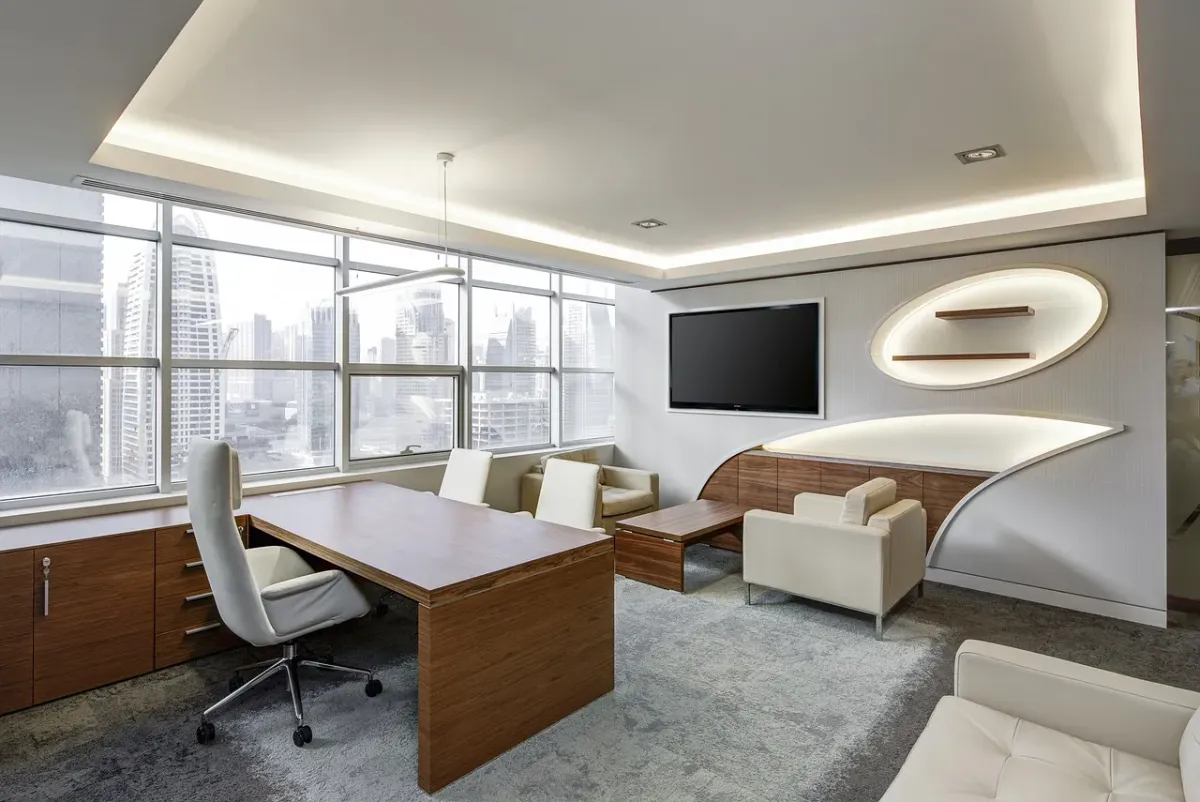
| 3. Interior safety optimization (general households) | Bathroom and indoor anti-slip improvement, handrail addition, threshold level-difference removal, door widening, fall-prevention facilities, renewal of indoor water, drainage, electrical, and gas piping | Up to NT$200,000 per household | Must be submitted together with a common-area renovation case, or meet townhouse application rules |
| 3. Interior safety optimization (elderly or disadvantaged bonus households) | Same interior safety and piping renovation items as above | Up to NT$300,000 per household | A senior aged 65 or older is registered and actually resides in the household, or a member holds low-income, middle-low-income, or disability status |
As the table shows, if a 5-story walk-up apartment wants to solve "seniors unable to climb stairs", "falling exterior wall tiles", and "rooftop water leaks" at the same time, it can select the 3 exterior common works of "adding an elevator + facade renovation + roof waterproofing and insulation", allowing households on each floor to also apply for NT$200,000 to NT$300,000 per household in indoor piping and anti-slip handrail subsidies. If a community only wants to evaluate Taipei City's local program for adding an elevator, compare the site's summary of Taipei walk-up apartment elevator subsidies and space requirements, and note that central and local subsidies cannot be claimed twice for the same item.
Application process in Taipei and New Taipei and five preparation steps
The National Land Management Agency old-home extension plan is budgeted by the central government and accepted by municipal and county/city governments upon announcement. Because review follows "collection during the acceptance period and scoring or ranking by priority order" rather than first-come, first-served, communities in Taipei and New Taipei can prepare in five steps:
- Step 1: Inventory building conditions and run a preliminary check. Gather the owners of each floor and use the site's old-house checkup tool to inventory aging exterior walls, roof waterproofing, common main pipes, and each unit's electrical panel, confirming consensus on at least 3 common-area renovation items.
- Step 2: Commission an accredited institution for the structural safety performance assessment. Check the list of accredited structural safety performance assessment institutions announced by the Taipei City Urban Renewal Office (臺北市都市更新處) or New Taipei City Urban Renewal Office (新北市都市更新處), complete the preliminary seismic assessment (and detailed assessment if needed), and obtain the assessment report.
- Step 3: Form a management committee or designate a representative and hold a meeting. Most 4-to-6-story walk-up apartments lack a management committee; under the rules, all owners may designate a representative, or complete management organization filing under the Condominium Administration Act (《公寓大廈管理條例》), and obtain written consent from the required ratio or all owners on the renovation items and cost sharing.
- Step 4: Commission a professional team to draft the renovation plan for review. Have an architect, interior renovation firm, or counseling team prepare pre-construction photos, renovation drawings, and an engineering budget, and submit the package during the acceptance window announced by the Taipei and New Taipei city governments. If a household has a resident aged 65 or older applying for the NT$300,000 cap, attach household registration and identity documents at the same time.
- Step 5: Start construction only after approval and file for disbursement upon completion. Be sure to wait until you receive the competent authority's "subsidy approval letter" (核准補助函) before starting work; if you demolish walls or start work before approval, those costs may not be reimbursed. After completion, submit before-and-after photos, invoices/receipts, and warranties for inspection and payout.
For questions about application forms, counseling team matching, or eligibility determinations, call the National Land Management Agency old-home extension hotline at 02-7701-9919, or check the "Old-Home Extension Zone" (老宅延壽專區) on the Urban Renewal Portal for each city's latest schedule.
Frequently asked questions
Can I apply only for the NT$200,000 interior renovation subsidy for my own unit without renovating the apartment's common areas?
Under the plan rules, 4-to-6-story multi-unit residential buildings (walk-up apartments) center on "whole-building public safety improvement" and must usually select at least 3 exterior common-area renovation items first (such as roof waterproofing, stairwell repair, or common pipe renewal) before pairing with applications for each household's NT$200,000 to NT$300,000 interior safety optimization subsidy; a single household cannot apply in isolation from the whole-building common works.
If our structural safety performance assessment score is low, will we be denied the renovation subsidy?
A low preliminary score does not automatically disqualify you. The plan requires a structural safety assessment first so owners clearly understand the building's structural state before spending money on renovation; as long as the building has not reached a danger level requiring immediate mandatory demolition, you can still apply for old-home extension renovation subsidies according to the procedure.
If our building has already received a Taipei or New Taipei elevator or facade subsidy, can we also claim the old-home extension subsidy?
You cannot claim duplicate government subsidies of the same nature for the same renovation item. If a community has already applied to the Taipei City or New Taipei City government for a local elevator or facade subsidy, compare the subsidy percentages, caps, and consent thresholds of the central and local programs, and either choose one or apply for different, non-overlapping engineering items.
Can rooftop additions or outward-extended balconies that are illegal structures be renovated using old-home extension subsidy funds?
No. Government subsidy funds are strictly limited to common areas and interior renovations within the scope of legal buildings; however, if a community chooses to include "removal of old signs and illegal structures" (老舊招牌及違建拆除) among its exterior common engineering items, the cost of demolishing illegal structures to restore public safety falls within the subsidizable scope.
Sources
- National Land Management Agency Urban Renewal Portal (內政部國土管理署都市更新入口網): Old-Home Functional Renewal Plan Zone (running until December 31, 2027, verified 2026-11-07): applicability to 30+ year 4-to-6-story apartments and townhouses of 6 stories or fewer, structural assessment rules, and subsidy caps
- National Land Management Agency (內政部國土管理署全球資訊網): Old-Home Functional Renewal Plan policy guide and hotline 02-7701-9919 (verified 2026-11-07): 65% maximum subsidy ratio, NT$4,000,000 elevator cap, NT$3,000,000 facade cap, and NT$200,000 to NT$300,000 interior rules
- Taipei City Urban Renewal Office (臺北市都市更新處): building maintenance and old-building structural safety assessment subsidy information (verified 2026-11-07): Taipei City maintenance counseling mechanism and acceptance procedures