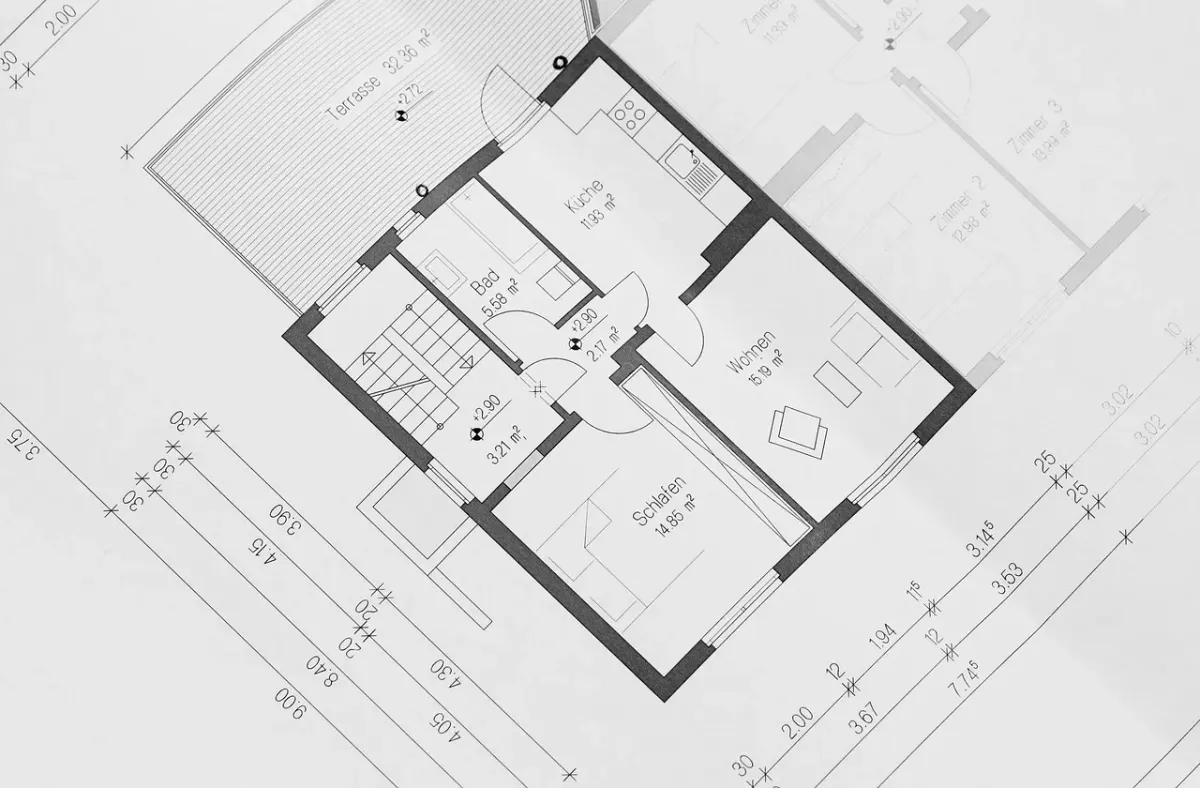
Renovating older residences should transcend superficial surface aesthetic re-tiling by incorporating green building MEP retrofits that permanently slash daily residential operating electricity costs by over 35%. Many vintage homes retain outdated, high-heat T8 fluorescent tubes and fixed-speed ceiling fans that consume excessive power while radiating thermal waste that strains summer air conditioners. Upgrading to high-efficacy LED lighting exceeding 120 lm/W with smart zoned controls, pairing ceiling DC inverter circulation fans with diagonal air conditioning airflow paths, and investing a modest portion of a NT$500,000 renovation budget achieves an annualized return on investment (ROI) surpassing 25%.
Looking for the Chinese version of this article?切換至繁體中文版 →
Old House Green Retrofit with Smart LED and Fans ROI
This article is compiled from publicly available online sources for general reference only; readers should independently verify and judge its accuracy, and it is not legal, tax, medical or engineering advice. Rules, fees and subsidies change; check the latest notice from the responsible authority before acting. For electrical, gas, structural or health risks, consult a qualified professional.
This is the English edition of a Chinese article, adapted with AI assistance and checked against the original. Where the two differ, the Chinese version and the official sources it cites prevail.
Green Retrofitting: Slashing Long-Term Residential Operational Costs
In Taiwanese urban renovations of homes over 30 years old, property owners frequently allocate millions to imported marbles and architectural cabinetry while begrudging NT$100,000 to optimize electrical energy infrastructure, resulting in post-move-in monthly power bills exceeding NT$6,000 to NT$8,000. Over a residential building's life-cycle cost (LCC), more than 70% of total expenditure is consumed by ongoing utility operating costs.
Green MEP retrofitting focuses on passive efficiency and fluid dynamic optimization: re-zoning circuits prior to drywall sealing, deploying high-luminous-efficacy solid-state lighting, and leveraging aerodynamics to destratify room air, achieving maximum comfort with minimal power draw.
Replacing T8/T9/T5 Fluorescents with High-Efficacy Smart Zoned LEDs
Vintage cove lighting and troffer fixtures typically employ 36W or 40W T8 and T9 fluorescent tubes with magnetic ballasts. Magnetic ballasts consume an additional 8W to 12W with poor power factor below 0.6, drawing nearly 50W per fixture while delivering modest efficacy of 60 lm/W to 70 lm/W alongside visible 120Hz stroboscopic flicker:
- Doubling Luminous Efficacy: Upgrading to Tier-1 CNS-certified LED lamps delivering 120 lm/W to 140 lm/W reduces single-tube power consumption from 50W down to 16W to 18W, securing over 64% direct energy savings. Converting 6 vintage 50W halogen spotlights (300W total) in living rooms to 7W LED spotlights (42W total) cuts lighting power demand by 86%.
- Multi-Zone Lighting and Microwave Radar Sensing: Electricians should partition broad "all-on" branch circuits into 3 distinct control zones: ambient baseline, task reading, and decorative wall washing. Transition spaces like entry foyers, corridors, and walk-in pantries receive microwave radar presence sensors that illuminate fixtures in 0.2 seconds and step down to 10% standby or shut off 30 seconds after vacancy.
Integrating MEP Airflow: Ceiling DC Inverter Fans and Diagonal AC Flow Fields
A primary driver of high air conditioning power consumption is thermal air stratification, where hot air pools near ceilings while dense cool air sinks to the floor. In stagnant rooms, ceiling air is routinely 3°C to 5°C warmer than floor levels, tricking AC temperature sensors into driving compressors at prolonged high-frequency overloads:
Electrical rough-ins should provide a 110V/15A ceiling junction box to mount high-efficiency DC brushless inverter circulation fans:
DC brushless fan motors draw merely 15W to 28W, saving over 65% power compared to conventional 75W AC fans. Positioning circulation fans diagonally opposite split-system AC indoor units establishes an aerodynamic cross-flow field: spinning clockwise in summer pushes stratified cool air horizontally across living spaces, while counter-clockwise reverse rotation in winter draws cool floor air upward to gently recirculate warm ceiling air along walls. This fluid integration permits raising AC cooling setpoints from 24°C up to 26°C or 27°C while preserving identical perceived coolness, where each 1°C increase saves 6% to 8% in air conditioning power.
Recouping Green Retrofit Investments in a NT$500,000 MEP Budget
Evaluating financial payback using a standard 30-ping, 3-bedroom older apartment renovation model:
- Incremental Green Retrofit Capital Outlay: Retrofitting 35 traditional fixtures to smart high-efficacy LEDs with radar sensors costs NT$22,000; mounting 2 ceiling DC inverter circulation fans in living and master bedroom zones costs NT$12,000 installed; and reconfiguring distribution panel timer zones costs NT$8,000. Total incremental green MEP investment equals NT$42,000.
- Annual Power Bill Savings Modeling: ① Lighting Efficiency: Operating 6 hours daily, high-efficiency LEDs save 3.8 kWh daily, totaling 1387 kWh annually; ② Air Conditioning Optimization: Destratifying fans allow raising AC setpoints by 2°C, cutting cooling consumption by 25% (saving 320 kWh monthly across 4 summer months, totaling 1280 kWh). Combined annual energy savings reach 2667 kWh.
- Financial Payback and Return Metrics: Applying Taipower's marginal summer residential tariff of NT$4.0 per kWh, annual power bill savings total NT$10,668. Simple payback period = NT$42,000 ÷ NT$10,668 ≈ 3.9 years. Recovering full costs in under 4 years yields net cumulative savings exceeding NT$120,000 across a 15-year decor lifecycle.
Traditional MEP Configuration vs Green Retrofit Performance Matrix
| Engineering System | Vintage Conventional Baseline | Modern Green Retrofit Standard | Energy Savings & Annualized ROI |
|---|---|---|---|
| Lighting Luminaire | T8 fluorescent + halogens (300W) | Tier-1 LED smart zoned lighting (42W) | Direct 80%+ drop in lighting power |
| Lighting Control | Single switch all-on, forgotten lights | Microwave radar occupancy sensing | Eliminates vacancy waste, saves 30% |
| Air Destratification | No fans, AC set down to 22°C to cool | Diagonal DC reversible circulation fan | AC setpoint up 2°C, cooling power -15% |
| Financial Payback | Unnoticed energy waste of NT$10,000s | NT$42,000 retrofit, 3.9-year payback | Annualized ROI exceeding 25% |
Homeowners evaluating whole-house lighting loads can utilize our appliance electricity cost calculator, reference our wire gauge ampacity and breaker matching calculator, and examine our interactive home inspection checklist calculator.
Frequently Asked Questions
Can green electrical retrofits in older residences qualify for government energy subsidies?
Yes. The Ministry of Economic Affairs Energy Administration offers residential appliance replacement subsidies providing NT$3,000 per Tier-1 inverter AC plus up to NT$2,000 in commodity tax reductions (totaling NT$5,000 per unit). Municipal environmental protection bureaus also provide localized lighting and insulation grants.
Do ceiling DC inverter circulation fans generate distracting motor noise?
No. Quality DC brushless motors paired with aerodynamic 3 or 5-blade impellers restrict low-speed operating noise strictly below 20 dB to 25 dB (quieter than rustling leaves), completely eliminating humming while anchoring securely into structural concrete via expansion bolts to eliminate vibration resonance.
Does extensive LED installation expose eyes to harmful blue-light hazards?
No. Purchasing luminaires certified under CNS 15592 Photobiological Safety Standards as "Exempt (Risk Group 0)" ensures safety. Opting for 3000K to 4000K warm-white color temperatures with CRI > 90 and stroboscopic flicker under 1% provides soothing, eye-safe residential illumination.
Sources and References
Energy conservation standards and green building guidelines consulted:
- Energy Administration, MOEA: Mandatory Energy User Conservation Guidelines
- Architecture and Building Research Institute, MOI: Green Building Evaluation Manual
Disclaimer: This technical guide is compiled from public engineering references and building standards. Actual on-site conditions vary across individual properties; readers should evaluate technical applicability carefully and consult qualified trade professionals.
Related reading: Home Carbon Footprint: LED & Smart Thermostat Savings · Community Lighting Retrofit LED and Radar Sensor ROI Guide