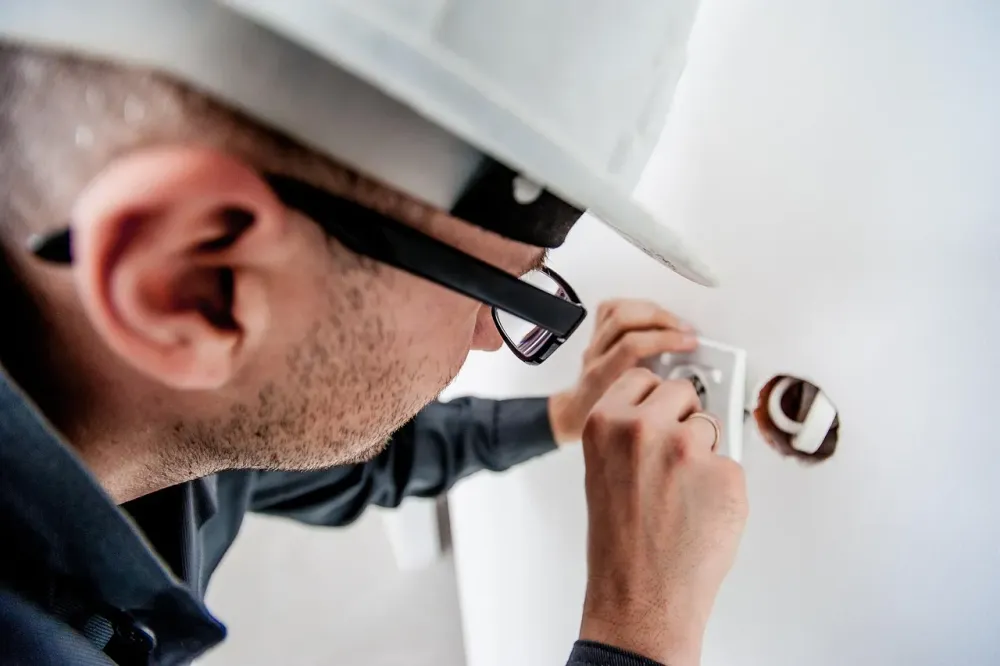
If a plug wobbles inside a wall receptacle or falls out at the slightest touch, it signifies poor electrical contact, and that specific receptacle socket should be decommissioned immediately. Unplug connected appliances, stop using that outlet, and engage a licensed electrical contractor to inspect and replace the receptacle. Homeowners should observe, cease use, and document symptoms without disassembling the faceplate themselves.
Looking for the Chinese version of this article?切換至繁體中文版 →
Loose Wall Outlets: Plug Wiggle Causes and Replacement
This article is compiled from publicly available online sources for general reference only; readers should independently verify and judge its accuracy, and it is not legal, tax, medical or engineering advice. Rules, fees and subsidies change; check the latest notice from the responsible authority before acting. For electrical, gas, structural or health risks, consult a qualified professional.
This is the English edition of a Chinese article, adapted with AI assistance and checked against the original. Where the two differ, the Chinese version and the official sources it cites prevail.
A loose receptacle is more than an inconvenience. The Taichung City Economic Development Bureau lists "loose plugs and receptacles generating sparks and melting insulation due to poor contact" as the primary cause of electrical fires. Below is a breakdown of why looseness occurs, when to immediately discontinue use, and why receptacle replacement must be handled by registered contractors.
Safety Warning: Never bend or splay plug blades outward to force a tighter fit, never stuff paper slips or toothpicks into sockets or tape plugs in place, and never remove receptacle plates or tamper with the electrical panel yourself. If you smell burning, see discoloration, or detect smoke, safely unplug the cord if possible, stop using the socket, and contact an electrical contractor; if active flames or dense smoke appear, evacuate immediately and dial 119.
Why Wall Receptacles Become Loose
Official publications directly address loose sockets primarily in the context of extension cords; accumulated dust and moisture on plugs are not direct causes of loosening, but frequently accompany it. Other factors compiled in this article are noted below.
- Frequent plugging and unplugging: The Bureau of Standards, Metrology and Inspection (BSMI), Ministry of Economic Affairs Extension Cord Purchasing and Safety Guide warns to avoid frequent plugging and unplugging, which loosens extension cord receptacles. This applies equally to wall receptacles that rely on internal spring brass clips.
- Accompanying plug dirt and moisture: Taichung City Economic Development Bureau bulletins point out that long-term plug use in humid environments accumulates dust and moisture, creating conductive bridges that induce tracking phenomena. This represents a distinct risk, though official documents do not state it causes mechanical loosening.
- Article findings: Heavy wall-wart power adapters, cables subjected to continuous tensile pulling, and receptacles aged over many years gradually cause metal contact clips to lose mechanical elasticity. These common conditions occur widely beyond official listings.
Hazards of Loose Receptacles: Poor Contact and Tracking Fires
Poor electrical contact generates sparks and localized heat at contact points. The Taichung City Economic Development Bureau guide Common Causes of Electrical Fires states that loose plugs and receptacles create contact arcing, melting insulation and carbonizing dielectric materials into conductive paths that cause short circuits and fires.
Tracking resistance breakdown is another frequent accompanying issue. Taichung City Finance Bureau safety guidelines explain that dust and hair accumulating between plug blades become conductive when damp; heat from leakage current damages insulating resins without tripping fuses or breakers. When sockets loosen, plugs sit partially exposed, allowing dust to collect across prongs. We recommend inspecting both factors simultaneously.
The National Fire Agency, Ministry of the Interior Residential Fire Prevention Habits poster notes that electrical factors rank as the No. 2 cause of home fires, advocating 5 No's and 1 None (5 no, 1 none), including keeping plugs clean and dry, and unplugging unused appliances. If an outlet feels hot or smells scorched, consult the response checklist in 插座發燙、變色、有燒焦味怎麼辦.
Conditions Requiring Immediate Decommissioning vs Monitoring
| Observed Condition | Recommended Action | Basis |
|---|---|---|
| Plug wobbles or falls out at the slightest touch | Decommission that socket, use firm sockets on the plate or other outlets, and schedule repairs | BSMI Extension Cord Guide: plugs must fit securely into sockets; discontinue use if loose; extended here to wall receptacles |
| Receptacle or plug shows black scorch marks, green corrosion, or dust | Unplug cord, wipe blades with a dry cloth with power off; decommission if receptacle faceplate is discolored | Article compilation; dust and moisture causing tracking fires referenced from Taichung Economic Development Bureau |
| Plug or receptacle overheats and deforms | Cease use immediately | BSMI Extension Cord Testing Results Annex (2024); originally applied to extension cords, extended here to wall receptacles |
| Burnt plastic odor detected during operation | Stop use and submit to qualified technical professionals for inspection | National Fire Agency, Ministry of the Interior Electrical Habits Poster |
| Receptacles near bathrooms, kitchens, or aquariums | Prioritize inspection, watching for moisture and dust contamination | Taichung City Finance Bureau Tracking Fire Guidelines |
Handling loose extension cord sockets is more straightforward. BSMI 2026 extension cord safety bulletins state: "if cords tear, plugs loosen, or heat up, discard them immediately," replacing with a certified extension cord featuring overload cutoffs. To calculate circuit loads, see 延長線負載瓦數怎麼算.
Why Receptacle Replacement Requires Licensed Electrical Contractors
Wall receptacles constitute customer electrical equipment. Under Article 59 of the Electricity Act, customer electrical installation works must be undertaken, installed, and repaired by registered electrical contractors; the law also requires contractors to register with municipal or county authorities. While replacing a receptacle seems minor, wiring methods are strictly regulated: Article 31 of the 用戶用電設備裝置規則 (Regulations for Installation of Customer Electrical Equipment) requires grounding terminals to connect to equipment grounding conductors and neutral poles to grounded neutral conductors, Article 373 mandates grounding-type receptacles on 15A or 20A branch circuits, and Article 375 specifies weatherproof enclosures and covers for damp locations.
When contractors arrive, evaluate two additional items. First, check whether other receptacles on the same branch circuit are loose or show thermal discoloration. Second, evaluate arc-fault circuit interrupter (AFCI) upgrades for older homes: Article 42 of the Regulations for Installation of Customer Electrical Equipment notes that branch circuits serving living rooms, dining rooms, and bedrooms may install arc-fault circuit interrupters at the branch origin or first outlet during rewiring. This is optional rather than mandatory, subject to homeowner evaluation.
Before requesting repairs, complete three preparatory steps: photograph the receptacle faceplate markings, note which socket is loose and what appliances were plugged in, and confirm whether any power trip occurred. This information helps electricians determine whether failure is isolated or systemic across the circuit. To formalize repair requests, use our 修繕合約/估價單簡易產生器; if plugging in triggers tripping, consult the 跳電原因診斷小幫手 and 插座一插就跳電的排查順序. For adding new outlets, see 如何新增插座.
Frequently Asked Questions
Can I bend the metal plug prongs outward slightly to fix loose fit?
We strongly advise against this. Official safety bulletins direct that loose connections must "not be used" or "immediately discarded"; no official documentation recommends bending plug prongs. Bending prongs can decrease contact surface area without resolving degraded receptacle spring clips.
Can I continue using the other normal socket if only one socket is loose?
The normal socket can be used temporarily while labeling the loose socket as "out of service" to warn family members. Because dual sockets on a single plate share internal wiring, we recommend having a contractor inspect both promptly.
What should I do if a rental property outlet becomes loose?
Notify your landlord immediately, take reference photos, and request that the landlord arrange repairs through a registered electrical contractor. Avoid plugging high-wattage space heaters or electric cookers into that socket before repairs occur.
How often should plugs be cleaned and wiped?
Official guidance recommends periodic inspection and cleaning without specifying a set number of days. We suggest wiping plugs during seasonal deep cleaning—more frequently near bathrooms, kitchens, aquariums, or pet habitats—always unplugging cords prior to wiping.
Last updated: 2026-10-30
This article compiles public information by SOSfix for general reference; consult registered electrical contractors for individual evaluations, and dial 119 in emergencies.
Sources
- Bureau of Standards, Metrology and Inspection (BSMI): Extension Cord Purchasing and Safety Guide (PDF, Uploaded 2021, Verified 2026-10-30): Plugs must fit tightly into sockets and discontinued if loose; avoid frequent plugging that loosens cord sockets.
- Bureau of Standards, Metrology and Inspection (BSMI): Extension Cord Safety Rules (PDF, Uploaded June 2026 (month 6), Verified 2026-10-30): Discard broken cords, loose plugs, or overheating lines; select certified extension cords with safety marks.
- Bureau of Standards, Metrology and Inspection (BSMI): Commercial Extension Cord Inspection Annex (PDF, July 2024 (month 7), Verified 2026-10-30): Regular cleaning prevents tracking resistance fires; cease use immediately if plugs or sockets deform from overheating.
- Taichung City Government Economic Development Bureau: Common Causes of Electrical Fires (December Year 113 / 2024 (month 12), Verified 2026-10-30): Loose plugs cause contact arcing and insulation carbonization leading to short circuits; dust and moisture cause tracking fires.
- Taichung City Government Finance Bureau: Agency Safety Bulletin (May Year 106 / 2017 (month 5), Verified 2026-10-30): Tracking resistance mechanisms, absence of fuse tripping, and precautions around bathrooms, kitchens, aquariums, and pets.
- National Fire Agency, Ministry of the Interior: Electrical Safety Habits Poster (Verified 2026-10-30): Electrical causes rank No. 2 in residential fires; 5 No's and 1 None; stop use and consult professionals upon burning odors.
- Laws and Regulations Database of The Republic of China: Electricity Act (Amended January 5, Year 115 / 2026, Verified 2026-10-30): Article 59 customer electrical installations must be executed by registered electrical contractors.
- Laws and Regulations Database of The Republic of China: Regulations for Installation of Customer Electrical Equipment (Amended May 9, Year 114 / 2025 (month 9), Verified 2026-10-30): Article 31 grounding receptacle wiring, Article 42 AFCI options, Article 373 grounding-type receptacles, Article 375 damp location enclosures.
Related reading: Replacing a Light Switch in Taiwan: When to Call a Pro · Loose Outlets and Arcing Sparks: Safe DIY Replacement