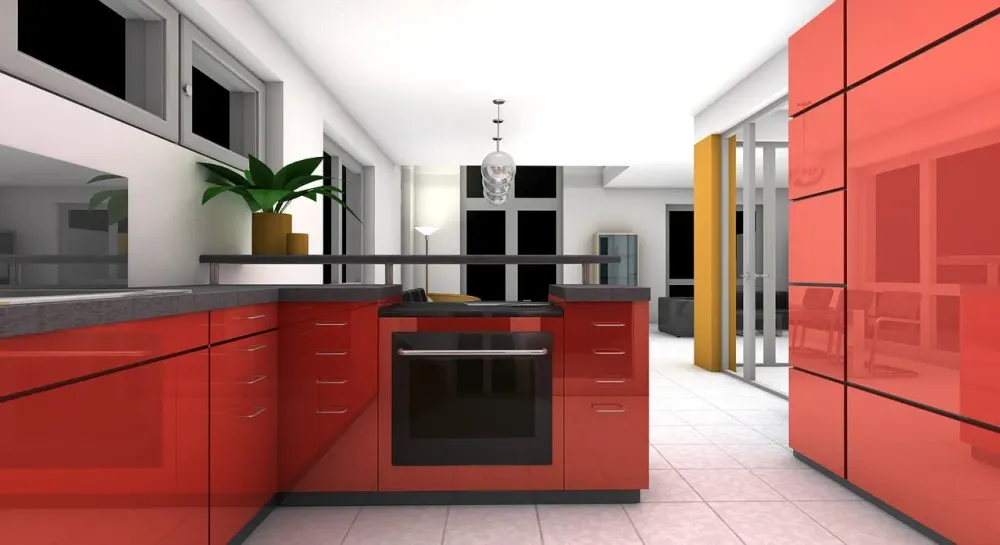
When choosing a kitchen range hood, beyond checking motor air exhaust volume (at least 15 to 20 m³/min (m3/min) is recommended for high-heat wok frying), exterior design dictates smoke collection capability: deep curved or canopy hoods or side-draft units situated closest to the cookware work best for heavy Chinese stir-frying. When selecting a domestic gas stove under Bureau of Standards, Metrology and Inspection (BSMI) national standard CNS 13604, legal products mandate automatic flame failure safety devices (cutting gas off if liquids boil over or drafts blow flames out), with Tier 1 or Tier 2 energy efficiency ratings strongly recommended to save gas and qualify for energy subsidies.
Looking for the Chinese version of this article?切換至繁體中文版 →
Range Hoods and Gas Stoves: Suction Power and Safety
This article is compiled from publicly available online sources for general reference only; readers should independently verify and judge its accuracy, and it is not legal, tax, medical or engineering advice. Rules, fees and subsidies change; check the latest notice from the responsible authority before acting. For electrical, gas, structural or health risks, consult a qualified professional.
This is the English edition of a Chinese article, adapted with AI assistance and checked against the original. Where the two differ, the Chinese version and the official sources it cites prevail.
Note: Prior to purchasing a gas stove, verify whether your home uses natural gas (NG1, piped piping and wiring gas) or liquefied petroleum gas (LPG, bottled gas). Their nozzle orifices and supply pressures differ completely and must never be interchanged! Both new gas stoves and range hoods must bear official BSMI product inspection marks.
Four Major Range Hood Types Compared: Curved, T-Shaped, Side-Suction, and Built-In
Many homeowners choose ultra-thin flat range hoods for open-concept aesthetics, only to find the living room filled with cooking fumes during pan-frying. Fumes rise and spread in a trumpet shape from the wok; key differences in chamber depth and inlet distance include:
| Range Hood Type | Structure and Fume Capture Characteristics | Cooking Style Suitability | Pros, Cons, and Cleaning Ease |
|---|---|---|---|
| 1. Curved / Deep Canopy (Traditional Chinese) | Substantial body depth featuring the deepest, largest three-dimensional capture chamber, corralling sudden high-volume cooking plumes before exhausting them | Daily high-heat stir-frying, wok cooking, and deep-frying households | Most reliable smoke removal, affordable price; bulky exterior cannot fully conceal inside overhead cabinetry |
| 2. Inverted T-Shape (European Funnel) | Stainless steel or black tempered glass flat profile with clean modern lines, often paired with high-volume variable-frequency motors and rectifier baffle plates | Open-plan kitchens and island cooktops balancing contemporary aesthetics with versatile cooking | Stylish look, removable baffle plates are easy to wipe; flat base relies heavily on turbo boost capacity during sudden heavy smoke |
| 3. Side-Suction / Slanted Draft (Angled Intake) | Chassis sits at an approx. 45-degree angle, with the air intake positioned 15 to 25 cm lower than traditional hoods, intercepting grease plumes right above the pan before they reach face level | Open kitchens, taller cooks avoiding head bumps (bump-free design), and frequent stir-fryers who dislike smoke in their face | Smoke never crosses the nose and mouth, zero head bumping; requires checking wall height clearance and tall stockpot room |
| 4. Concealed / Semi-Concealed (Cabinet Built-In) | The entire chassis conceals inside overhead kitchen cabinetry, extending a pull-out glass visor or front panel during cooking | Compact studio apartments measured in ping (1 ping ≈ 3.3 m²), galley kitchenettes, light dining, or minimal grease cooking | Maximizes visual space and creates unified cabinet fronts; shallow capture chamber requires high-exhaust turbo motors for heavy cooking |
If range hood suction degrades or begins dripping oil over time, read 抽油煙機濾網多久洗一次?小蘇打、過碳酸鈉不傷塗層除油步驟 for safe methods to clean filters, grease cups, and impeller blades.
Understanding Airflow Ratings (m³/min): Why Duct Size Dictates Suction Power
Air exhaust volume on range hood specification sheets is measured in m³/min (cubic meters per minute). Light cooking kitchenettes need 12 to 15 m³/min, while heavy stir-frying or open layouts require 16 to 22 m³/min (including Turbo boost modes). When powerful hoods fail to clear smoke, one of these three installation mistakes is usually responsible:
- Undersized exhaust duct diameter (high reduction resistance): Standard exhaust collars on high-volume hoods are 6 inches (approx. 15 cm diameter) or 5.5 inches. If an older building wall core drill is only 4 or 5 inches, installers must use reduction couplers, causing massive air resistance, loud wind shear noise, and severely compromised suction.
- Overly long aluminum duct runs or excessive elbows: Every 90-degree elbow in ducting reduces airflow volume by approx. 10% to 15%. Total duct lengths should be kept within 2 to 3 meters with no more than 2 elbows, ending with exterior windproof backdraft dampers.
- Failing to crack open a window during operation (negative pressure): In airtight apartments with closed windows, a running range hood creates negative indoor pressure, preventing fumes from exhausting and drawing sewer odors through bathroom floor drains. Always crack a nearby window 5 to 10 cm away from direct stove drafts to supply make-up air. To evaluate ventilation, see 浴室抽風機沒力、很吵怎麼辦?清潔扇葉、逆止閥檢查與更換指南 and inspect appliances with our 驗屋與租屋點交清單工具.
Gas Stove Selection: CNS 13604 Flame Failure Devices, Anti-Boil-Over, and Energy Tiers
When selecting countertop, drop-in, or freestanding gas stoves, verify these three statutory safety and efficiency specifications:
| Safety / Energy Standard | Operating Principle and Statutory Standard | Surface Materials and Burner Recommendations |
|---|---|---|
| 1. Flame Failure Device (CNS 13604 Mandatory) | A thermocouple temperature sensor probe sits beside the burner; if boiling soup spills or wind extinguishes the flame, the cooled probe automatically shuts the gas solenoid valve to prevent gas leaks and explosions | Depress knob for 3 to 5 seconds upon ignition to warm the probe (or choose instant-ignition models); avoid bending sensor pins when scrubbing |
| 2. Anti-Dry-Burn Safety Device (Overheat Thermal Protection) | A spring-loaded temperature sensor at burner center contacts pot bottoms directly, beeping and shutting off gas if boil-dry temperatures exceed approx. 250°C to 290°C | In households with seniors who frequently simmer soups or stews unattended, strongly prioritize stoves featuring anti-dry-burn thermal sensors |
| 3. Energy Efficiency Rating (Tiers 1 to 5) | Regulated by the Energy Administration, Ministry of Economic Affairs into Tiers 1 through 5: Tier 1 achieves thermal efficiency over 52% (most fuel-efficient), while Tier 5 requires 43% or more | Choose surfaces according to habits: stainless steel (scratch-proof, tolerates heavy cast-iron wok knocks) or tempered glass / enamel (wipes clean instantly, sleek look) |
Frequently Asked Questions
Should open kitchens install gas stoves or IH induction cooktops?
Both have distinct strengths. IH induction cooktops (generally requiring a 220V dedicated high-amp line) generate heat directly in ferromagnetic cookware bases via electromagnetic induction. They produce zero open flames, don't heat ambient air, keep cooks cool in summer, release less oily aerosol, and have flat glass surfaces that clean effortlessly, though they require compatible cookware (ceramic, glass, and standard round woks cannot be used). Gas stoves work with any cookware, permit tossing round woks over roaring flames, and cook during blackouts. Pick gas stoves for intense wok char; pick IH cooktops for flameless, easy-cleaning kitchens if panel capacity permits.
Why does the burner flame extinguish immediately after releasing the ignition knob?
It may not be broken! On stoves equipped with flameout safety devices, heat from the flame must warm the thermocouple probe beside the burner to keep the internal gas solenoid energized. If released too quickly (under 3 to 5 seconds), if heavy charred grease insulates the probe tip, or if the bottom ignition battery (commonly a large Size 1 D-cell battery) is dead, the flame extinguishes instantly. Clean the probe tip gently with emery cloth and replace the battery to restore normal operation.
Are electric thermal degreasing and steam self-cleaning features on range hoods useful?
These automated cleaning cycles heat and melt grease coating internal casings and blower wheels so oil drains into collection cups, reducing full teardown frequency and preventing impeller imbalance. However, they cannot entirely eliminate manual wiping of outer intake baffles, mesh filters, and exterior housings. For minimal filter scrubbing, choose baffle-plate filterless models where only the exterior plate and oil cup require routine washing.
What is the recommended installation height between a range hood and a gas cooktop?
For standard curved or inverted T-shaped range hoods, maintain a distance of 65 to 75 cm between the base of the hood and the cooktop grates. Installing higher than 75 cm allows fumes to disperse into ambient air before capture; installing lower than 60 cm leads to head bumping and hazards from proximity to open flames. Side-draft models follow manufacturer specs, typically positioned 35 to 45 cm above the counter.
Last updated: 2026-11-01
This article compiles public information by SOSfix for general reference; consult the Bureau of Standards, Metrology and Inspection (BSMI), the Energy Administration, Ministry of Economic Affairs, or licensed gas appliance technicians for specific evaluations.
Sources
- Bureau of Standards, Metrology and Inspection (BSMI) National Standards: CNS 13604 Gas Appliances and CNS 3805 Range Hoods (Verified 2026-11-01): Mandatory gas stove flame failure safety specifications, range hood airflow measurement, and safety standards.
- Energy Administration, Ministry of Economic Affairs: Energy Efficiency Rating Management System for Gas Stoves (Verified 2026-11-01): Energy rating criteria for Tiers 1 through 5 (Tier 1 thermal efficiency 52% or greater).
- Bureau of Standards, Metrology and Inspection (BSMI): Safety Guidelines for Purchasing and Operating Gas Stoves and Range Hoods (Verified 2026-11-01): Verifying natural gas (NG) and liquefied petroleum gas (LPG) markings, kitchen ventilation, and BSMI commodity inspection marks.
Related reading: How to Clean Induction Cooktop Burn Marks and Stains · Lunar New Year Kitchen Cleaning and Safety Guide