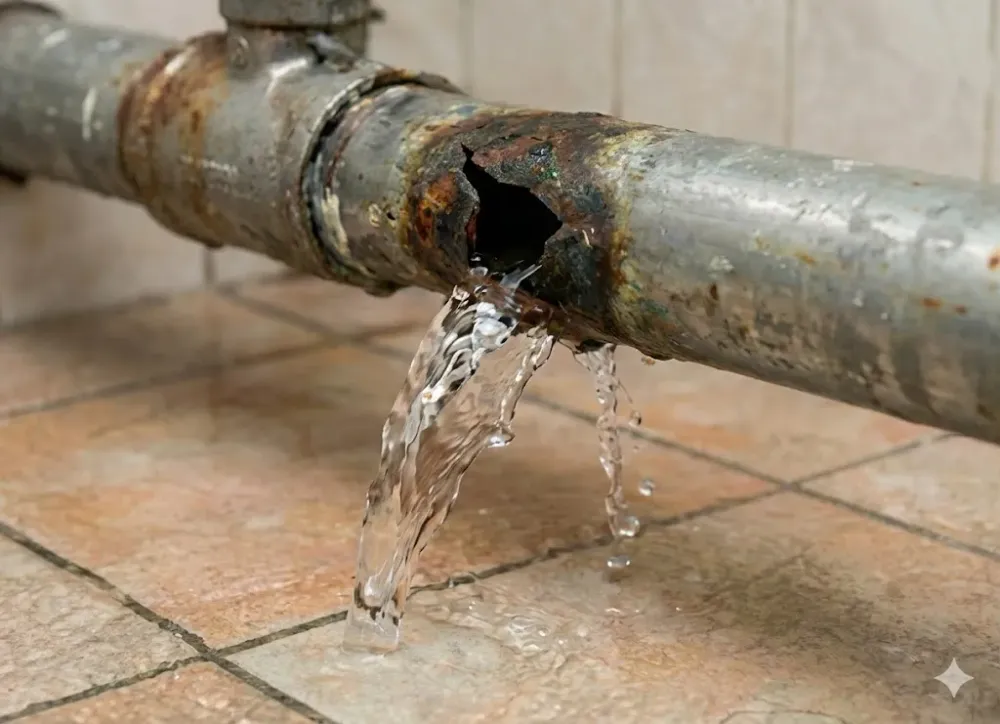
In the official guidance and gas-company explanations checked for this article, there is no single replacement age for gas rubber hoses. For bottled gas, the National Fire Agency, Ministry of the Interior recommends frequent checks and replacement every 1 to 2 years at best, with a hose no longer than 1.8 meters. For natural gas, Greater Taipei Gas (大台北區瓦斯) and Shin Shin Natural Gas (欣欣天然氣) advise keeping the rubber hose within 1 meter, fitting a safety clamp on the connectors, and replacing it immediately when cracks, insect bites or aging appear; their websites give no fixed number of years. Either way, connectors must be fixed with a clamp so they cannot come off, and the hose must be installed flat, not kinked and not pressed. Natural gas users also get a periodic piping inspection that the gas company is required by law to carry out at your home, with no separate charge for household users.
Gas Hose Replacement in Taiwan: Cracks, Clamps, Rules

This article is compiled from publicly available online sources for general reference only; readers should independently verify and judge its accuracy, and it is not legal, tax, medical or engineering advice. Rules, fees and subsidies change; check the latest notice from the responsible authority before acting. For electrical, gas, structural or health risks, consult a qualified professional.
This is the English edition of a Chinese article, adapted with AI assistance and checked against the original. Where the two differ, the Chinese version and the official sources it cites prevail.
Note: This article draws on the National Fire Agency, Ministry of the Interior's Fire Prevention Hall page “Preventing and Handling Liquefied Petroleum Gas Leaks” (updated October 29, 2024; ROC year 113), the Greater Taipei Gas website's gas safety guidance (updated May 17, 2023) and its periodic safety inspection page, the Shin Shin Natural Gas website's safety guidance, Article 48 of the Natural Gas Business Act (amended January 5, 2026; ROC year 115), Article 15-2 of the Fire Services Act (amended November 29, 2024; ROC year 113), and the Energy Administration, Ministry of Economic Affairs page “User Safety Inspection” (updated August 6, 2025; ROC year 114). The “replace every 1 to 2 years” advice comes from the National Fire Agency's liquefied petroleum gas (bottled) page. Taipei and New Taipei have other natural gas companies; this article checked only Greater Taipei Gas and Shin Shin Natural Gas, so for your home, go by the website or customer service of the company on your bill. Smelling gas is an emergency; go straight to the gas leak steps.
Bottled gas vs. natural gas: how the rubber hose rules differ
| Item | Bottled gas (liquefied petroleum gas) | Natural gas |
|---|---|---|
| Hose length | Must not exceed 1.8 meters (National Fire Agency) | Within 1 meter (Greater Taipei Gas: “should not exceed 1 meter”; Shin Shin Natural Gas: “total length within 1 meter”) |
| Connector fixing | Connectors should be fixed with a clamp to prevent them from coming off; a safety clamp should be fitted (National Fire Agency) | Fit a safety clamp at the connector to prevent it from coming off (Greater Taipei Gas, Shin Shin) |
| When to replace | Check often; replace immediately if cracked or damaged; best replaced every 1 to 2 years (National Fire Agency) | Check often; replace immediately if cracked or damaged (Greater Taipei Gas); replace immediately if cracked, insect-bitten or aged (Shin Shin) |
| Hose specification | Should meet national standards (National Fire Agency) | On the Greater Taipei Gas website's equipment table, the Japanese-made rubber hose and the Japanese-made reinforced rubber hose on sale are labeled as meeting CNS9620 and CNS13814 respectively |
| Who inspects regularly | Fire Services Act Article 15-2: retailers (gas dealers) must employ safety technicians to carry out gas supply inspections, and keep user safety inspection records for periodic reporting; the article does not state an inspection frequency, and the related subordinate regulations were not checked for this article. You can also ask the gas dealer to look at the hose when a cylinder is changed | Public natural gas businesses inspect periodically under Article 48 of the Natural Gas Business Act; Greater Taipei Gas does so once every 2 years |
| Who to call to replace the hose | Gas dealer | Your natural gas company; to change the piping, use a public natural gas pipe installation contractor (Natural Gas Business Act Article 20, license required) |
The National Fire Agency page also carries administrative guidance for business premises and gas dealers, stating that “each time a gas cylinder is replaced, the rubber hose should be checked for aging, cracks or damage,” and requiring the connections between the rubber hose and the pressure regulator and stove to be clamped tight with safety clamps. This is guidance for business premises and gas dealers, but when you order gas at home, asking the delivery person to look at the hose is a very practical thing to do. For storing the cylinder itself and the qualification marking, see bottled gas safety checks.
Checking it yourself: five steps
The steps below combine the inspection items from the National Fire Agency and the two natural gas companies. Turn off the flame and wait for the stove to cool before you start:
- Look at the exterior: From the gas valve all the way to the stove or water heater inlet, look for cracks, damage, insect bites or signs of aging.
- Feel the connectors: Check whether the connectors at both ends are loose and whether the safety clamp or clamp is fastened. The National Fire Agency reminds you to check often whether the gas valve and gas hose are loose or damaged.
- Check the routing: The hose should be installed flat and kept fixed, not deformed and not shifting; it must not be kinked, nor pressed by cabinets or pots. Measure the length: the National Fire Agency says bottled gas hoses must not exceed 1.8 meters; Greater Taipei Gas and Shin Shin advise natural gas hoses within 1 meter (the stove rubber hose on Greater Taipei Gas's equipment table is 120 centimeters, see below).
- Soap-water leak test: Brush soap bubbles on the connectors and any suspicious spots; if gas is leaking, bubbles will form (Greater Taipei Gas). Shin Shin Natural Gas says to dab soap foam on the spot being checked with a brush. Both state that you must never use a flame to test for leaks.
- Natural gas users, check the gas meter: When no gas is being used, look at the last digit on the gas meter; if it is still turning, there is a leak (Greater Taipei Gas).
If you find cracks or damage, first close the gas valve and stop using it, then contact the gas dealer or gas company to replace the hose. If bubbles appear during the leak test or you smell gas, it is no longer a hose-replacement question; follow the emergency steps for a gas leak.
Common mistakes
| Practice | What is wrong | Basis |
|---|---|---|
| Hose pulled long, routed around the stove or cabinet | Exceeds the length limit | National Fire Agency: must not exceed 1.8 meters; Greater Taipei Gas and Shin Shin: within 1 meter |
| Connector just pushed on, with no clamp | May come off | The National Fire Agency, Greater Taipei Gas and Shin Shin all require a safety clamp or clamp |
| Using an ordinary water hose or a hose of unknown origin | Does not meet national standards | National Fire Agency: gas hoses should meet national standards; its administrative guidance for business premises additionally requires a product inspection pass mark |
| Finding a small crack and wrapping it with tape to keep using it | Tape is not a repair | The Energy Administration mentions wrapping with tape or similar to reduce leaking only “when the leak is not serious, before rescue arrives”; the hose still has to be replaced afterward |
| Lighting a flame to see whether it leaks | May ignite the gas | Greater Taipei Gas: never use a flame to test for leaks; Shin Shin: lighting a flame to check for leaks is strictly prohibited |
| Hose pressed by a pot or kinked | Deformed, may leak | National Fire Agency: the hose should be installed flat and kept fixed, without deforming or shifting; the administrative guidance for business premises also says it must not be kinked or pressed |
A yellow flame or a stove that won't light is usually not a rubber hose problem; start with what to check when a gas stove won't light or burns yellow.
Natural gas users: how periodic inspection works and how to spot impostors
Article 48 of the Natural Gas Business Act requires public natural gas businesses to periodically inspect the piping of household, commercial and service-sector users and record the results, and to notify the user to make improvements within a time limit if it does not comply; the same applies when users ask for an inspection themselves. Periodic inspection of household users may not be charged separately, inspectors must proactively show proof of identity, and they may not promote or sell goods during the inspection. The Energy Administration also reminds users that during an inspection, operators may not push gas valves, safety switches, hoses or other products, and that repair costs for piping equipment are added to the next natural gas bill.
Taking Greater Taipei Gas as an example, its website states:
- A periodic safety inspection is carried out once every 2 years as required, with no service fee on site; if parts need replacing, the cost is added to the next gas bill.
- A notice and a gas safety manual are mailed 5 days before the inspection; if you cannot be there, you can inspect the piping yourself following the manual, or call within one week to arrange another time.
- Apart from inspections the user requests or that are announced in advance, no one is sent to your home. Some similarly named companies sell equipment under the pretext of a “safety inspection”; the website suggests asking the neighborhood chief (里長, lǐzhǎng) to help report to 110 or the nearest police station.
- Staff wear company uniforms and carry a service ID; if in doubt, call (02)2768-4999 extension 609 to verify their identity.
The equipment table on the Greater Taipei Gas website lists a Japanese-made rubber hose for stoves (specification ⌀10×120cm) and a Japanese-made reinforced rubber hose for water heaters (⌀15×35, 45, 55cm), each NT$600 per piece (tax included, verified 2026-11-03, prices may change), labeled with a 1-year warranty from the installation date. The 1-year warranty is a product warranty, not a recommended replacement age. Note that the stove rubber hose in this table is 120 centimeters long, which does not match the wording on the same company's guidance page that the “rubber hose should not exceed 1 meter”; whether your hose length is suitable, go by what the gas company's periodic inspector or customer service tells you.
| Organization | Phone | Notes |
|---|---|---|
| Greater Taipei Gas 24-hour emergency repair | (02)2767-6552 | As stated on the website |
| Greater Taipei Gas customer service | (02)2768-4999 ext. 609 | Business hours; can also verify the identity of service staff |
| Shin Shin Natural Gas leak reporting | (02)2922-6666 | As stated on the website |
| Shin Shin Natural Gas 24-hour emergency repair | (02)2921-7811 ext. 7276, 7277 | As stated on the website |
| Fire department | 119 | A large gas leak, someone feeling unwell, or you cannot find the valve |
For the phone numbers of other natural gas companies, go by your gas bill or that company's website.
Frequently asked questions
Must a gas rubber hose be replaced every 2 years?
No, there is no unified rule. For bottled gas, the National Fire Agency recommends replacement “at best every 1 to 2 years”; the websites of Greater Taipei Gas and Shin Shin Natural Gas say only to check often and replace immediately when cracks, damage, insect bites or aging are found, and give no fixed number of years. If you have used a hose for many years and cannot say when it was last replaced, this article suggests asking a gas dealer or gas company to inspect it.
What is a safety clamp? Do I have to install one?
A safety clamp is a clamp fitted on the hose connector to stop the hose from coming off. The National Fire Agency states that gas hose connectors should be fixed with a clamp and that a safety clamp should be fitted; Greater Taipei Gas and Shin Shin Natural Gas also advise fitting safety clamps on rubber hose connectors.
Someone comes to the door offering a free safety inspection and pushes hoses. What should I do?
Article 48 of the Natural Gas Business Act says inspectors must proactively show proof of identity and may not promote or sell goods during the inspection. Greater Taipei Gas's periodic inspection sends a written notice 5 days ahead, charges nothing on site, and adds the cost of parts to the next gas bill. If someone arrives unannounced and wants money on the spot, do not open the door at first; call the customer service number on your bill to verify.
Does the natural gas company's periodic inspection cost money?
For household users, periodic inspection may not be charged separately under Article 48 of the Natural Gas Business Act. If parts need replacing after the inspection, the Energy Administration explains that the repair cost is added to the next natural gas bill.
Can I wrap a small crack in the hose with tape for now?
Only as a temporary measure while waiting for rescue. The Energy Administration's guidance is that when a leak is not serious and before rescue arrives, you can first wrap it with tape or similar to reduce the leak. First close the gas valve and stop using it, then ask the gas dealer or gas company to replace the hose.
Last updated: 2026-11-03
This article was compiled from public information by the SOSfix editors and is for general reference only; for your own case, contact your natural gas company or gas dealer; for a large gas leak, call 119.
Sources
- National Fire Agency, Ministry of the Interior, Fire Prevention Hall: Preventing and Handling Liquefied Petroleum Gas Leaks (updated 2024-10-29, ROC 113-10-29; verified 2026-11-03): Gas hose must not exceed 1.8 meters, a safety clamp should be fitted, connectors fixed with clamps, should meet national standards, installed flat and fixed, check often and best replace every 1 to 2 years; administrative guidance for business premises: check the hose at every cylinder change, safety clamps clamped tight, no kinking or pressing, product inspection pass mark attached.
- Laws and Regulations Database of the Republic of China: Natural Gas Business Act (amended January 5, 2026, ROC year 115; verified 2026-11-03): Article 48 on periodic inspection of household piping, showing proof of identity, no separate fee for household users, and no sales promotion; Article 20 on public natural gas pipe installation contractors needing a license.
- Laws and Regulations Database of the Republic of China: Fire Services Act (amended November 29, 2024, ROC year 113; verified 2026-11-03): Article 15-2 on liquefied petroleum gas retailers employing safety technicians to carry out gas supply inspections and keeping user safety inspection records for periodic reporting.
- Energy Administration, Ministry of Economic Affairs: User Safety Inspection (updated 2025-08-06, ROC 114-08-06; verified 2026-11-03): Operators may not push gas valves, safety switches, hoses or other products during an inspection; repair costs are added to the next natural gas bill.
- Energy Administration, Ministry of Economic Affairs: Safety Guidance Materials (updated 2025-08-06, ROC 114-08-06; verified 2026-11-03): When a leak is not serious, you can wrap it with tape or similar to reduce the leak until rescue arrives; open flames and smoking are strictly prohibited until the leak is stopped.
- Greater Taipei Gas: Gas Safety Guidance (updated 2023-05-17; verified 2026-11-03): Rubber hose should not exceed 1 meter and should have a safety clamp, replace immediately if cracked or damaged, check the last digit of the gas meter and use soap-bubble leak testing, never use a flame to test.
- Greater Taipei Gas: Periodic Safety Inspection (verified 2026-11-03): Periodic inspection once every 2 years, no fee on site, cost of parts added to the next gas bill, notice sent 5 days ahead, how to report impostor companies, safety equipment table (Japanese-made stove rubber hose ⌀10×120cm / CNS9620, Japanese-made reinforced water heater rubber hose ⌀15 / CNS13814, NT$600 each, 1-year warranty), 24-hour emergency repair (02)2767-6552 and customer service (02)2768-4999 ext. 609.
- Shin Shin Natural Gas: Natural Gas Safe Use Guidance (verified 2026-11-03): Replace the rubber hose immediately if cracked, insect-bitten or aged; total length within 1 meter, safety clamp on the connectors; soap-foam leak testing, lighting a flame to check is strictly prohibited; leak reporting (02)2922-6666, 24-hour emergency repair (02)2921-7811 ext. 7276, 7277.
Related reading: Smart Gas Meter Earthquake Shutoff & Reset Button Guide