Is climate change destroying your appliances? The latest maintenance strategies and repair trends in 2026
🇹🇼 Looking for the Chinese version of this article?切換至繁體中文版 →

Is climate change destroying your appliances? The latest maintenance strategies and repair trends in 2026

Do you still remember how long the home appliances from ten years ago lasted? It is basic that the refrigerator lasts for fifteen years, and the air conditioner lasts for ten years without any problem. But now, things are different.

A recent report by the British BBC pointed out a surprising fact: the design standards of many household refrigerators remain at "32 degrees Celsius". This number may have been sufficient 20 or 30 years ago, but now the heat wave in the UK often exceeds 36 degrees, and the refrigerator compressor must run around the clock to barely maintain the low temperature, and eventually overheats and stops. Dr. Alan Foster, a Bristol refrigeration expert, said these appliances were "designed for a much cooler world."

The same scene is happening in Taiwan. In the summer of 2026, due to a malfunction of the air-conditioning system of the Banqiao Grand Park Plaza, the temperature inside the store soared to 34 degrees, and the waiter and customers collapsed from the heat. Extreme heat is no longer a “problem of the future”—it’s now in your living room, in the air-conditioning vents of your office, and in the hum of your refrigerator compressor.

How does high temperature kill your home appliances? Three major killers reveal

The impact of climate change on home appliances mainly comes from three aspects. The first is compressor overload. When the ambient temperature exceeds the design upper limit, the compressors of air conditioners and refrigerators must continue to operate at high intensity. Not only does power consumption increase dramatically, but the wear rate of parts also accelerates significantly. Studies have shown that without regular maintenance, the efficiency of air conditioners will decrease by about 5% every year. Followed by the soaring cost of refrigerant. The world is phasing out R-410A refrigerant with high warming potential and switching to environmentally friendly R-454B. But R-454B prices have skyrocketed from about $10 a pound to more than $70, and the price of new air conditioning systems has jumped 30 to 40 percent. The third is poor heat dissipation of the condenser. In a high-temperature environment, the heat dissipation efficiency of the outdoor unit decreases, and dust accumulation accelerates deterioration.

Taiwan’s special challenges: the double blow of high temperature + humidity

Compared to Europe and the United States, Taiwan’s home appliances face more severe challenges. In addition to record high temperatures in the summer, there are also months-long rainy and typhoon seasons. Humid weather can cause circuit boards to oxidize and short-circuit, and door seals to become moldy and ineffective. The salt spray in coastal areas will accelerate the corrosion of the metal shell of the outdoor unit.

The Taoyuan City Government has realized the seriousness of this problem. In June 2026, Taoyuan launched the nation's first "Cooling and Energy Saving Subsidy Program for High-Temperature Sensitive Groups", which provides subsidies for air-conditioning cleaning (a subsidy of NT$1,000 per unit), glass insulation film (up to NT$10,000 per room), and first-class energy-efficiency air conditioner replacement (up to NT$10,000 per unit) for families with children aged 0 to 6 or elders over 65 years old. This policy sends a clear signal: extreme climate is no longer an "environmental issue", but a "livelihood issue" that directly affects people's lives.
The latest maintenance strategies in 2026: Don’t wait until it breaks before calling a technician

In the face of climate change, the cost of passive maintenance is much higher than that of active maintenance. Data shows that emergency appliance repairs during peak summer months cost about $300 to $500, but preventive maintenance costs less than $50 in materials. The following are several key maintenance actions:

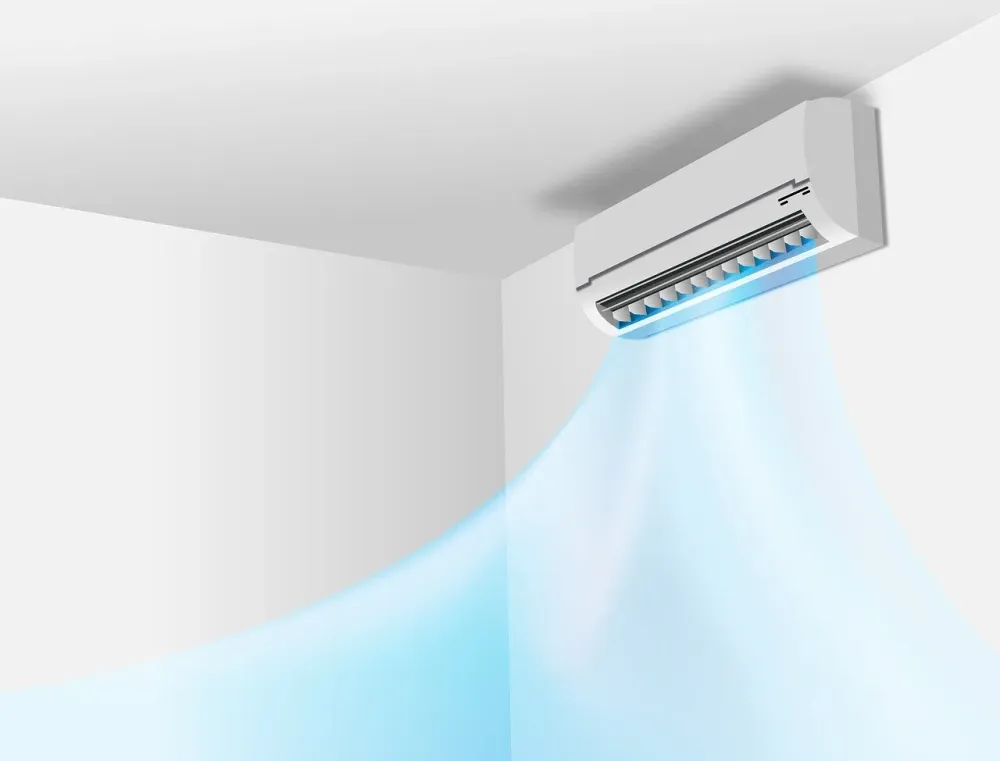
  • Change the filter frequently: Dust accumulates faster in hot and dry weather. It is recommended to check the air conditioning filter every 2 to 4 weeks.
  • Clean the condenser coil: If the heat sink of the outdoor unit is clogged with dust, the cooling efficiency will drop significantly.
  • Shade the outdoor unit: Avoiding direct sunlight can effectively reduce the operating temperature of the condenser.
  • Check the refrigerator door seal: Aged rubber strips can cause cold air to leak out and the compressor must be started more frequently.
  • Make good use of dehumidification mode: In humid weather, moderate use of a dehumidifier can reduce the burden on the air conditioner, but remember to clean the water tank regularly.

Climate change won’t wait for you to be ready. Instead of waiting until the summer heat wave hits to find out that the air conditioner is not cold and the refrigerator is not freezing, it is better to start establishing a "anti-climate change" maintenance plan for home appliances now.

New knowledge on air-conditioning power consumption and Taiwan climate maintenance regulations in recent years (2025-2026 current situation)

With the high temperatures in summer breaking historical records and the adjustment of electricity price structure in recent years, the latest statistics from the Energy Administration of the Ministry of Economic Affairs show that air-conditioning equipment accounts for more than 47% of residential electricity consumption in summer. Many people mistakenly believe that if the air conditioner is not cold, they only need to "replenish the refrigerant." However, in fact, refrigerant is not naturally consumed during normal operation in a closed circuit. If the refrigerant is insufficient, it means that there are micro leaks in the copper pipes or joints. Simply replenishing the air conditioner will only treat the symptoms but not the root cause. Refrigerant leakage will aggravate the high temperature overload of the compressor and shorten its service life.

According to Taiwan's standard operating specifications for air-conditioning projects, it is recommended that professional technicians with a refrigeration and air-conditioning decoration technician license perform "full machine high-pressure water washing and evaporator deep sterilization" every 1 to 2 years for detached air-conditioning indoor units. Especially in the humid summer in the Shuangbei Basin, the air drum and water collection tray are easy to breed black mold and jelly-like biofilm. This is also the main reason for the sour smell in the air-conditioning outlet and the backflow of the drainage pipe. Regular maintenance can maintain CSPF (Air Conditioning Seasonal Performance Factor) level one energy efficiency level, which can save an average household 15% to 20% of air conditioning electricity bills every year.

Autonomous simple maintenance vs professional maintenance safety red line

  • Homeowners can do by themselves: Remove and clean the nylon filter regularly every 2 to 3 weeks (rinse with clean water and dry in a cool place, do not expose it to the sun to avoid deformation and embrittlement); clean the air outlet blades of the indoor unit with a dry cloth; check whether there is any accumulation of debris within 50 cm around the outdoor unit that hinders heat dissipation.
  • Professional technicians must be entrusted by law:Refrigerant pressure detection and leakage repair welding, indoor unit air drum and aluminum fin high-pressure cleaning with chemical solution, ceiling buried cold water pipe drainage slope reset, and 220V dedicated power circuit configuration and leakage circuit breaker replacement.

🇹🇼 Expat Living Note: Home Repairs in Taiwan

If you are an international resident renting an apartment in Taipei, New Taipei, or anywhere in Taiwan:

  • Voltage & Electrical Safety: Taiwan standard household voltage is 110V (60Hz). Do not plug 220V imported European/UK appliances directly without a certified step-up transformer.
  • Plumbing Terminology: Local plumbers are called 水電 (Shuǐdiàn) and handle both water and electrical repairs.
  • Landlord Obligations: Under Article 429 of Taiwan Civil Code, landlords are legally responsible for repairing natural wear and tear (such as hidden wall pipe leaks, water heater faults, or booster pump failures) unless explicitly waived in your lease.