
Air circulator fans (空氣循環扇) and traditional electric fans (一般電風扇) serve fundamentally different purposes: traditional fans produce broad, diffused, gentle breezes designed to blow directly at human skin to evaporate perspiration and lower perceived body temperatures; circulator fans use deep-pitch blades and cylindrical ducts to project concentrated, high-velocity vortex air columns (with throw distances reaching 10 to 20 meters) aimed at ceilings or room corners to drive whole-room convective airflow and eliminate hot/cold dead zones. Pairing an air conditioner set at 26 to 28°C with a properly positioned DC inverter circulation fan not only chills rooms quickly but also drastically cuts high-frequency compressor run times.
Looking for the Chinese version of this article?切換至繁體中文版 →
Circulation Fan vs Standard Fan: AC Placement & DC Power
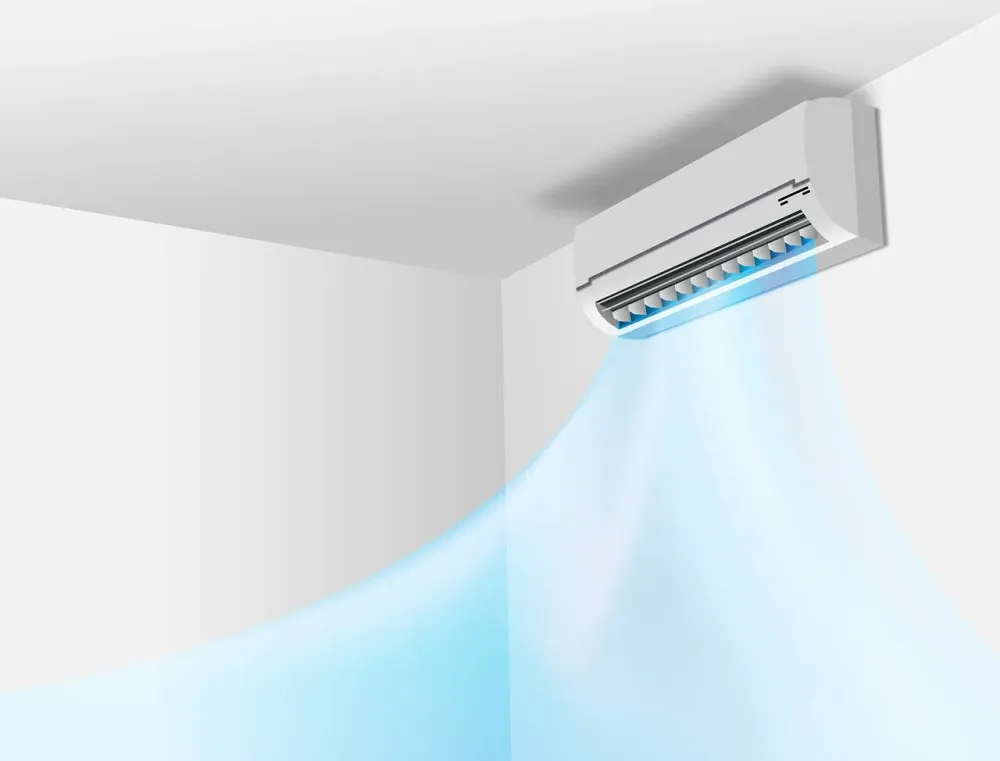
This article is compiled from publicly available online sources for general reference only; readers should independently verify and judge its accuracy, and it is not legal, tax, medical or engineering advice. Rules, fees and subsidies change; check the latest notice from the responsible authority before acting. For electrical, gas, structural or health risks, consult a qualified professional.
This is the English edition of a Chinese article, adapted with AI assistance and checked against the original. Where the two differ, the Chinese version and the official sources it cites prevail.
Note: When purchasing electric fans or air circulators, look for the Bureau of Standards, Metrology and Inspection (BSMI, 經濟部標準檢驗局) commodity inspection certification mark, prioritizing DC inverter models bearing the Energy Administration, Ministry of Economic Affairs (經濟部能源署) Energy Label. Always unplug before clearing dust from grilles and blades; if motors exhibit unusual noise, burning odor, or sluggish rotation, disconnect power immediately for servicing.
Circulation Fans vs Traditional Fans: Airflow Dynamics and Functional Comparison
Why does pointing a circulation fan directly at your face feel overly harsh and induce headaches, while traditional fans fail to circulate cool air into adjoining dining areas? Fluid dynamics explain the difference:
| Comparison Item | Air Circulator Fan (Vortex Fan) | Traditional Fan (Stand / Desk Fan) |
|---|---|---|
| Blade and grille design | Aircraft turbine inspired: deep pitched narrow blades, elongated cylindrical duct, spiral front grille | Flat shallow blades (commonly 5, 7, or 9 blades) with shallow dish grilles |
| Airflow pattern | Concentrated spiral columnar jet with high dynamic pressure and long reach (10 to 20+ meters) | Broad cone-shaped diffused breeze covering wide area but decaying rapidly after 2 to 3 meters |
| Intended target | Aimed at air, ceilings, or diagonal corners to establish whole-room circulation | Aimed directly at human skin to sweep away heat and sweat, cooling skin 1 to 2°C |
| Tilt adjustment range | Tilts up to 90 degrees vertically toward ceiling, supporting 3D oscillation | Primarily horizontal oscillation; vertical tilt limited to 15 to 30 degrees |
| Best application scenarios | Equalizing AC/heater temperatures, pushing air across elongated layouts, drying clothes with dehumidifiers | Mild spring/autumn cooling, gentle sleeping breeze directed at beds |
Where to Place Circulation Fans for Max Efficiency: 4 Seasonal Setups
Circulator placement leverages basic physics: cold air is denser (sinks to the floor), while warm air is lighter (rises to the ceiling). Circulators blend these separated thermal layers:
| Appliance and Season | Optimal Circulator Placement | Airflow Angle and Convective Principle |
|---|---|---|
| 1. Summer pairing with AC | Position A (Preferred): Directly below AC supply (same wall, backing to AC); Position B: Diagonal far corner of room | Direct AC louvers horizontally; tilt circulator at Position A 30 to 45 degrees upward toward room center (or Position B toward AC base) to lift pooled floor cold air toward ceilings |
| 2. Winter pairing with electric heaters | Place in room corner diagonally opposite heater outlet | Warm air pools near ceilings; tilt circulator 45 to 90 degrees upward at ceiling to break up warm layers and circulate them back down |
| 3. Rainy days pairing with dehumidifiers | Place dehumidifier near drying racks; place circulator beneath or beside clothes | Blow circulator upward through gaps between hanging garments to accelerate surface moisture evaporation, doubling dehumidifier extraction |
| 4. Quick heat purge when returning home | Place roughly 1 meter inside open windows or balcony doors | Before turning on AC, open windows and doors, pointing circulator outward through window for 3 to 5 minutes to purge hot indoor air efficiently |
For AC electricity savings when pairing 26 to 28°C settings with fans, saving 6% per degree, and Taipower (台電) calculations, see AC Temperature Setting 26 to 28 Degrees and 6 Percent Savings Calculation; to check room cooling tonnage needs, use the AC Tonnage and Cooling Capacity Calculator.
DC Inverter Motors vs AC Motors: Wattage, Noise, and Cost Analysis
Whether choosing circulators, pedestal fans, or ceiling fans, motors divide into traditional AC induction and modern DC brushless inverter types. Calculated over 12 hours daily for 4 summer months (120 days):
- Power draw differs 2 to 5 times: Traditional 14-inch AC fans consume approx. 35W on low and 50W to 60W on high. DC inverter units consume just 2W to 5W on sleep breeze, 10W to 15W at medium speed, and 22W to 28W on maximum blast.
- Summer electricity cost comparison: At medium speed 12 hours daily and NT$3.5 per kWh, an AC fan (45W) uses 64.8 kWh (approx. NT$227), while a DC fan (12W) consumes just 17.3 kWh (approx. NT$60), saving over 70%!
- Speed increments and whisper operation: AC motors offer only 3 speeds (high, medium, low) with noticeable motor hum. DC motors offer 7 to 12 or more granular speed steps, dropping below 20 dB on low (quieter than turning book pages), ideal for nurseries and light sleepers.
For ceiling fans mounted in living rooms, large blades (commonly 42 to 56 inches) circulate massive vertical air columns efficiently. Ensure three clearance rules: blade height above finished floor exceeds 230 to 250 cm, blade tips clear walls or tall cabinets by at least 50 to 60 cm, and ceiling mounts support 30 kg dynamic load, avoiding positions directly below recessed spotlights to prevent strobe flicker.
Frequently Asked Questions
If buying only one unit for a room, should I choose a circulator or a DC stand fan?
Choose based on habits: if you prefer breeze blowing directly at your skin to feel cool or rely on fans without AC during mild seasons, buy a 14-inch or 16-inch DC stand fan. If you dislike wind blowing on your head, run fans only to assist AC cooling, and dry laundry indoors with dehumidifiers in winter, a compact DC air circulator is superior.
Why is a circulation fan louder than a normal fan at maximum speed?
This is expected physics. To compress air into high-pressure vortex columns reaching 15 meters, circulator blades feature steep pitches and high RPMs. Air rushing through cylindrical grilles generates noticeable wind shear noise. When pairing with AC, run max speed for the first 15 minutes to equalize room air, then drop to medium-low speeds 2 to 4 for whisper-quiet circulation.
How should a circulator be placed to push living room AC into an uncooled study?
To transfer cool air from Room A into adjoining uncooled Room B, place the circulator on the floor at the doorway boundary, backing Room A and aiming horizontally into Room B to push denser floor-level chilled air inward continuously.
When grilles and blades accumulate dust, can they be detached and washed with water?
Refer to your specific product manual. Four manuals reviewed by SOSfix (Panasonic F-H16GND, Sharp PK-18S02 Japanese model, Toshiba F-DLE70HK and F-ALB60HK Hong Kong models) only advise wiping with cloths or vacuuming; none permit soaking motor housings or grilles in water. Sharp bans detergents and washing blade caps, Toshiba F-DLE70HK forbids removing grilles for cleaning, and Panasonic warns against water splashing. Disconnect power, detach only authorized components, wipe with mild detergent or damp cloth, and dry thoroughly; see Electric Fan and Circulator Disassembly, Cleaning, and Noise Guide.
Last updated: 2026-11-03
Compiled by SOSfix from official technical references for general guidance. Consult the Energy Administration, Bureau of Standards, Metrology and Inspection, or appliance manufacturers for specific questions.
Sources
- Energy Administration, Ministry of Economic Affairs: Energy Label Energy Efficiency Standards for Electric Fans and Air Circulators (Verified 2026-11-01): DC vs AC motor efficiency standards and energy conservation guidance when increasing AC temperature setpoints.
- Bureau of Standards, Metrology and Inspection (BSMI): Safety Purchasing and Operating Guidelines for Electric Fans and Circulators (CNS 2062, CNS 60335-2-80, Verified 2026-11-01): Commodity inspection certification checks, motor thermal protection standards, and routine dust cleaning safety advisories.
Related reading: How to Clean and Maintain Your Electric Fan and Circulator · Quiet DC Ceiling Fan With Light Selection Guide


