For baby room air conditioner and heater temperatures, follow the original health education text published by the Ministry of Health and Welfare's Health Promotion Administration (衛生福利部國民健康署) and the Taiwan Pediatric Association (台灣兒科醫學會). When this article was written, the original text could not be opened for word-by-word checking, so it does not fill in its own temperature or humidity numbers. There are three equipment points you can act on: keep airflow from blowing straight onto the crib, place the hygrometer beside the crib at the baby's height rather than under the air conditioner, and judge warm or cold by touching the baby's neck, chest or back instead of only the hands and feet. For medical judgment, ask a pediatrician. This article only covers how to set and place the equipment.
Baby Room AC Settings: Airflow, Humidity, Hygrometer
This article is compiled from publicly available online sources for general reference only; readers should independently verify and judge its accuracy, and it is not legal, tax, medical or engineering advice. Rules, fees and subsidies change; check the latest notice from the responsible authority before acting. For electrical, gas, structural or health risks, consult a qualified professional.
This is the English edition of a Chinese article, adapted with AI assistance and checked against the original. Where the two differ, the Chinese version and the official sources it cites prevail.
Official temperature and humidity ranges
What the Health Promotion Administration or the pediatric association says (quoting the original)
Room temperature and overheating prevention for a baby's sleep environment are covered in the sudden infant death syndrome health education from the Health Promotion Administration and in the sleep environment recommendations from the Taiwan Pediatric Association. The numbers may change as the health education material is updated, so open the official source website directly, copy the original room temperature and humidity ranges onto a note and stick it up at home, then go back and set the equipment. We write a number only if it can be found, and leave it out if it cannot. That is this site's rule for numbers like these.
Why you cannot rely only on the air conditioner panel temperature
The temperature on the air conditioner panel is the target the machine is trying to reach, not the actual temperature at the crib. Temperatures near the air outlet, by the window and beside the crib can differ a lot, so use a hygrometer to measure the actual reading beside the crib, then adjust the set temperature and airflow direction. For the general logic of air conditioner settings and energy saving, see the explanation of air conditioner set temperature and electricity cost.
How to set the air conditioner
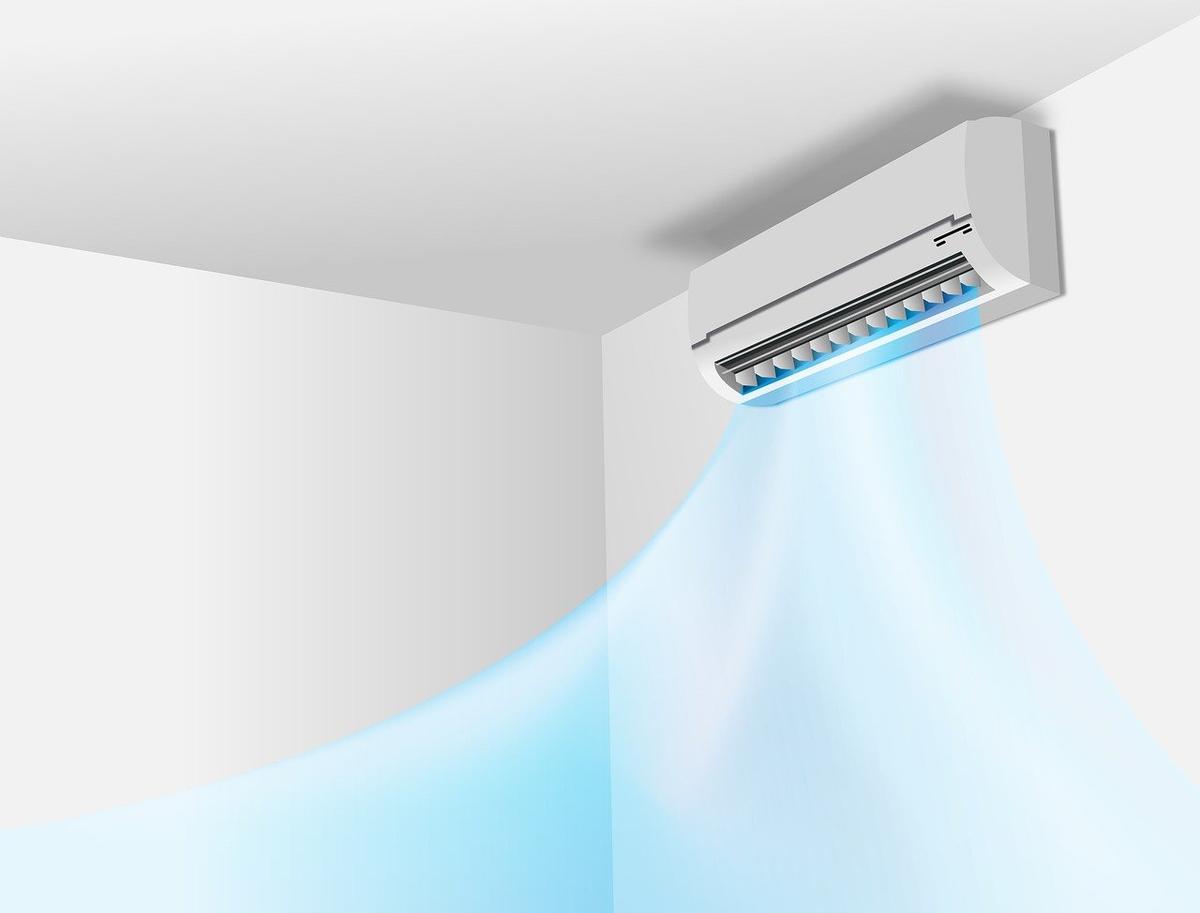
Position of the air outlet relative to the crib, louvers and wind deflectors
- Do not place the crib directly under the air outlet, and do not face it toward the airflow direction.
- Adjust the louvers upward or horizontal so the cold air spreads along the ceiling instead of blowing down onto the crib.
- When adding a wind deflector, make sure it does not block intake or outlet airflow, and install it according to the manufacturer's instructions so it cannot fall into the crib.
- After adjusting, use your hand at crib height to feel for any obvious airflow, and check the spot where the baby sleeps too.
Sleep mode and timer issues
Sleep mode usually adjusts the set temperature step by step during the night, and a timer shuts the unit off at a set time. After shutoff the room temperature rises again, so the night may turn alternately hot and cold, or stuffy. First read the sleep mode description in the manufacturer's manual, watch how the hygrometer beside the crib changes through the night, and then decide whether to use it.
How often to clean the filter
A dusty filter reduces airflow and makes the output uneven, and it can also carry dust into the room. Adjust the cleaning frequency according to the manufacturer's instructions and your usage environment, and in seasons of heavy use, check on a fixed day. Before cleaning, turn off the power and unplug the unit.
Hot and cold swings caused by an oversized unit
When the air conditioner's tonnage is much larger than the room needs, it reaches the set temperature very quickly and stops, then the room temperature rises again, causing temperature swings, and humidity also tends to run high. Before replacing or choosing a unit, first estimate the room's needs with the air conditioner tonnage calculator, then confirm with the contractor.
Winter warming equipment
Differences between heat-and-cool air conditioners, oil-filled radiators and ceramic heaters
A heat-and-cool air conditioner warms the whole room gradually, and its warm airflow direction must also avoid the crib. An oil-filled radiator has a gentler surface temperature and warms up more slowly. A ceramic heater warms up quickly, but most have a fan, so pay special attention to the airflow and local high temperatures. For the power consumption and surface temperature of all three, check the nameplate and manual, and do not choose from impressions.
Heater distance, extension cords and tripped breakers
Place the heater at the safe distance stated in the manual from the crib, blankets and curtains, and do not cover it. Heaters draw a lot of power, so do not connect them to an extension cord or share an outlet with other appliances. If the plug heats up, there is a burning smell or the breaker trips, stop using it immediately. For more winter usage details, see winter electrical safety for space heaters.
Humidity and monitoring
When to use a dehumidifier, the air conditioner dry mode or a humidifier
In humid seasons you can use a dehumidifier or the air conditioner dry mode to lower humidity. Consider a humidifier only when winter air is dry, and clean the water tank regularly to avoid scale and mold. Take the target humidity from the official health education, and for everyday judgment you can refer to indoor humidity and dehumidifier settings and humidifier use in dry winter air and cleaning safety.
Where to put the hygrometer, and whether to get a connected alert
Put the hygrometer beside the crib at the same height as the baby, away from the air outlet, windows, heaters and direct sunlight. A connected model can notify your phone when the reading goes outside a range you set, but it is not essential equipment, and an ordinary hygrometer combined with a habit of checking it regularly also works.
Equipment comparison and placement check
| Equipment | Purpose | Notes |
|---|---|---|
| Heat-and-cool air conditioner | Cooling in summer, warming the whole room in winter | Keep airflow away from the crib and clean the filter regularly |
| Space heater | Local or supplementary warmth in winter | Keep a safe distance, no extension cord, do not cover |
| Dehumidifier | Lowering humidity in humid seasons | Keep the drainage and placement position fixed and clean the tank regularly |
| Humidifier | Adding moisture when winter air is dry | Clean the water tank regularly and avoid excess humidity and mold |
Placement checklist:
- The crib is not directly under the air outlet and does not face the airflow.
- The hygrometer is at the baby's height and not under the air conditioner.
- The heater keeps the distance stated in the manual from the bed, blankets and curtains.
- The heater is not on an extension cord, and the outlet and plug are not heating up.
- The filter and water tank are cleaned on fixed dates.
Electricity cost and circuits
How to estimate the electricity cost of running the air conditioner all night
Electricity cost is roughly power consumption (kilowatts) multiplied by hours of use, then multiplied by the electricity rate. Suppose an air conditioner averages 0.6 kWh per hour; over 8 hours that is 4.8 kWh. This number is only an example of the calculation, so check your own model and electricity bill for actual figures. You can enter your own values in the appliance electricity cost calculator.
A dedicated circuit for the air conditioner and no shared extension cord for heaters
An air conditioner should use a dedicated circuit, and high-power appliances such as heaters should not share an extension cord with it, to avoid overheated wiring or tripped breakers. Adding a circuit or outlet must be assessed by a qualified electrician, and when SOSfix visits for an inspection, we check the outlets, wire gauge and circuit load.
Frequently asked questions
Can a newborn have the air conditioner on all night?
Whether it can run all night is a health judgment, so ask a pediatrician and refer to the official health education. On the equipment side, make sure the airflow does not blow directly, the temperature beside the crib stays steady and the filter is clean, and use a hygrometer to confirm the actual reading.
How do I avoid the air conditioner blowing directly in a baby room?
Adjust the louvers upward or horizontal, move the crib, add a wind deflector according to the manual if necessary, and finally confirm at crib height that there is no obvious airflow.
What happens if the baby room humidity is too high?
High humidity easily causes mold on walls, clothes and furniture, and it also makes the room feel stuffy and hot. First confirm that ventilation and dehumidifying equipment work normally, then keep recording with a hygrometer, and take the humidity range from the official health education.
Can I use a space heater in a baby room?
In terms of equipment you can, but keep a safe distance, do not cover it, do not connect it to an extension cord, and do not leave it for long periods while it is on. Whether it is suitable for a baby, ask a pediatrician.
Sources
- Ministry of Health and Welfare, Health Promotion Administration (衛生福利部國民健康署): sudden infant death syndrome prevention and infant sleep environment health education (checked 2026-11-11): the official homepage, search the site for the original text to confirm the room temperature and overheating guidance
- Taiwan Pediatric Association (台灣兒科醫學會): infant sleep environment recommendations (checked 2026-11-11): the official homepage, search the site for health education on infant sleep
- Ministry of Economic Affairs, Energy Administration (經濟部能源署): air conditioner use and energy-saving promotion (checked 2026-11-11): the official homepage, look up air conditioner use and energy-saving information
Related reading: Plants in Air-Conditioned Rooms: Vents, AC Drips, Humidity