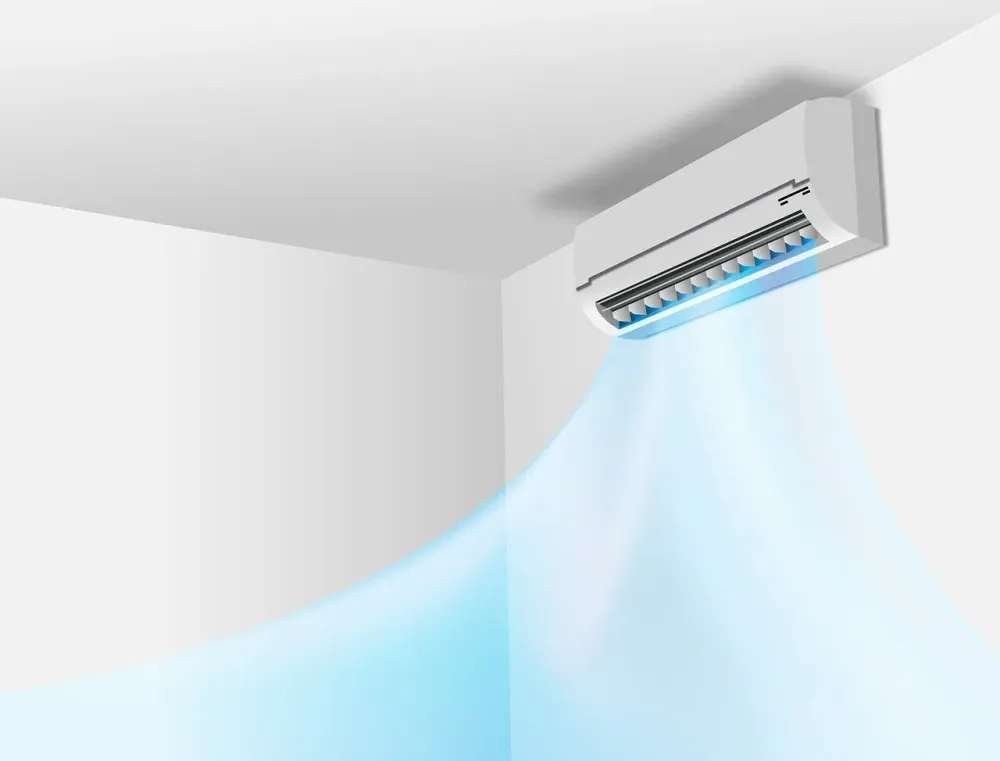
In a 2021 comparative experiment published in the Energy Knowledge Base of the Energy Administration, Ministry of Economic Affairs, set at 26 degrees Celsius, dry mode consumed 10.7% to 12% less electricity per day than cool mode, but room temperature was 1 to 2 degrees higher; the report suggests the public can regard dry mode simply as a "weakened cooling mode." This percentage was measured on a single air conditioner on sunny days with the cooling control set to low breeze, and cannot be directly applied to every home. Dry mode is not an energy-saving button, but rather cooler air blown more gently, suitable for overcast or rainy days when you want to avoid feeling too cold; on hot days when you need to lower room temperatures, still use cool mode.
AC Dry Mode vs Cool Mode in Taiwan: Energy and Usage Guide
This article is compiled from publicly available online sources for general reference only; readers should independently verify and judge its accuracy, and it is not legal, tax, medical or engineering advice. Rules, fees and subsidies change; check the latest notice from the responsible authority before acting. For electrical, gas, structural or health risks, consult a qualified professional.
This is the English edition of a Chinese article, adapted with AI assistance and checked against the original. Where the two differ, the Chinese version and the official sources it cites prevail.
For filter cleaning, refrigerant top-ups, and routine servicing, see the comprehensive air conditioner maintenance guide.
Differences Between Dry Mode and Cool Mode: What Manuals State
The Daikin and Hitachi manuals consulted for this article never describe dry mode as an energy-saving mode, but rather explain how they regulate temperature and fan speed.
- Daikin FTXM series (2025 edition manual, page 10): In dry mode, indoor temperature is kept as stable as possible, with temperature and airflow controlled automatically without manual adjustment.
- Hitachi RAS-NT series (manual page 11): When room temperature exceeds the setting, it cools while dehumidifying; when it drops below the setting, operation pauses and restarts once temperatures rise. When room temperature starts below the setting, the unit automatically sets the target slightly below room temperature; when room temperature is below 16 degrees, it sets to 16 degrees.
- Hitachi same manual page 9 automatic operation rules: When room temperature is around 25 degrees or above, it runs cool mode; between 20 and 25 degrees, it runs dry mode; below 20 degrees, it runs heating.
The Energy Administration report explains the operating principle: standard air conditioners do not feature humidity sensors. The dehumidifying effect of dry mode comes from low supply air temperature (generally 8 to 15 degrees lower than return air) combined with a fixed low breeze, causing moisture in the air to condense on the heat exchanger. The report concludes that air conditioning operation in dry mode resembles cooling mode, differing in fixed low fan speed and differing compressor loading and unloading thresholds.
Energy Administration Test Data: Power Saved vs Temperature Sacrificed
This experiment was conducted at the Shalun revolving test platform (published in the Energy Knowledge Base; at the time of the 2021 test, the agency was the Bureau of Energy, Ministry of Economic Affairs) using identical Hitachi 14.0 kW split air conditioners (RAD-140NX1, CSPF 5.08) in side-by-side rooms measuring 5.4 × 6.6 × 3.85 m. Both were set to 26 degrees from 8 AM to 6 PM with west-facing windows, 40% window-to-wall ratio, no exterior shading, and an office thermal load of 2 people plus 2 computers, swapping dry and cool modes between rooms. Crucially, the cooling control room fan speed was also fixed to "low breeze," matching the fixed low airflow of dry mode; both rooms had an initial relative humidity around 50%, which was already relatively low. Table 3 lists data across 6 sunny days from May 7 to 12 in 2021 (the report text states May 9 to 12, inconsistent with Table 3, so this article follows Table 3); on May 9 cited in the report, outdoor temperatures ranged from 30.6 to 35 degrees.
| Metric | Dry Mode | Cool Mode | Source |
|---|---|---|---|
| Daily power consumption (Room B dry, Room A cool, 3-day average) | 8.84 kWh | 9.91 kWh (dry consumed 10.7% less) | Energy Administration Report Table 3 |
| Daily power consumption (Room A dry, Room B cool, 3-day average) | 8.66 kWh | 9.84 kWh (dry consumed 12.0% less) | Energy Administration Report Table 3 |
| Average indoor temperature before noon | 26.8 degrees | 25.1 degrees | Energy Administration Report Page 4 |
| Average relative humidity before noon | 48% | 49.5% | Energy Administration Report Page 4 |
| Afternoon west-facing sun period | Averaged roughly 28.2 degrees, 0.5 to 1 degree higher than cool mode, peaking near 30 degrees | Also running on low breeze, cooling output was noticeably insufficient | Energy Administration Report Page 4 |
The test demonstrates that when dry mode saved roughly 1 kWh per day, the indoor space was 1 to 2 degrees warmer, and average humidity before noon differed by only 1.5 percentage points (48% vs 49.5%). In other words, dry mode saves electricity because it cools less intensely, not because it removes humidity with zero cooling power. The report also cites a 2009 Tokyo Electric Power Company survey showing dry mode used roughly 15% of cool mode power, but emphasized that Japanese market multi-stage reheat dehumidification systems differ completely from conventional single-cooling units sold in Taiwan.
For de-icing, drainage, and safety when using portable dehumidifiers, see New Taipei dehumidifier drainage and electrical safety; for target humidity comfort, see indoor relative humidity targets.
When to Use Dry Mode vs Cool Mode
Based on Energy Administration findings, manufacturer manuals, and Taipower recommendations, use the following operational guidance:
| Scenario | Recommendation | Rationale and Source |
|---|---|---|
| Midsummer afternoons, western exposure, high occupancy | Cool mode, set at 26 to 28 degrees with electric fans | Dry mode provides inadequate cooling under high thermal loads (Energy Administration); Taipower recommends 26 to 28 degrees paired with fans |
| Plum rain season, cloudy or rainy days, clammy but not hot | Dry mode | Energy Administration recommended scenario; Hitachi automatic operation runs dry mode between roughly 20 and 25 degrees |
| Feeling uncomfortably chilly while sleeping | Raise temperature or reduce fan speed first before considering dry mode | Energy Administration: raise set temperature, lower fan speed, or switch to dry mode; Taipower: each 1 degree higher saves 6% cooling power |
| Primary goal is lowering indoor moisture | Use a standalone dehumidifier, not AC dry mode | Standard air conditioners lack humidity sensors and dehumidification is marginal (Energy Administration); dehumidifier wattage can be calculated via energy labels (Taipower) |
More Effective Energy-Saving Measures Than Switching Modes
- Set temperatures to 26 to 28 degrees paired with an electric fan. Taipower states electric fans consume about 50 to 70 watts per hour, while air conditioners consume at least 800 to 2000 or 3000 watts; running both reduces compressor run-time.
- Every 1 degree higher in temperature setting saves roughly 6% of air conditioner power.
- Wash air filters every 2 to 3 weeks using plain water or neutral detergent without harsh scrubbing, and dry in shade away from direct sun.
- Replace aging units with Grade 1 energy efficiency models. To check whether appliance tonnage matches your room ping (1 ping ≈ 3.3 m²), calculate with the room ping and AC tonnage calculator, and review the relationship between cooling capacity and bills in how to choose AC tonnage.
For fan mode before powering off, see whether to run fan mode before turning off the AC; for electricity bill calculations, see calculating household appliance kilowatt-hours.
Conditions That Are Not Dry Mode Malfunctions
- Indoor unit blows no air for a period in dry mode: Hitachi manual page 11 states that when room temperatures rise and operation resumes, air is held back for about 30 seconds to enhance dehumidification; Daikin manual page 29 notes that auto fan mode deodorizes for about 1 minute before blowing air.
- White vapor mist emerging from discharge louvers during dehumidification: Hitachi manual page 24 and Daikin page 30 categorize this as normal, caused when room air is rapidly cooled by cold airflow.
- Indoor unit dripping water during dehumidification: Daikin manual page 30 explains that operating beyond rated conditions (maximum indoor humidity of 80% for cool and dry modes) may cause surface condensation and dripping. To determine drip locations, see whether to shut off or keep running when the indoor unit drips.
Frequently Asked Questions
Does running AC dry mode all night save more power than cool mode?
Not necessarily. The Energy Administration report only tested from 8 AM to 6 PM, not overnight, and evaluated a single unit with the cooling group set to low breeze; under those conditions at 26 degrees, dry mode used about 10.7% to 12% less electricity but room temperature was 1 to 2 degrees higher. To save electricity, Taipower recommends raising temperature by 1 degree, which saves about 6% cooling power.
In dry mode, does the compressor stop running while only the fan spins?
No. The Energy Administration report clarifies that dry mode, like cool mode, condenses moisture via the heat exchanger to reduce temperature and humidity, but maintains a fixed low breeze with different thermal control logic. Operating only the fan is "fan mode"; Daikin FTXM manual page 10 specifies that fan mode applies "only to the fan."
On rainy days when the room is damp, is AC dry mode effective?
Only slightly, so keep expectations modest. Energy Administration measurements showed average relative humidity before noon differed by only 1.5 percentage points between modes, and standard air conditioners lack humidity sensors. For true moisture removal, this article recommends a dedicated dehumidifier, calculating power consumption using Taipower formulas.
Last updated: 2026-10-30
This article is compiled from public documentation by SOSfix for general reference; for specific issues, consult official service centers or qualified technicians.
Sources
- Energy Administration Energy Knowledge Base: Air Conditioner Dry Mode Experimental Analysis (file timestamp 2021-09-10, experiment date May 2021, formerly Bureau of Energy): test conditions including low fan speed, thermal loads, initial humidity, Table 3 power data, 10.7% to 12% energy savings, 1 to 2 degrees higher indoor temps, humidity differences, lack of humidity sensors, 8 to 15 degrees lower supply air, description as weakened cooling mode, and Tokyo Electric Power Company 2009 survey.
- Taiwan Power Company (Taipower) energy-saving tips: Have you washed your AC filter?: setting AC to 26 to 28 degrees with fans, saving 6% per 1 degree increase, cleaning filters every 2 to 3 weeks, and upgrading to Grade 1 energy efficiency.
- Taiwan Power Company (Taipower) energy-saving tips: Is running AC and fan together wasteful?: fan using 50 to 70 watts versus AC consuming 800 to 2000 or 3000 watts, combined use reducing compressor run-time.
- Taiwan Power Company (Taipower) energy-saving tips: How much power does a dehumidifier consume all day?: calculating power via rated capacity and energy factor, with 10.5-liter units using about 4.3 kWh for Grade 1 and 6.1 kWh for Grade 4.
- Daikin (Hotai Development) FTXM22 to 90ZVLT User Manual (3P697657-3E, July 2025 edition): page 10 dry operation notes and fan mode notes, page 29 deodorization delay of 1 minute, page 30 mist as non-fault and operating conditions up to 80% indoor humidity.
- Hitachi (Johnson Controls-Hitachi Air Conditioning Taiwan) RAS-22NT to 90NT Inverter Split Air Conditioner User Manual: page 9 auto operation temperature thresholds, page 11 dry operation notes and 30-second delay, page 12 rapid dehumidification for 1 hour, page 24 mist emission as non-fault.
Related reading: Optimal AC Temperature: 26 to 28°C Energy-Saving Guide