Power outage is not scary, only the second when power is restored
Power outages are common in Taipei and New Taipei during typhoons. Taipower's emergency repair crews usually start restoring power after the wind and rain subside. But what many people don’t know is that the moment of power restoration is often accompanied by violent voltage fluctuations. This phenomenon is called "surge", and the voltage may surge to several times the normal value in a very short period of time before gradually stabilizing.
This instantaneous high-voltage impact is like a heavy punch, hitting the control circuit board (PCB) of your home appliance directly. The electronic components of televisions, air conditioners, washing machines, computers, and other devices that contain precision IC chips cannot withstand this abnormal voltage. At worst, they may function abnormally, or at worst, the motherboard may be directly burned. What's even more troublesome is that some injuries are "chronic" - on the surface, the appliance can still be used, but the internal components have been damaged, its lifespan is greatly shortened, and it suddenly breaks down after a few months.
Self-protection actions during power outage: cut off the power first and then wait
As soon as you notice a power outage, please do the following things immediately:
- Turn off the main switch of the distribution box: This is the simplest and most effective way of protection. Turning down the main switch is equivalent to setting up a wall between your home and Taipower's power supply, so that surges during power restoration will not rush in directly.
- Unplug precision electrical appliances: Unplug all power cords of TVs, computers, stereos, microwave ovens, and inverter air conditioners. Even if the main switch has been turned off, it is always good to have an extra layer of protection.
- Fridges can stay plugged in: Refrigerators are more durable and need to maintain refrigeration during power outages. If the power outage lasts less than four hours, try not to open the refrigerator door so that the cold air will not dissipate too quickly.
Correct boot sequence after power restoration
When you notice the power is back on (usually the lights in hallways or common spaces), don't rush to turn all appliances on at the same time. The correct approach is:
- Observe for 5 to 10 minutes first: After turning on the main switch, turn on only one light and observe whether it glows steadily. If the light flickers on and off and flashes frequently, it means the voltage is not yet stable, so continue to wait.
- Restore power one by one: After the voltage is stable, plug the refrigerator back in first, and wait until its compressor starts running normally before connecting the next device. Leave one to two minutes between each device.
- Turn on high-power appliances last: Turn on high-power appliances such as air conditioners, electric water heaters, and ovens last, and do not turn on multiple appliances at the same time. The instantaneous current when multiple high-power electrical appliances are started at the same time is very large, which can easily cause another power trip.
Anti-surge equipment: Spend a little money and save on major repairs
If you have expensive electrical or electronic equipment at home, it is recommended to invest in some anti-surge devices:
| Device type |
Applicable scenarios |
Estimated cost (NTD) |
| Anti-surge extension cable (SPD socket) |
General home appliances such as TVs, stereos, computers, etc. |
NT$ 500 – $1,500 |
| Distribution box level surge protector (SPD) |
Whole house protection, installed in the main distribution box |
NT$ 3,000 – $8,000 (including installation) |
| Uninterruptible power supply system (UPS) |
Uninterruptible devices such as computers, NAS, and monitoring hosts |
NT$ 3,000 – $15,000 |
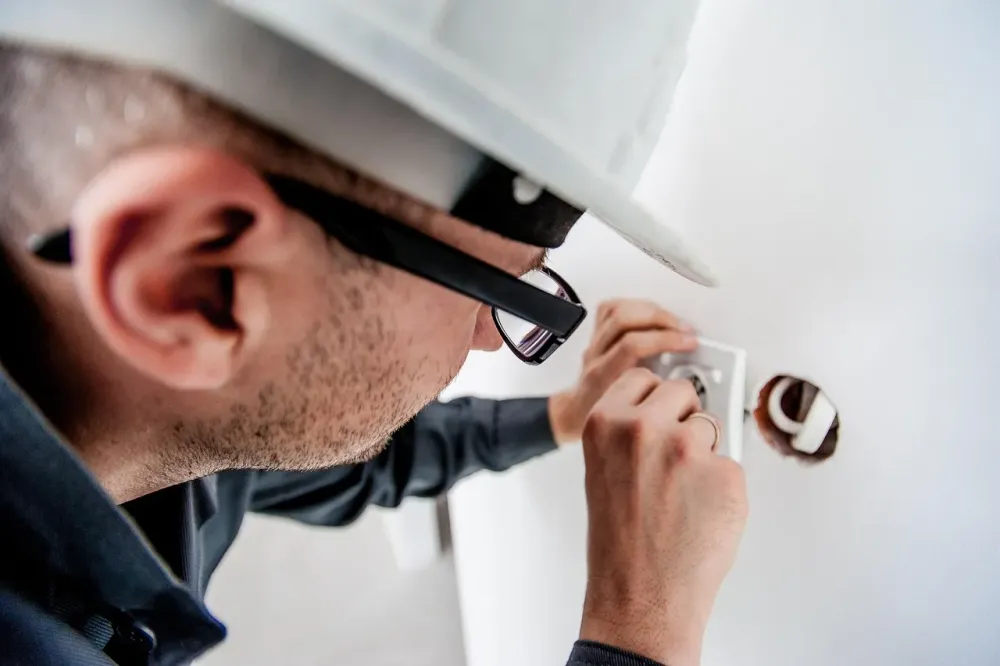
Distribution box level surge protector (SPD) is the most recommended option. It is installed on the main line of the main distribution box. When abnormal high voltage is detected, it will guide the excess energy to the ground wire within nanoseconds and drain it away, protecting the electrical equipment in the whole house from the source. It is recommended to ask a plumber technician with a Class A or B electrician's license to install it.
Lightning induced surge: Lightning rods cannot protect your electrical appliances
Many people think that if a building has a lightning rod, it will be fine. In fact, the lightning rod only protects the building structure from being damaged by direct lightning strikes. It is powerless against surges caused by "induction lightning". The so-called induction lightning means that when lightning strikes a nearby telephone pole or the ground, the strong electromagnetic field will induce a high-voltage pulse on the surrounding wires, network lines, and fourth cables. This pulse will be transmitted along the lines into your home.
This is why sometimes electrical appliances break down inexplicably even though lightning did not hit near your home. The most effective way to protect against inductive lightning is to install SPD at the distribution box level, and then use it with network equipment with surge protection function (such as a network switch with SPD or a coaxial cable surge protector installed at the front end of the MOD modem).
Conclusion: Power outage is a test, power restoration is a risk
Typhoon power outages are just inconvenient, but sudden surges at the moment power is restored may cost you tens of thousands of dollars in appliance repair costs. Develop the habit of "turning off the main power when there is a power outage and restore power slowly", and spend a little budget to install a distribution box-level surge protector to minimize the risk. This is not just homework during the typhoon season, it is useful throughout the thunderstorm season.
🇹🇼 Expat Living Note: Home Repairs in Taiwan
If you are an international resident renting an apartment in Taipei, New Taipei, or anywhere in Taiwan:
- Voltage & Electrical Safety: Taiwan standard household voltage is 110V (60Hz). Do not plug 220V imported European/UK appliances directly without a certified step-up transformer.
- Plumbing Terminology: Local plumbers are called 水電 (Shuǐdiàn) and handle both water and electrical repairs.
- Landlord Obligations: Under Article 429 of Taiwan Civil Code, landlords are legally responsible for repairing natural wear and tear (such as hidden wall pipe leaks, water heater faults, or booster pump failures) unless explicitly waived in your lease.
Legal Disclaimer
The information provided on this website is for general educational and reference purposes only. For hazardous repairs involving live 220V electrical circuits, main gas lines, or structural wall drilling, always consult certified, licensed technicians. SOSfix disclaims any liability for personal injury or property damage resulting from DIY repair attempts.