Flushing Yellow Water from Toilet Bases Is Not a Silicone Issue
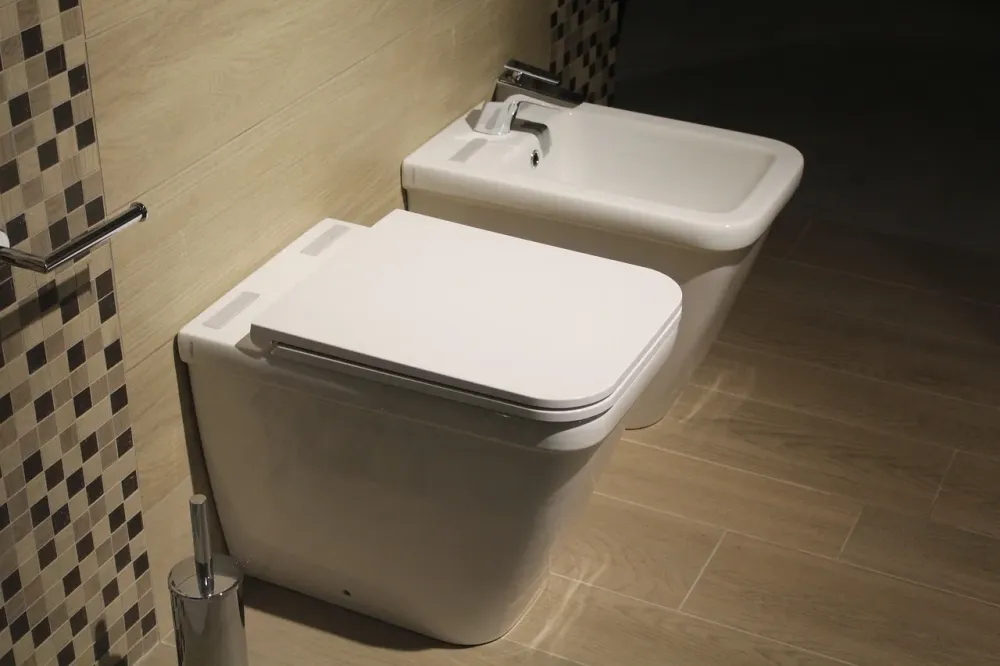
Many homeowners walking into bathrooms notice a lingering septic sewer odor, observing that the perimeter silicone caulk between the toilet porcelain base and floor tiles has yellowed and blackened, slowly weeping foul yellowish wastewater after every flush. A common reaction is applying more anti-mold silicone around the base, but within two weeks sewage and odors rupture through the bead as foul as ever.
Perimeter silicone caulk is merely aesthetic finishing; the true barrier preventing sewage and sewer gases from escaping is the high-polymer wax ring flange gasket (油泥法蘭密封圈) concealed between the toilet horn outlet and the floor PVC drain pipe. Under Article 29 of the Building Technical Regulations Architectural Equipment Chapter (Article 29; 29) from the Ministry of the Interior and CNS 3220 standards, sanitary fixtures and drainage piping must maintain complete watertightness and airtightness.
💡 Plumbing Technician Insight: If you merely seal the toilet exterior with silicone caulk, trapped wastewater cannot escape onto tile surfaces; instead, it is absorbed across the porous mortar bed beneath floor tiles, soaking structural subfloors to cause moldy rot in adjoining bedroom wood floors, or migrating downward into downstairs ceilings to trigger costly damage disputes.
Three Root Causes Behind Wax Ring Flange Failure and Leakage
- Floor drain pipe recessed below finished floor tile surface: When tiling bathrooms, if masons fail to extend the rough-in 4-inch or 3.5-inch PVC waste pipe (4, 3.5), leaving the pipe flush or recessed 1 to 2 cm (1-2 cm) below mortar, the wax ring flange cannot sleeve tightly over the collar. Powerful flush velocities strike the gap directly, washing away the wax seal.
- Toilet installed off-center or misaligned: During renovations, if floor rough-in distances (30 cm or 40 cm; 30, 40) mismatch new fixtures and contractors use substandard offset flanges or press the toilet down crookedly, the wax ring is crushed unevenly, tearing an opening.
- Legacy low-grade paraffin wax hardening and cracking: Traditional paraffin wax rings dry out after 5 to 8 years (5-8 years) in humid conditions, forming permanent fissures when subjected to seismic tremors or rocking motion.
DIY Replacement Guide: Toilet Removal and New Flange Installation SOP
Replacing flanges on dry-installed toilets is straightforward; legacy wet-bed cement-installed toilets should be addressed by professionals to avoid cracking porcelain:
- Shut off water and evacuate tank water: Close the angle stop supply valve, depress the flush handle to empty the cistern, and sponge or syringe dry all standing water inside the P-trap bowl.
- Slice perimeter caulk and remove bolts: Slice through old perimeter silicone caulk along the bowl base with a utility knife, removing decorative caps and nuts from floor mounting bolts.
- Lift toilet vertically: Grip the toilet bowl waist firmly with both hands, lifting straight up vertically (keeping the unit level to avoid spilling residual trap water), and rest it sideways onto heavy cardboard or old towels.
- Scrape old wax and clean surfaces: Use a putty scraper to remove old black sticky wax residue from the bowl horn outlet and PVC floor pipe, degreasing surfaces thoroughly.
- Check floor waste pipe height: The PVC collar should ideally project 10 to 15 mm (10-15 mm, or roughly 1.5 cm; 1.5) above the finished tile surface. If the collar sits too low, glue a PVC extension sleeve or specialty raised flange to achieve proper height.
- Fit new high-polymer composite anti-odor flange: Press a new composite flange (featuring rubber guide sleeves and butyl rubber mastic) firmly onto the porcelain horn outlet rim.
- Align and press down firmly: With two people, align the toilet vertically over the drain pipe centerline, lowering it smoothly onto the floor. Sit on the bowl seat, utilizing full body weight (60 to 80 kg; 60-80kg) for 10 seconds (10s) to compress the wax mastic into an airtight seal. Fasten floor bolts snugly by hand without overtightening porcelain.
- Seal perimeter joints: Tool a smooth bead of neutral anti-mold silicone around the base seam, allowing 24 hours (24h) for complete curing before flushing.
| Flange Gasket Category |
Key Advantages |
Primary Limitations |
Applicable Installation Scenarios |
| Traditional Pure Paraffin Wax Ring |
Lowest retail price (few tens of dollars) |
Prone to drying out and cracking; single-use only |
Early legacy wet-set cement toilets |
| Polymer Butyl Rubber Flange |
Permanent elasticity, tenacious adhesion, acid/alkali proof |
Sticky handling; requires precise alignment |
Standard choice for modern dry-installed toilets |
| Flange with Rubber Funnel Sleeve |
Deep rubber sleeve inserts into pipe, preventing backflow |
Pipe diameters must match dimensions precisely |
Drain pipes with minor floor elevation variances |
Plumbing Labor Rates for Flange Replacement and Re-seating
- Replacement component costs: High-grade composite polymer rubber toilet wax flanges cost roughly NT$200 to $450 (200-450); neutral anti-mold silicone costs approximately NT$150 to $200 (150-200).
- Professional plumbing service rates: For modern dry-installed toilets, contractor service to remove the bowl, clean old caulk, install a new flange, and reseal costs around NT$2,000 to $3,500 (2,000-3,500); older wet-set cement toilets requiring chiseling cost NT$3,000 to $4,500 (3,000-4,500).
When maintaining bathroom drainage, review Toilet Fill Valve Running and Float Adjustment DIY and whole-building drain-waste-vent piping maintenance.
Frequently Asked Questions About Leaking Toilet Bases
Q1: Can expandable spray foam (PU foam) replace a wax ring flange?
This is strictly prohibited. Open-cell polyurethane foam absorbs urine-tinged wastewater like a sponge, festering with unbearable stench. Furthermore, expansive curing forces can crack and shatter porcelain toilet bases.
Q2: How long after installing a new wax ring flange can the toilet be flushed?
Wax ring flanges seal instantly upon compression; you can immediately perform 2 to 3 test flushes (2-3 flushes) to verify drainage and confirm zero leaks before applying perimeter silicone caulk. Once silicone is tooled, keep the perimeter dry for 24 hours to cure.
Related reading: Toilet Wobbly Base Leak Causes And Silicone Sealing Guide