Why Smart Home Enthusiasts Recommend Neutral Switches: No-Neutral Flaws
When transitioning to smart home ecosystems (HomeKit, Home Assistant, Aqara, Mi Home), many homeowners purchase single live-wire smart switches only to face persistent headaches: LED ceiling downlights flickering dimly at midnight (ghost glow), smart switches repeatedly dropping offline, or high-power smart switches failing to boot.
Under conventional Taiwanese wiring practices, wall light switches only interrupt the live conductor, leaving junction boxes with only an energized live line and switched load travelers, without a neutral wire. To maintain standby power for internal Wi-Fi or Zigbee chips when lights are switched off, no-neutral switches trickle parasitic current through the light fixture back to the neutral busbar; this tiny leakage current repeatedly charges sensitive LED driver capacitors, causing noticeable ghost glow and flicker.
💡 Decisive Advantages of Neutral-Wire Required Switches: Neutral-wire switches connect both live and neutral lines, forming an independent, closed 110V circuit that delivers continuous power to smart wireless chips without passing current through fixtures. They eliminate flicker, maintain rock-solid mesh connectivity, and act as Zigbee signal routers, serving as the definitive standard for smart homes!
Identifying Switch Box Wiring and Tracing Circuit Conduits
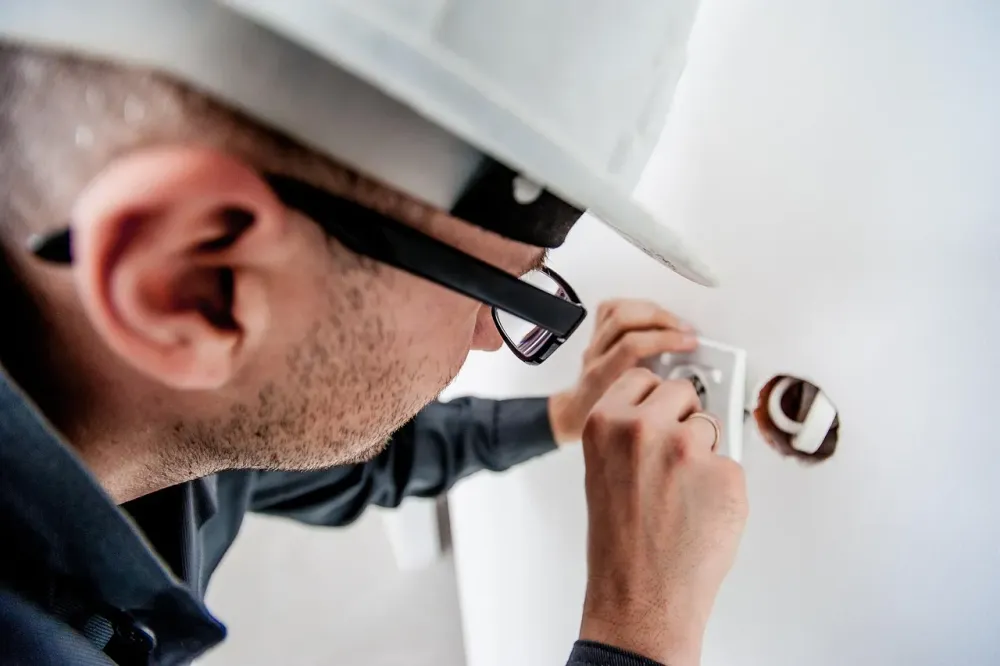
Remove legacy mechanical wall plates to inspect wire colors and terminal configurations pursuant to User Electricity Device Installation Rules Article 54:
- Characteristics of Single Live-Wire Boxes (95% of Older Homes): Enclosures contain only black conductors (110V live feed inserted into terminal 0) and red or yellow conductors (switched load lines in terminals 1 or 3). The box bottom contains zero white neutral wires.
- Tracing Neutral Routing: In residential concealed PVC conduit networks, white neutral wires (N-phase) routed from distribution panels enter ceiling junction boxes directly to connect luminaires, bypassing wall switch boxes entirely.
- Core Wire-Pulling Strategy: Utilize embedded 4-minute (1/2 inch) PVC conduits connecting ceiling octagonal junction boxes and wall switch boxes, fishing an additional 2.0mm single-core white copper wire into the switch box to complete the upgrade!
Step-by-Step Neutral Pulling SOP: Fish Tape and Water-Based Lubricant Tips
Pulling wires through embedded conduits requires methodical care; never pull violently to prevent jamming wires in bends:
- Distribution Panel De-energization and Safety Verification: Switch off the branch circuit no-fuse breaker (NFB, 無熔絲開關) and probe all switch box terminals with a voltage tester to verify 0 volts.
- Dismantle Ceiling Luminaires to Access Octagonal Boxes: Remove the ceiling fixture to access the concrete-embedded octagonal junction box, locating the PVC conduit port heading down to the wall switch (tug the wall switch traveler line gently to identify the moving wire in the ceiling).
- Feed Professional Fish Tape:
- Utilize 3-strand braided fiberglass jacketed fish tape (diameter approx. 4 to 6mm) equipped with rotating spring roller guide heads.
- Feed the tape upward from the wall switch box or downward from the ceiling junction box until the guide tip emerges through the opposite conduit opening.
- Secure Wire Harness and Apply Water-Based Pulling Lubricant:
- Strip 5 cm of copper core from brand-new CNS 690 certified 2.0mm single-core white insulated wire, loop and twist it firmly through the fish tape eyelet, and wrap electrical tape into a tapered, hydrodynamic bullet-nose shape without sharp edges.
- Coat wire jackets generously with water-based wire pulling lubricant, reducing wall friction by over 70%. Never apply dish soap, salad oil, or cooking grease, as food-grade oils harden into sticky residues upon drying and degrade PVC conduits and insulation.
- Coordinated Two-Person Pulling Workflow: One technician pulls the fish tape at a steady pace from the exit port while the other guides wire smoothly into the entrance port, preventing kinks or twisting.
- Electrical Termination and Splicing:
- Ceiling side: Use closed-end crimp caps or WAGO spring lever connectors to securely splice the new white wire into the bundled ceiling neutral bus.
- Switch side: Insert the new white wire into terminal N of the neutral smart switch; connect the black line to terminal L; connect traveler load lines to terminals L1 and L2.
| Smart Switch Type |
Key Advantages |
Key Disadvantages |
Recommended Applications |
| No-Neutral Switch |
Requires zero wire fishing, directly replaces older switches |
Prone to LED ghost flicker, radio offline drops, requires bypass capacitors |
Rental properties where conduits are jammed and cannot accommodate new wires |
| Neutral-Wire Switch |
Clean power delivery, zero ghost glow, acts as mesh router, ultra-stable |
Requires neutral wire in switch box, necessitating wire fishing in older homes |
Owner-occupied properties prioritizing long-term stability and whole-home automation |
Electrical Wire-Pulling Market Rates and Tool Budget Estimates
- DIY Tools and Material Costs: 15-meter fiberglass fish tape costs about 250 to 400 NTD; water-based wire pulling lubricant costs about 150 NTD; 50-meter cut lengths of 2.0mm white single-core copper wire cost about 200 to 300 NTD; several WAGO 221 lever connectors cost around 50 NTD.
- Professional Electrician Contracting Rates: In Greater Taipei, hiring licensed electricians to pull neutral wires through conduits is charged per junction box or on half-day and full-day labor rates. Fishing neutral lines into a single switch box costs roughly 800 to 1500 NTD; retrofitting 5 to 8 switch boxes across a whole apartment costs approximately 3500 to 5500 NTD for full-day labor and materials.
When planning switch retrofits, review our guides on integrating smart homes with existing older wiring without wall damage and installing anti-flicker capacitors for LED ghost glows.
Neutral Wire Retrofit Frequently Asked Questions
Can I borrow the ground wire from an adjacent 3-prong outlet as a neutral wire?
Strictly prohibited and exceptionally dangerous! Ground wires serve solely to discharge leakage current during faults and must never carry continuous operating currents. Misusing ground lines as neutral conductors charges metal piping and appliance chassis with induced voltage, while continuously tripping the earth-leakage circuit breaker (ELCB, 漏電斷路器) in your distribution panel!
If older conduits are blocked and fish tape cannot pass, is there a wire-free alternative?
If embedded conduits are compressed or obstructed with hardened mortar, install an in-wall smart switch relay module directly inside the ceiling octagonal box where neutral and live wires already reside; repurpose existing wall mechanical switch lines for low-voltage signal toggling without pulling new wires through conduits.
Related reading: Smart Switch Wiring Guide: Neutral Wire Retrofit in Homes