
Many homeowners use a 3-prong receptacle phase detector (3-light tester) to check wall outlets and discover warning lights indicating reverse ground or reverse polarity (hot and neutral reversed); or when touching metal appliance chassis (such as PC cases, electric ovens, or espresso machines), their palms feel a tingling micro-electric shock. Many think that if appliances still turn on, reversed polarity does not matter. However, reverse polarity compromises appliance safety protections, leaving the interior of switched-off appliances charged at a lethal 110V voltage.
Looking for the Chinese version of this article?切換至繁體中文版 →
Reverse Polarity Outlet Safety: Tester Guide and Correction
This article is compiled from publicly available online sources for general reference only; readers should independently verify and judge its accuracy, and it is not legal, tax, medical or engineering advice. Rules, fees and subsidies change; check the latest notice from the responsible authority before acting. For electrical, gas, structural or health risks, consult a qualified professional.
This is the English edition of a Chinese article, adapted with AI assistance and checked against the original. Where the two differ, the Chinese version and the official sources it cites prevail.
Warning: Before swapping receptacle wiring to correct polarity, always switch off the branch no-fuse breaker (NFB, 無熔絲開關) in the main breaker box, and re-test with a phase tester or voltage detector pen to verify that all 3 indicator lights are extinguished and power is completely shut off. Never pull live copper wires by hand; if live copper touches grounded metal boxes, violent short circuits and molten copper sparks will occur.
1. Standard AC Phase Polarity: Long Neutral Slot vs Short Hot Slot Design
Although Taiwan single-phase 110V alternating current alternates direction 60 times per second (60Hz), potential to earth carries fundamental safety differences:
- Neutral wire (Neutral, water wire/zero wire): In Taipower distribution transformers and residential main breaker distribution panels, the neutral wire connects directly to earth grounding copper buses, maintaining a ground voltage of 0 volts (0V) so touching neutral barefoot theoretically prevents electric shock. The outlet slot is the longer, wider left slot (length approx 9mm), with the rear wiring terminal marked W (White).
- Ungrounded conductor (Phase, hot wire): Continuously carries high-frequency AC voltage of 110 volts (110V) relative to earth. The outlet slot is the shorter right slot (length approx 7mm).
- Equipment ground wire (Ground, earth wire): Green conductor dedicated to draining leakage current safely to earth, shaped as the lower semi-circular or round hole.
2. 3 Deadly Hazards of Reverse Polarity for Home Safety
- Appliance switches cut 0V neutral, leaving interiors energized with 110V high voltage 24 hours a day: Power switches on compliant appliances (desk lamps, microwaves, hair dryers) are designed to cut the hot line on a single pole. If polarity is reversed, switches disconnect 0V neutral. While the appliance turns off, everything from plug pins to internal coils and rectifiers remains soaked in 110V hot line voltage, meaning touching screw sockets during bulb changes shocks you immediately.
- EMI filter ground biasing causes microampere metal chassis tingling shocks: Modern computer power supplies and audio equipment include Y-capacitors (CY capacitors) for noise suppression. Reversed polarity unbalances symmetric filtering circuits, coupling 50V to 70V induced AC voltage onto metal chassis and creating distinct tingling sensations upon touch.
- Microcomputer appliance control boards suffer lightning surge puncture: Metal oxide varistors (MOV) in inverter air conditioners and smart TVs reside on hot lines. Reversed polarity inverts protection paths, directing thunderstorm grid surges straight into sensitive microcomputer motherboards.
3. 3 Detection Tools and Testing Readings
- Tool 1: 3-Prong Receptacle Phase Tester (Recommended):
- Normal status: 2 amber lights illuminate (labeled Correct), verifying hot in short slot, neutral in long slot, and sound ground connection.
- Reverse Polarity: Left lamp on, center lamp off, right lamp on (varies by brand code table), indicating hot is misconnected to the long slot.
- Open Ground: Only 1 lamp lights on one side, meaning polarity is correct but the ground terminal is ungrounded.
- Tool 2: Non-Contact Voltage Detector Pen:
- Insert the tester tip sequentially into the left long slot and right short slot.
- Standard correct wiring: The detector flashes red and beeps only in the right short slot; the left long slot remains silent. If the long slot beeps and short slot is silent, polarity is reversed.
- Tool 3: Digital Multimeter (Electricity Meter) AC Voltage Testing (Professional Plumbing and Electrical Work Method):
- Red and black probes inserted into short slot and long slot: voltage should read 110V to 115V.
- Probes inserted into short slot and round ground pin: voltage should read 110V to 115V (confirming short slot is genuine hot wire).
- Probes inserted into long slot and round ground pin: voltage should measure below 2V (near 0V) (confirming long slot is neutral). If long slot to ground measures 110V, reversed polarity is confirmed.
4. Step-by-Step 5-Minute Outlet Polarity Correction SOP
- Disconnect branch circuit power and re-verify voltage: Turn off branch NFB in the distribution panel, confirming zero voltage with a receptacle tester.
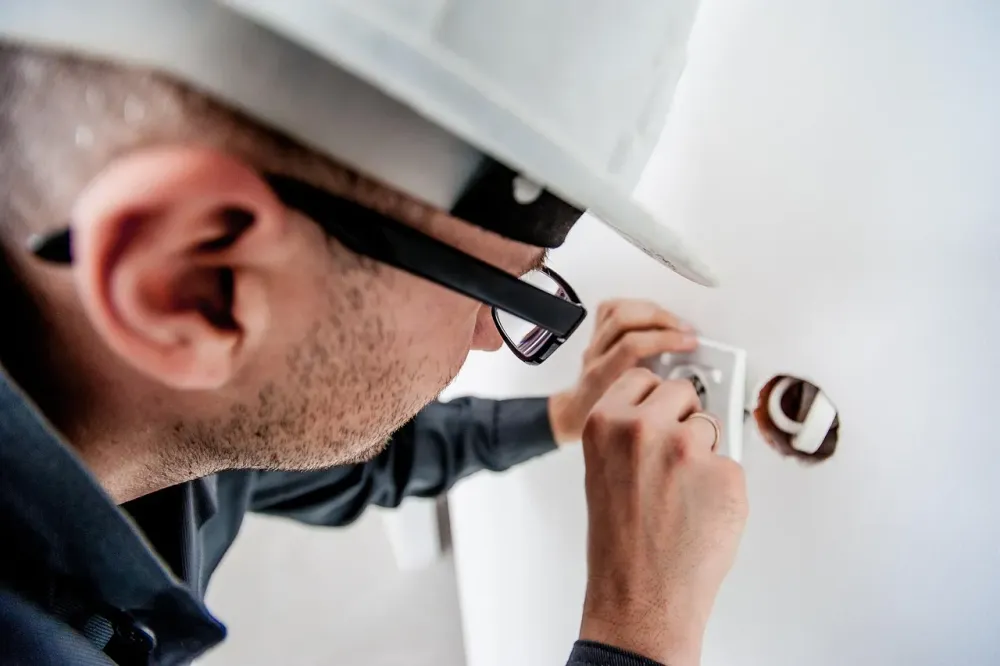
- Remove faceplate to expose wiring terminals: Unscrew 2 mounting bracket screws and gently pull the outlet receptacle outward from the wall box.
- Inspect rear markings and prepare wire release: Carefully examine the receptacle rear:
- Locate the side stamped W or WHITE (corresponding to front long slot).
- Regulatory wire colors: white wire represents neutral, while black (or red) wire represents hot. Reversed outlets often show black inserted into W.
- Depress terminal release slots to swap conductor positions: Insert a small flat-blade screwdriver into release slots to smoothly pull out black and white wires. Firmly insert white neutral into W slot and black hot into ungrounded hot slot.
- Reassemble, fasten screws, and conduct live testing: Neatly fold wires back into the junction box, tighten screws on the bracket and wall plate. Switch on the distribution box NFB, insert the phase tester, and confirm 2 steady amber lights indicating correct polarity.
5. Receptacle Polarity Comparison Table
| Comparison Dimension | Standard Correct Polarity (Hot in Right Short Slot) | Reverse Polarity (Hot and Neutral Swapped) | Safety Impact and Code Rating |
|---|---|---|---|
| Internal voltage after switch turned off | Zero volts (0V), completely safe | Continuously energized with 110V high voltage, severe shock risk | Risk Level: 5 stars (critical latent hazard) |
| Metal chassis microampere leakage | Y-capacitors balanced to ground, chassis reads 0V without sensation | Symmetric filtering unbalanced, producing 50V to 70V tingling shock | Barefoot contact causes painful electric shock scare |
| Effectiveness of polarized asymmetric plugs | Wide and narrow prongs provide 100% foolproof protection | Foolproof safety disabled, multiplying electrical hazard | Violates CNS standards and Taipower customer equipment regulations |
6. Official Inspection Standards and Taipower Wiring Regulations
Residential branch outlet polarity and grounding configurations must strictly comply with Article 15 and Article 54 of the Regulations for Installation of Customer Electrical Equipment (用戶用電設備裝置規則) enacted by the Ministry of Economic Affairs (grounding type single-phase receptacles must align grounding pole polarity with grounded conductors; neutral conductors must connect to terminal slots marked W). For distribution installation guidance, refer to construction standards from the National Land Management Agency under the Ministry of the Interior.
Extended reading reference: Regulations for Installation of Customer Electrical Equipment, Loose Power Outlet Sparking and Receptacle Replacement Guide, and Bathroom GFCI and Earth-Leakage Circuit Breaker Tripping Troubleshooting.
7. Frequently Asked Questions FAQ
Q1: If plug prongs are identical (symmetric round or flat pins), does polarity matter?
For appliance operation itself there is no difference, but for overall home safety a huge difference remains. Traditional mobile chargers and nightlights feature symmetric prongs operable in both orientations. However, safety-focused appliances (hair dryers, audio equipment, coffee makers, microwaves) utilize polarized plugs with one wide and one narrow prong to ensure hot lines pass directly through power switches. If the wall outlet itself is reversed, foolproof plugs cannot protect you.
Q2: Why do all outlets in older homes test 100% reversed?
In older homes with over 20 years of building age, this is a common occurrence. Rather than an electrician (水電師傅) wiring dozens of outlets backwards individually, electricians during original construction inverted black hot feeder cables and white neutral conductors at the main distribution board. If every outlet in the house is inverted, an electrician does not need to open each socket; simply swapping phase and neutral conductors beneath the main breaker inside the breaker box restores correct polarity across the entire home simultaneously.
Q3: What does Hot/Ground Reverse mean on a receptacle tester?
This is an extremely dangerous electrical hazard (Danger Level 100%). Hot/Ground Reverse indicates the electrician mistakenly connected the 110V hot conductor to the circular grounding terminal. This means all metal appliances with 3-prong plugs (computers, refrigerators, washing machines, ovens) have their entire metal chassis directly energized with live 110V voltage. Anyone touching appliance frames completes a path through the heart to earth, demanding immediate main power cutoff and emergency repair.
Q4: My computer gives a tingling shock; does flipping the plug 180 degrees help?
If the plug is a traditional 2-prong symmetric plug, rotating it 180 degrees can indeed reduce chassis leakage voltage by realigning symmetric filter paths. However, with standard 3-prong grounded plugs featuring fixed grounding pins, rotation is mechanically impossible; the only true remedy is correcting wall outlet polarity and verifying that green ground wiring is solidly bonded to earth.


