
Across the metropolitan areas of Taipei and New Taipei, walk-up apartments and residential buildings exceeding 30 or even 40 years of age account for more than 70% of total housing stock, where deteriorating electrical and plumbing conduits concealed inside structural walls form the primary cause of water leakage disputes and domestic water hazards. Across the Atlantic, New York City accommodates a vast inventory of pre-war residential buildings constructed between 1900 and 1940. Their accumulated expertise in managing corroded cast iron soil stacks, eliminating lead supply lines, and maintaining aged steam pipes provides invaluable practical wisdom for older properties in Taiwan. By embracing a micro-renewal philosophy that avoids structural wall demolition, utilizing modern PPR and stainless steel pipe materials, and adopting exposed pipe aesthetics, older apartments in Taipei can restore safe and durable water supply functions without destructive overhaul.
NYC Apartments to Taipei Old Homes: Micro-Renewal Lessons
This article is compiled from publicly available online sources for general reference only; readers should independently verify and judge its accuracy, and it is not legal, tax, medical or engineering advice. Rules, fees and subsidies change; check the latest notice from the responsible authority before acting. For electrical, gas, structural or health risks, consult a qualified professional.
This is the English edition of a Chinese article, adapted with AI assistance and checked against the original. Where the two differ, the Chinese version and the official sources it cites prevail.
Infrastructure Challenges and Solutions in Century-Old NYC Apartments
The urban landscapes of Manhattan and Brooklyn feature thousands of historic brownstone buildings and pre-war residential apartment co-ops dating from the dawn of the 20th century. In these historic properties, plumbing systems traditionally relied on heavy cast iron drainpipes, galvanized steel supply lines, and early lead risers. After a century of continuous municipal water circulation and mineral scaling, internal pipe diameters have contracted severely, turning persistent leaks and low water pressure into commonplace daily headaches.
Faced with historic properties that cannot simply be demolished or redeveloped, the residential sector in New York developed structured long-term maintenance protocols administered by co-op boards. Every 5 to 10 years, building boards commission professional engineering teams to perform endoscopic video inspections across all vertical building risers. Regarding remediation methods, New York widely implements trenchless cured-in-place pipe (CIPP) technologies, pulling epoxy-saturated liners into old cast iron conduits and heat-curing them on-site to create robust jointless internal pipes that restore structural integrity for up to 50 years without breaching walls.
On the regulatory and policy front, New York municipal authorities enforce Local Law 97 alongside targeted repair loan and grant programs managed by the Department of Housing Preservation and Development (HPD). These initiatives incentivize residential co-op boards to replace lead pipes and inefficient vertical risers. This tripartite mechanism combining strict statutory standards, municipal low-interest loan backing, and mandatory reserve funds ensures the infrastructural longevity of century-old architecture.
| Engineering Repair Method | Duration and Operational Scope | Structural Disruption Degree | Estimated Budget Level | Average Service Life |
|---|---|---|---|---|
| Traditional concealed wall excavation | 21 to 35 days with extensive demolition | Extreme, ruins walls and waterproofing | High, includes tile masonry and waste | Around 25 to 30 years |
| Micro-renewal exposed piping aesthetic | 3 to 7 days with surface anchor brackets | Minimal, preserves tiles and structure | Moderate, avoids demolition carting | Up to 50 years with PPR/stainless |
| CIPP cured-in-place pipe relining | 2 to 4 days using existing cleanouts | Zero disruption, avoids wall cutting | Higher single-line technical cost | Around 40 to 50 years |
Aging Pipe Realities and Living Hazards in Taipei Old Houses
Examining conditions in Taipei and New Taipei through data from the Ministry of the Interior real estate platform, the average residential building age has exceeded 33 years, with more than 400000 households situated in properties older than 40 years. Built largely between 1970 and 1990, these walk-up apartments suffer inherent infrastructure limitations:
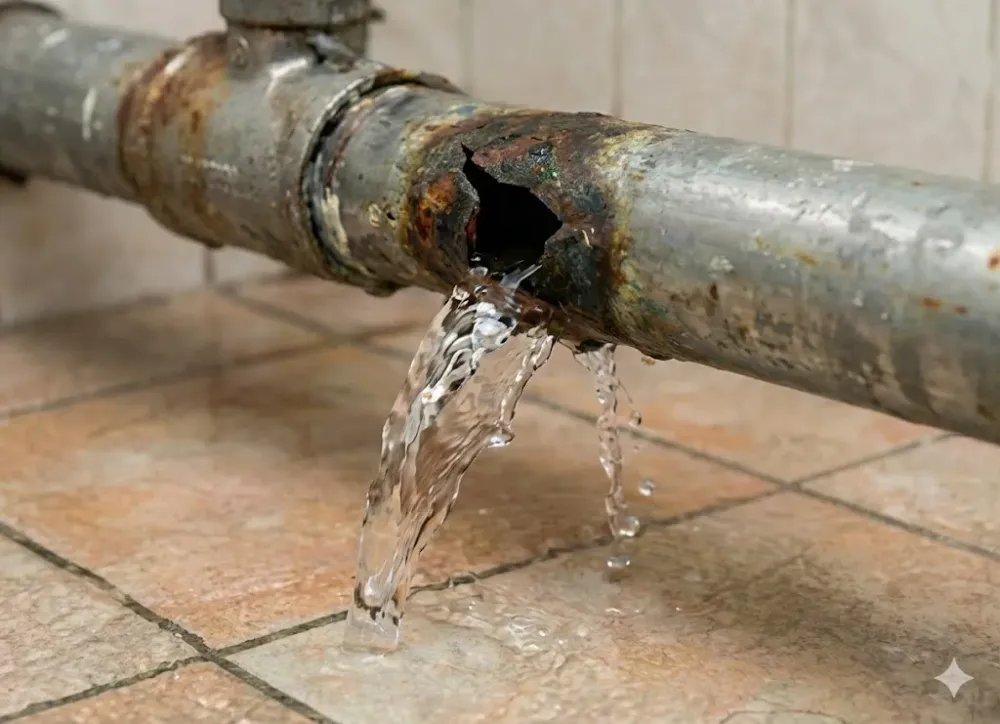
The primary concern is severe degradation of hot and cold water pipes. Early builders routinely installed galvanized steel pipes and uninsulated copper pipes. Galvanized steel pipes oxidize heavily after 15 to 20 years of water contact, developing internal rust nodule buildups that choke water flow down to 30% of original capacity while dislodging heavy metals; meanwhile, uninsulated copper hot water pipes suffer pinhole punctures from continual expansion cycles, serving as the leading origin of ceiling moisture and mold in downstairs apartments.
The secondary vulnerability is poor soil stack venting. Older apartments often omitted dedicated vertical vent pipes, meaning sudden drainage surges from upper floors generate negative siphon pressures that drain water seals from lower traps, allowing sewer sewer odors and insects to enter living quarters. Compounding this, early breaker boxes rated at only 30A struggle with modern inverter air conditioners, air fryers, dehumidifiers, and smart bidet toilets, generating dangerous electrical overheating risks.
When organizing pipe replacements, homeowners should observe a clear hierarchy of priorities: Priority 1 targets essential hot and cold potable supply pipes; Priority 2 focuses on upgrading the main electrical distribution panel and circuit breaker units; Priority 3 addresses bathroom floor drains and soil stack venting; Priority 4 updates gas water heater flue piping and certified metal gas hoses.
The Micro-Renewal Philosophy: Pipeline Activation Without Structural Ruin
Confronted with plumbing deterioration, many homeowners procrastinate due to fears of month-long dust, temporary relocation rental costs, and massive contractor renovation bills. The core philosophy of micro-renewal derived from New York rejects whole-scale demolition in favor of lightweight, targeted technical interventions that revitalize pipework.
Exposed pipework has evolved into a celebrated design standard in older building revivals. Drawing inspiration from New York SoHo loft interiors and Nordic minimalism, plumbing technicians arrange sleek grade 304 double-press stainless steel pipes and metallic EMT electrical conduits along ceiling beams, corners, or baseboards. Secured by calibrated brackets, these conduits highlight architectural geometry while completely eliminating future wall-cutting damage, ensuring any joint moisture remains visible for instant maintenance.
Regarding piping materials, micro-renewal strongly recommends PPR (Polypropylene Random Copolymer) fusion-welded pipes or food-grade 304 or 316 stainless steel lines. PPR offers low thermal conductivity, superior thermal retention, corrosion resistance, and lightweight installation; thermal socket fusion melts pipe and fitting into a single contiguous unit that withstands continuous operating temperatures up to 95 degrees, while exposed stainless steel lines provide a maintenance lifespan of over 50 years with excellent seismic pressure resistance.
5 Key Lessons from International Practice for Renovating Old Taipei Homes
Synthesizing New York building maintenance practices with local plumbing realities across Taiwan, property owners and buyers in Taipei should integrate the following 5 critical lessons:
- Lesson 1: Pipeline health diagnostics must become a prerequisite in home purchase evaluations. When inspecting 30-year-old secondhand homes in Taipei, look beyond cosmetic paint and retain certified home inspectors to run 1-hour static water pressure tests and electrical distribution thermal imaging. Homeowners can use our comprehensive old house comprehensive health assessment tool to conduct rapid initial safety screenings.
- Lesson 2: Engineer 20-year headroom for electrical and smart automation expansions. When refreshing interior conduits, expand the service panel to at least 75A, run dedicated 220V lines for kitchen and bath appliances, and allocate space for whole-home water filtration and smart automatic leak shutoff valves.
- Lesson 3: Insist on hiring certified electrical and plumbing contractors. Old structures are delicate, and plumbing alterations near load-bearing walls must strictly adhere to the residential hot and cold water pipe installation standards, strictly prohibiting reckless core drilling through rebar within structural beams.
- Lesson 4: Leverage municipal renewal and structural maintenance grants. Residents in Taipei and New Taipei can apply for exterior wall, elevator, and common plumbing riser renovation subsidies through the Taipei Urban Regeneration Office or its New Taipei counterpart to offset common utility upgrades.
- Lesson 5: Harmonize historical architectural charm with modern functionality. Rather than erasing an old home character, preserving authentic terrazzo floors, patterned glass, or vintage brickwork while introducing modern metallic exposed conduits yields an elegant aesthetic balance. For comprehensive project budgeting tips, consult our Taipei old house electrical and plumbing renovation budget guide.
Frequently Asked Questions
Is it mandatory to hack away all tiles and plaster walls when replacing old plumbing?
Not at all. Modern plumbing engineering offers refined exposed pipework options. Hot and cold water pipes travel neatly along ceiling soffits, structural corners, or behind cabinetry, requiring only localized wall drill holes. Conduits can be enclosed in decorative trim channels or showcased in brushed industrial stainless steel. This technique bypasses masonry demolition, reducing work schedules from 3 weeks down to 3 to 5 days while shaving 40% to 60% off total renovation budgets.
If tap water runs rusty yellow-brown, does the issue stem from rusty pipes or a dirty rooftop water tank?
You can identify the root cause with a simple test: thoroughly clean the rooftop storage tank first. If water continues discharging yellow particles and rust stains form in basins after cleaning—especially during early morning faucet openings or following periods of non-use—it indicates internal oxidation and flaking within concealed galvanized steel lines. Rusted lines restrict flow and leach oxidized iron, demanding prompt exposed pipe conversion.
Are exposed pipe installations in older walk-up apartments susceptible to impacts or excessive water flow noise?
When installed following standard specifications, there is no cause for concern. PPR pipes utilized in micro-renewal possess exceptional impact resilience, while stainless steel offers superior mechanical rigidity. Conduits are anchored firmly every 60 to 80 centimeters using expansion bolts and rubber-cushioned clamps. To mitigate drainage noise, wrapping high-density acoustic foam and aluminum damping tape around pipe surfaces reduces fluid turbulence sound by 15 to 20 decibels, ensuring quiet durability.
Sources
Information referenced from international building standards and official urban renewal guidelines:


