
When caring for elderly relatives dependent on home oxygen concentrators, suction machines, hospital beds, or alternating-pressure air mattresses, families frequently ask: can these devices running 24 hours a day be plugged into extension cords, will they trip circuit breakers, and how should households prepare for power outages? Bottom line: continuous medical equipment like oxygen concentrators (drawing 300 to 600 watts) and suction units must plug directly into wall receptacles; never daisy-chain extension cords or 3-to-2 prong adapters. Verify that branch circuit no-fuse breakers (NFB, 無熔絲開關) have adequate capacity and do not share lines with high-wattage heating appliances like hair dryers or space heaters; register with Taipower's Home Life-Support Equipment user registry, and equip bedside areas with a high-capacity portable power station (1000Wh or greater) or online UPS alongside at least 1 full pressurized medical oxygen cylinder for a 3-tier emergency backup defense. Understanding medical device wattage, grounding integrity, and emergency protocols protects equipment reliability and preserves life support.
Home Oxygen Concentrator Dedicated Outlet and Backup Guide
This article is compiled from publicly available online sources for general reference only; readers should independently verify and judge its accuracy, and it is not legal, tax, medical or engineering advice. Rules, fees and subsidies change; check the latest notice from the responsible authority before acting. For electrical, gas, structural or health risks, consult a qualified professional.
This is the English edition of a Chinese article, adapted with AI assistance and checked against the original. Where the two differ, the Chinese version and the official sources it cites prevail.
Auditing Bedside Home Care Equipment: Wattage, Amps, and Outage Risks
Before planning bedroom circuits, calculate total load and assess outage tolerance across care devices:
1. Continuous oxygen concentrators (life-critical, zero interruption): Continuous 5-liter (L) to 10-liter concentrators draw 300W to 600W (2.7A to 5.5A at 110V). Compressor motor startups generate surge currents 3 to 5 times their rated draw; power cuts of even a few minutes cause blood oxygen desaturation, classifying them as Tier 1 non-interruptible devices.
2. Medical suction machines and nebulizers (intermittent emergency equipment): Suction pumps draw 90W to 180W (0.8A to 1.6A). While operated for short 3 to 5-minute intervals to clear phlegm, they represent essential airway clearance tools that must be powered on demand without tripping breakers.
3. Electric hospital beds and alternating air mattresses (support equipment): Air mattress pumps run continuously but draw only 10W to 20W (0.1A to 0.2A); 3-motor adjustable beds draw 100W to 200W momentarily during positioning. These can tolerate power outages of several hours without immediate life danger, and their electricity costs can be calculated with our 家電耗電計算機 (appliance electricity cost calculator).
| Home Medical Care Device Name | Typical Rated Operating Wattage | Operating Current at 110V AC | Life-Support Outage Tolerance Level | Recommended Electrical Configuration |
|---|---|---|---|---|
| Continuous Oxygen Concentrator | Approx. 300W to 600W | Approx. 2.7A to 5.5A | Extremely Critical (life danger within minutes) | Direct wall outlet; dedicated 15A branch with UPS |
| Electric Medical Suction Pump | Approx. 90W to 180W | Approx. 0.8A to 1.6A | High Emergency (airway clearance required) | Direct wall outlet with clear clearance |
| Alternating Pressure Air Mattress | Approx. 10W to 20W (micro-load) | Approx. 0.1A to 0.2A | Moderate Tolerance (holds pressure for hours) | Shares general bedroom lighting or outlet circuit |
| 3-Motor Electric Hospital Bed | 100W to 200W during adjustment | Approx. 0.9A to 1.8A | Low Criticality (manual hand-crank backup) | Wall receptacle; select models with backup batteries |
Bedside Medical Wiring Standards: Dedicated Outlets, Branch Isolation, and Grounding
Power delivery for care equipment must satisfy strict residential electrical codes:
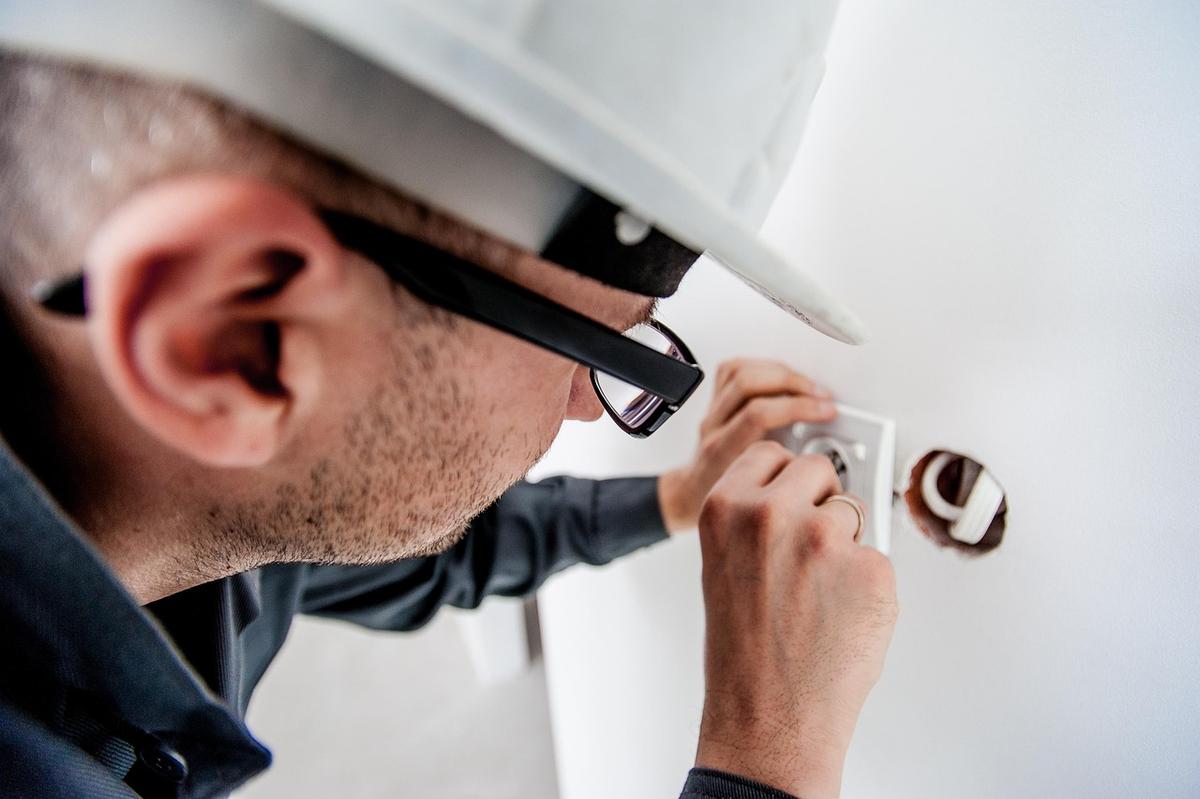
1. Dangers of extension cords with oxygen concentrators: Thin extension cords have loose internal spring contacts that overheat under sustained 400W+ continuous loads, melting plastic housings and sparking electrical fires. Loose floor cords can also be crushed by wheelchair tires or accidentally kicked out by caregivers. Concentrators must plug directly into dedicated wall outlets.
2. Breaker panel branch circuit isolation: In Taiwan residences, general bedroom outlet circuits are protected by a 15A or 20A no-fuse breaker (NFB, 無熔絲開關). If a 1200W space heater or 1500W hair dryer shares the circuit, combined currents exceed 18A, tripping breakers instantly, as detailed in our 無熔絲開關與漏電斷路器跳電排查指南 (no-fuse breaker and earth-leakage circuit breaker (ELCB, 漏電斷路器) tripping guide). Electricians should pull a dedicated 2.0 mm or 3.5 mm² circuit from the panel, referencing our 老屋電路升級指引 (old house electrical upgrade guide).
3. 3-prong grounding and locking safety outlets: Medical equipment requires robust grounding to bleed static interference and prevent micro-leakage currents. Receptacles must connect to an equipment grounding conductor (G) with ground resistance below 100 ohms (Ω), and utilize twist-lock safety faceplates to prevent accidental cord detachment.
3-Tier Emergency Contingency Plan for Power Outages
Prepare for typhoons, grid faults, and blackouts through a structured 3-tier emergency plan:
1. Tier 1: Taipower Home Life-Support Equipment User Registry: Under Taipower utility service regulations, families with home ventilators or oxygen concentrators can present hospital medical certificates to Taipower's 1911 customer service line to register as life-support equipment households. Taipower provides advance phone notifications for planned outages and prioritizes power restoration during disasters, as outlined in our 颱風長輩安全照護指引 (typhoon elderly home safety guide).
2. Tier 2: Portable battery power stations and online UPS: Deploy a high-capacity lithium iron phosphate (LiFePO4) power station or pure sine wave online UPS. Calculate battery runtimes using: Battery Capacity (Wh) × 0.85 Inverter Efficiency ÷ Device Wattage (W) = Operating Hours. A 1,024Wh power station powering a 350W concentrator delivers: 1024 × 0.85 ÷ 350 = approx. 2.48 hours of run time. An 8-hour overnight backup requires 3000Wh or greater capacity.
3. Tier 3: Pressurized medical oxygen cylinders: Batteries can fail; keep one 10-liter primary cylinder and one 2 to 3-liter portable emergency tank with mechanical pressure regulators on standby. If battery power depletes, manually crack open the cylinder and call 119 for hospital transfer.
| Emergency Defense Tier Level | Hardware Equipment or Notification Channel | Activation Trigger and Operational Function | Routine Maintenance and Testing Interval |
|---|---|---|---|
| Tier 1: Advance Notice & Restoration | Taipower 1911 Life-Support Registry | Advance phone warning for planned cuts; priority line restoration | Annual registry renewal with updated medical note |
| Tier 2: On-Site Battery Backup Power | LiFePO4 portable power station (1000Wh+) | Instant battery backup sustaining concentrator for 2 to 4 hours | Monthly battery capacity check; maintain above 90% |
| Tier 3: Pressurized Oxygen Cylinders | Medical high-pressure oxygen cylinder with regulator | Manual pure oxygen supply when batteries deplete or pumps fail | Check pressure gauge every 3 months; refill when low |
| Tier 4: Emergency Hospital Evacuation | 119 EMS dispatch and regional hospital card | Extended grid blackout with backup oxygen running low | Post hospital emergency contacts on refrigerator |
Fire Safety Precautions in Oxygen-Enriched Environments
Concentrated oxygen creates intense fire acceleration risks; observe strict room safety boundaries:
1. Zero open flames and high-temperature heating: Maintain a 2-meter clearance around the bed free of cigarettes, incense, or open flames. Never use quartz or halogen space heaters or electric heating blankets within 1.5 meters of oxygen nasal cannulas, as sparks trigger instant flash fires.
2. Machine ventilation clearances and bedding hazards: Concentrator intake filters and cooling vents require at least 20 cm of wall clearance. Never drape blankets, clothes, or towels over the chassis, which causes compressor overheating and motor burnout.
Frequently Asked Questions
Can an oxygen concentrator ever be plugged into an extension cord?
No, extension cords are strictly prohibited. If wall outlets sit far from the bed, hire a licensed electrical contractor to run a rigid PVC or metal conduit branch and install a dedicated 3-prong grounding receptacle 45 to 60 cm above the floor behind the bed. Cheap extension cords overheat and pose life-threatening fire hazards.
How much electricity does an oxygen concentrator consume running 24/7 each month?
A 350W concentrator running 24 hours daily over 30 days consumes: 350W × 24 hours × 30 days = 252,000 Wh = 252 kWh per month. At Taipower third-tier residential rates (approx. NT$3.70 per kWh), monthly electricity costs total roughly NT$932. Families with disability certificates can apply for local social welfare utility subsidies.
During a typhoon blackout, how long will backup power sustain an oxygen concentrator?
Runtime depends strictly on battery capacity (Wh) and concentrator wattage. Standard computer UPS units (50 to 100Wh) run a concentrator for only 10 to 15 minutes, allowing short manual switchovers. Running 3 to 4 hours requires a 1,500Wh portable power station. During blackouts, switch immediately to pressurized oxygen tanks and evaluate hospital evacuation before batteries deplete.
Who qualifies for Taipower's Home Life-Support Equipment user registry?
Patients residing at home whose attending physicians certify dependent daily use of life-sustaining medical equipment (ventilators, oxygen concentrators, or suction pumps) qualify for registration. Submit medical certificates, disability cards, equipment leases, and electric bills to Taipower service counters or call 1911.
Summary and Recommendations
Powering home medical equipment requires dedicated wall outlets, branch circuit isolation, verified equipment grounding, utility registry, and backup oxygen cylinders. Sound electrical infrastructure ensures unbroken life support for vulnerable loved ones.
Sources
Medical equipment guidelines and electrical codes verified from official authorities:
- Taiwan Power Company (Verified 2026-11-11): Home Life-Support Equipment User Registration and Outage Notification Operating Guidelines
- Health Promotion Administration Ministry of Health and Welfare (Verified 2026-11-11): Safe Operating Guidelines for Home Oxygen Equipment and Electrical Fire Prevention
- Regulations for Installation of Customer Electrical Equipment (Verified 2026-11-11): Branch Circuit Overload Ratings and Equipment Grounding Standards
Disclaimer: Technical specifications are compiled from public electrical codes and equipment standards. Individual patient medical needs require physician direction; engage certified electricians for home wiring alterations.


