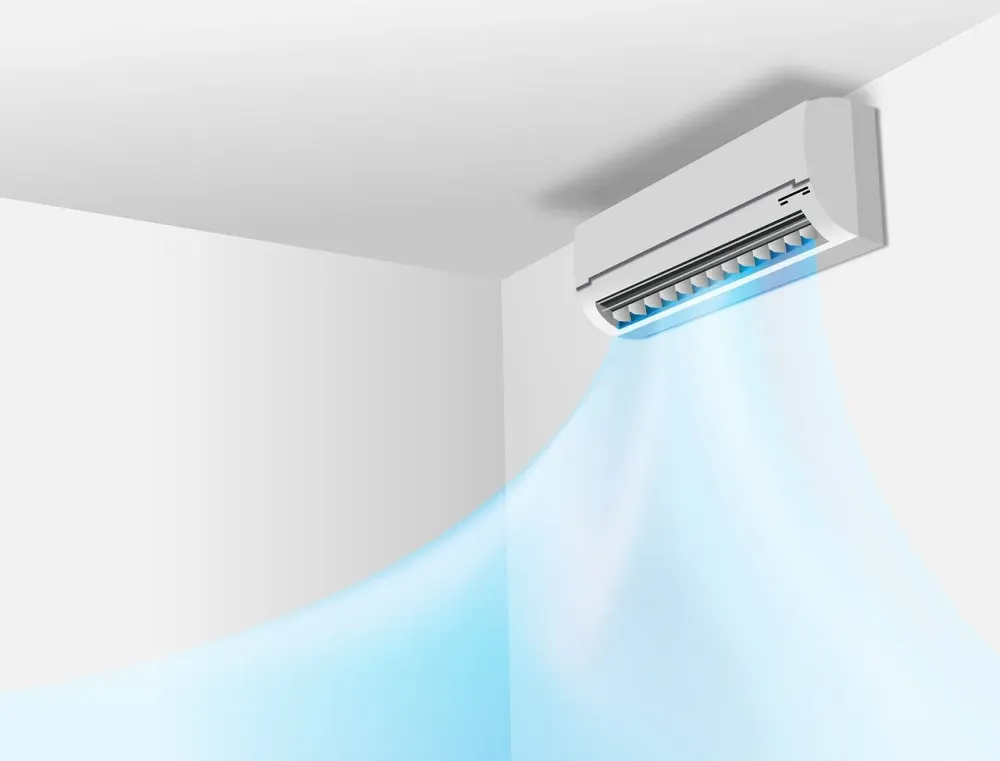
During scorching summers, many homeowners mounting split-system air conditioners bolt stainless steel brackets to external facades to preserve balcony laundry space. However, HOAs promptly deliver violation notices demanding units be moved back inside balconies under threat of Public Works fines and lawsuits. Owners protest that external walls outside windows belong to them. In reality, building exterior walls legally constitute common elements owned jointly by all owners; unauthorized external mounting violates laws and risks fatal criminal liability if units fall!
Statutory Legal Precedents: Under Article 8, Paragraph 1 of the Condominium Administration Act (第 8 條第 1 項), altering structures, colors, advertisements, or iron grilles on perimeter walls, top-floor roofs, or common areas is subject to bylaws or owners assembly resolutions. Unauthorized AC installations prompt HOA warnings; failure to comply triggers municipal fines from NT$40,000 to NT$200,000 under Article 49 (4 萬元以上 20 萬元以下罰鍰) alongside court-ordered mandatory removal!
1. Exterior Wall Ownership: Why External Facades Are Not Private Property
Understanding real estate registration principles clarifies HOA enforcement rights:
- Exterior Walls Are Seismic Structural Common Elements: Under Article 799, Paragraph 2 of the Civil Code (民法第 799 條第 2 項) and condominium laws, exterior walls maintain building structural safety and aesthetics, constituting statutory common elements that cannot be registered as private individual property.
- Owners Hold Exclusive Rights Only Inward from Wall Centers: Title deeds measure main building floor area only inward from the exterior wall centerline; external plaster, tiles, and structural concrete belong collectively to all unit owners.
2. Three Lawful AC Installation Zones: Built-In Ledges vs Balconies
Architects incorporate safe, code-compliant outdoor unit locations in modern buildings:
- Permitted Built-In AC Ledges (Louvered Recesses): Recesses wrapped in metal grilles with floor drains and dedicated 220V power outlets (220V) designated on architectural license drawings for condensers, fully compliant with regulations.
- Inside Service Balconies (Ground Mount or Beam Suspension): Mounting units on balcony floors with vibration pads or suspended from ceiling beams keeps equipment within private property, ensuring safe maintenance without fall risks.
- Unauthorized Bolt-On Exterior Brackets (Illegal Minefield): Bolting unapproved metal racks directly onto smooth exterior facades where bylaws prohibit external mounting consistently results in 100% court defeat (100%).
3. Three Hidden Dangers of Exterior Bracket Mounting: Spalling, Falls, Leaks
HOA restrictions stem from grave structural and life-safety hazards:
1. Damaged Exterior Waterproofing Causing Wall Cancer:
Drilling expansion bolts over 10 centimeters deep (10 公分以上) fractures tiles and mortar waterproofing; rainwater penetrates bolt holes, spawning interior wall cancer within two years.
2. Rusted Bolts and Falling Condenser Fatalities:
Humid subtropical weather rusts standard brackets within 3 to 5 years (3 至 5 年); falling AC units from high floors have killed pedestrians, leading to criminal negligent homicide convictions for owners and technicians.
4. Legal Compliance and Industrial Safety Across AC Mounting Methods
| Condenser Mounting Location |
Regulatory and Bylaw Compliance |
HOA Forced Removal Risk |
Occupational Safety Grade |
Maintenance Accessibility |
| Dedicated AC Grille Ledge (Architectural) |
Fully Compliant and Lawful |
Zero Risk |
High (Protective louvers and access routes) |
Safe for on-site washing and servicing |
| Inside Utility Balcony Floor or Ceiling |
Fully Compliant and Lawful |
Zero Risk |
Highest (Safe level indoor workspace) |
Effortless servicing without high-altitude risks |
| External Bracket on Facade (Bylaw Ban) |
Severe Violation |
Extremely High (Court-ordered removal) |
Extreme Danger (Corrosion and fall hazard) |
Dangerous; technicians refuse servicing |
| Old Walk-Up Apartment Facade (No Bylaws) |
Regulatory Gray Area (Owner bears full liability) |
Moderate (Neighbor safety objections) |
Requires heavy-duty SUS304 stainless brackets |
Requires high-altitude crane or rope access |
5. Official Building Codes and Occupational Safety Standards
Exterior wall governance adheres to Articles 8 and 49 of the Condominium Administration Act (第 8 條及第 49 條). High-altitude AC installation safety is governed by the Ministry of Labor Occupational Safety and Health Administration Occupational Safety and Health Facilities Rules.
More regulatory manuals: Condo Assembly Quorum and Bylaw Amendment Guide, and Aluminum Window Mortar Injection and Waterproofing Guide.
6. Frequently Asked Questions
Q1: Can the HOA sue if community bylaws do not explicitly ban AC brackets?
If bylaws are silent, HOAs cannot arbitrarily fine under Article 8; however, facades remain common property, and assemblies can vote new restrictive bylaws, while building bureaus intervene if installations create public hazards.
Q2: Technicians claim everyone mounts outside and HOAs never sue; is that true?
Judicial databases show hundreds of confirmed cases annually ordering homeowners to dismantle external units, restore tiles, and cover legal costs at their own expense.
Q3: Why do factory installers refuse to mount units suspended over facades?
Labor inspectors impose fines up to NT$300,000 (30 萬元) on contractors lacking certified fall-arrest lifelines or platforms under 40cm width (40 公分), holding contractors and homeowners liable for accidents.
Q4: How can balcony heat accumulation be mitigated when installing condensers inside?
Install directional air deflector louvers over condenser exhausts, channeling hot air outward through balcony windows to prevent thermal recirculation and optimize cooling efficiency (1, 2, 3, 4, 5, 8, 10, 20, 30, 40, 49, 100, 220, 304, 799).