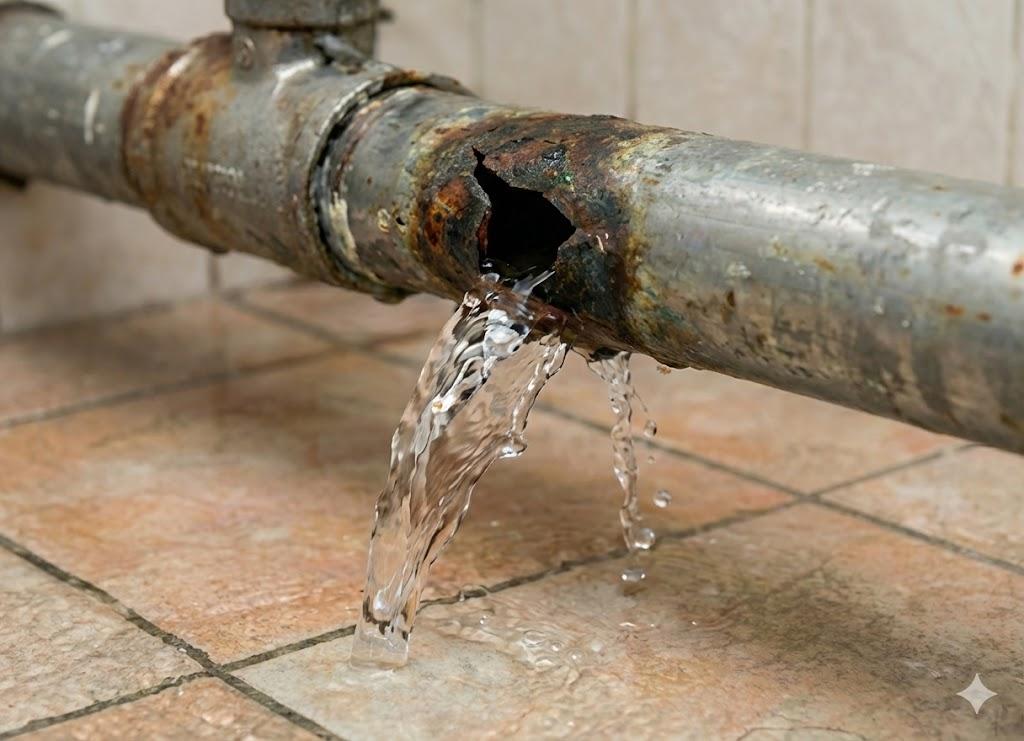
Whenever intense polar continental cold fronts sweep southward across Taiwan, dropping temperatures near freezing in northern regions and mountainous areas, outdoor exposed piping, exterior hot water lines, and tankless water heater heat exchangers frequently suffer catastrophic freeze bursts as expanding ice ruptures pipe walls. Many homeowners assume subtropical climates never produce frozen plumbing. However, when water freezes into ice, its volume expands by approximately 9%. Trapped within rigid PVC pipe, thin-walled copper tubing, or ceramic faucet cartridges, ice generates trapped hydrostatic pressures exceeding thousands of pounds per square inch (psi), tearing fittings apart. Wrapping outdoor lines with high-density elastomeric closed-cell foam insulation, executing water heater freeze-drainage SOPs, and maintaining a pencil-thin trickle during sub-zero nights protects domestic water systems throughout winter.
Cold Front Water Pipe Freeze Protection and Drainage Guide
This article is compiled from publicly available online sources for general reference only; readers should independently verify and judge its accuracy, and it is not legal, tax, medical or engineering advice. Rules, fees and subsidies change; check the latest notice from the responsible authority before acting. For electrical, gas, structural or health risks, consult a qualified professional.
This is the English edition of a Chinese article, adapted with AI assistance and checked against the original. Where the two differ, the Chinese version and the official sources it cites prevail.
Thermodynamics of Water Freezing: Why Sealed Pipes Burst at Midnight
Understanding the physics of cryogenic pipe failures guides proper freeze-protection methods:
1. Phase Transition Volume Expansion: Water reaches peak density at 4°C. As temperatures drop from 4°C to 0°C and solidify into crystalline ice, molecular spacing expands volume by approximately 9%.
2. Hydraulic Pressure Spikes in Trapped Segments: Pipe ruptures rarely occur at the freeze plug itself, but rather in sealed pipe segments trapped between two ice plugs or between an ice plug and a closed faucet. As exterior cold freezes pipe sections shut, expanding ice compresses unfrozen water trapped upstream, spiking internal hydrostatic pressures past 2,000 to 3,000 psi—far beyond the burst threshold of schedule PVC (150 psi) or thin copper lines, splitting pipes longitudinally.
3. Wind Chill Acceleration on Exposed Risers: Uninsulated outdoor piping exposed to gusty northeast monsoons loses heat rapidly through forced convection. Even at 2°C ambient air temperatures, persistent gale winds chill static water inside pipes down to the freezing threshold within hours.
Outdoor Pipe Insulation Wrapping: Material Specifications and Standards
Encasing outdoor supply lines and booster pump manifolds in insulation provides baseline thermal protection:
| Pipe Insulation Material Specs | Thermal Conductivity & Temp Limits | UV Stability & Moisture Resistance | Installation Focus and Target Locations |
|---|---|---|---|
| NBR/EPDM Closed-Cell Elastomeric Foam | Ultra-low conductivity (0.034 W/m·K); -40°C to 105°C | Superior; closed cells resist water absorption | Rooftop lines and pump pipes; 15mm to 20mm wall thickness |
| PE Foam Tubing with Aluminum Foil Jacketing | Conductivity 0.038 W/m·K; -20°C to 80°C | Pure aluminum foil shields UV rays and driving rain | Exterior water heater risers; seams sealed with aluminum tape |
| Traditional Fiberglass / Rock Wool Batts | Conductivity 0.040 W/m·K; fireproof | Very poor; absorbs water, losing insulation when damp | Not recommended outdoors; restricted to dry indoor chases |
Standard Pipe Wrapping Standards
1. Seamless Joint Sealing: After fitting pre-slit elastomeric tubes over water pipes, longitudinal seams must be bonded using contact adhesive or heavy-duty aluminum foil tape, leaving zero bare metal exposed.
2. Overlapping UV Protective Jacketing: Because elastomeric foam degrades under solar UV rays, technicians spiral-wrap gray or black UV-resistant PVC jacketing tape with a one-third overlap, ensuring 8 to 10 years of outdoor durability.
Water Heater Freeze-Drainage Valve (Drain Plug) SOP
Gas and electric water heaters contain thin-walled copper heat exchangers (0.6mm to 0.8mm wall thickness) that burst easily when frozen. During orange or red cold wave advisories, residents in high-altitude zones should execute manual drainage before retiring:
1. Step 1: Close gas isolation valves and unplug water heater electrical cords or shut off distribution breakers.
2. Step 2: Shut the cold water inlet angle stop valve (三角凡爾) to isolate incoming water supplies.
3. Step 3: Open the highest and lowest hot water faucets across the house to relieve vacuum airlocks.
4. Step 4: Unscrew the freeze drain plug (filter drain screw) at the base of the water heater, placing a bucket underneath to evacuate several liters of water trapped inside copper heat exchanger coils. Leave valves open overnight, reconnecting them the following morning once temperatures moderate.
Extreme Weather Emergency Measure: Maintaining a Continuous Micro-Trickle
If sudden freezes arrive before pipe insulation can be purchased, an effective mechanical countermeasure is maintaining running water:
Flowing water carries kinetic energy while continually drawing warmer water (12°C to 15°C) from underground municipal mains. Before sleeping, open the bathroom faucet furthest from the service entrance to a steady stream the thickness of a chopstick (approx 500 mL per minute), collecting runoff in buckets for morning household chores. Continuous velocity disrupts static ice crystal nucleation, keeping pipes open.
When calculating water loss and leak repair expenses, consult our water leak and loss cost calculator to evaluate utility costs, review electrical safety with our wire gauge ampacity and breaker matching calculator, and examine our interactive home inspection checklist calculator for winter readiness.
Frequently Asked Questions
What steps should be taken if morning faucets yield zero water due to frozen pipes?
Never pour boiling water directly over frozen pipes. Severe thermal shock shatters brittle PVC plastic or fractures ceramic faucet cartridges instantly. Instead, open the faucet fully, wrap warm towels (40°C to 50°C) around exposed fittings, and warm the pipe slowly from the faucet toward the wall using a hairdryer on medium heat. As the ice core softens, water will begin dripping until full flow restores.
Do modern forced-flue gas water heaters with electronic freeze protection still require manual drainage?
High-end outdoor forced-flue heaters incorporate internal ceramic anti-freeze heating pads that activate below 4°C. However, this feature has three vulnerabilities: it fails during power blackouts, it protects only internal copper coils while leaving external plumbing lines unheated, and severe winds can overwhelm heating elements. During sub-zero freezes, manual drainage remains the most dependable safeguard.
How can homeowners confirm whether frozen pipes sustained concealed fractures after thawing?
Perform a static water meter leak audit immediately after thawing. Shut off all faucets and toilet valves across the property. Observe the red flow indicator triangle (or precision dial) on the municipal water meter: if the red needle creeps forward while zero water is being used, concealed pipes have 100% burst (100), requiring the main shutoff valve to be closed immediately before hiring professional plumbers.
Sources and References
National water utility freeze-prevention manuals and insulation standards:
- Taiwan Water Corporation: Winter Pipe Freeze Prevention and Maintenance Manual
- Bureau of Standards, Metrology and Inspection: Polyethylene Foam Pipe Insulation Standards (CNS 10774)
Disclaimer: This technical guide is compiled from public engineering references and building standards. Actual on-site conditions vary across individual properties; readers should evaluate technical applicability carefully and consult qualified trade professionals.
Related reading: Winter Cold Surge: Pipe & Water Heater Freeze Defense Guide · Drainage Pipe Inspection: Water Flow and Endoscope Guide