In densely populated cities, one of the most suffocating forms of household pollution is secondhand and thirdhand smoke from a neighbor. Whether a downstairs neighbor smokes on the balcony and the smoke rises with the warm air into your living room and bedroom, or a neighbor smokes in the bathroom and the smoke backflows through the exhaust vents of the shared duct in an older building, the nicotine, tar and carcinogenic aromatic hydrocarbons in the smoke often make older relatives and young children cough hard or even trigger asthma attacks. Many victims assume that "what happens in someone's own home is not our business". In fact, Taiwan's courts have in recent years handed down a large number of judgments finding that secondhand smoke drifting into a neighbor's home is a civil tort, and awards of tens of thousands up to NT$100,000 for mental distress have become the norm!
Legal practice in winning cases: Under Civil Code Article 184, paragraph 1 (first sentence), Article 195, paragraph 1, and Article 793 ("prohibition of intrusion by fumes and similar emissions"), where a landowner or resident causes fumes or smoke to enter another's premises, the intrusion may be prohibited unless it is slight or is considered appropriate given the shape of the land and local custom. High Court judgments have clearly stated that a person's right to peaceful enjoyment of their home is an important personality interest protected by the Constitution and the Civil Code, that long-term emission of secondhand smoke into other units goes beyond the level an ordinary person can be expected to tolerate, and that the victim is entitled to claim damages and to ask the court for an injunction.
Three common routes for secondhand smoke, and physical ways to block them
Before starting legal action, first check whether physical measures at home can reduce how much smoke you breathe in:
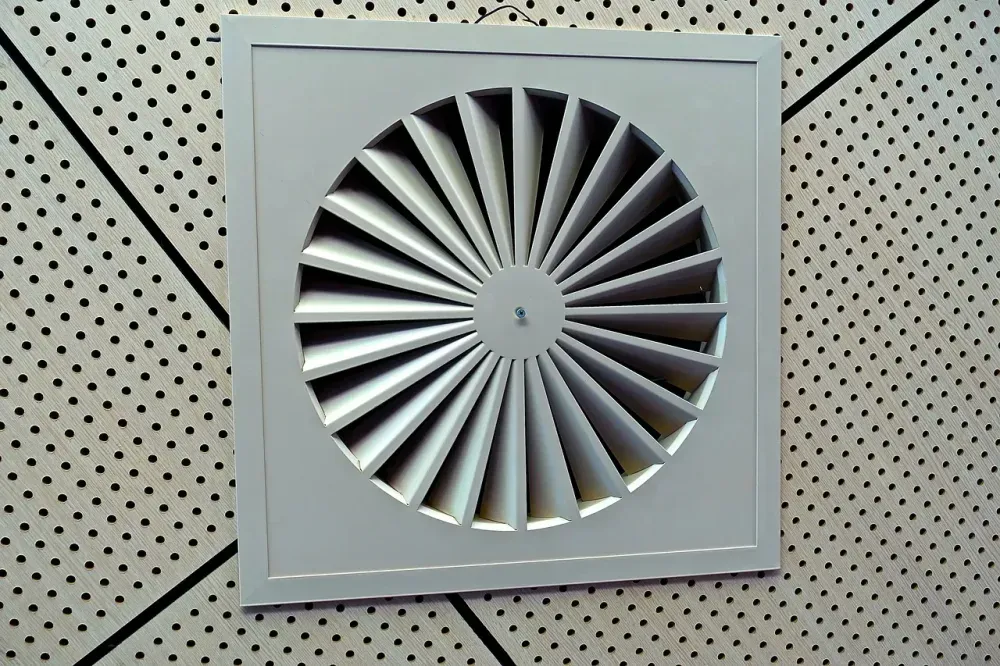
- Shared bathroom duct (exhaust failing on the same floor): In older buildings the bathroom exhaust fan often discharges straight into the vertical shared duct. When a neighbor smokes in the toilet, the fumes flow back into other units under negative pressure in the duct. Fix: install a high static-pressure ventilation fan with an electric non-return damper (sealing valve), and fully seal the gap in the ceiling around the fan with cement mortar or foam sealant.
- Warm air rising from front and rear balconies: When a downstairs neighbor opens a window or smokes on the balcony, the hot smoke rises straight up through the stack effect and enters open windows above. Fix: add double-glazed airtight windows and add wind-guiding louvers to the balcony.
- Projecting terraces or ventilation grilles: If a kitchen range hood's exhaust pipe sits right next to a neighbor's window, smoke from a neighbor smoking in the kitchen can also blow directly into your home.
Four evidence-gathering steps courts accept for a secondhand smoke damages claim
The key to winning a secondhand smoke tort case in court is not "the smoke smells terrible" but "objective, scientific data and proof of causation":
- Buy a PM2.5 / TVOC air quality monitor that records data continuously: A judge cannot rely on someone's nose alone. The victim should obtain a high-accuracy air quality monitor with network or memory-card logging, set it up where the smoke comes in (for example next to the balcony door or inside the bathroom), and record readings continuously for several weeks. When the smoke arrives, photograph or film the PM2.5 reading jumping from a normal 10 μg/m³ to 80-150 μg/m³ or even off the scale.
- Video-record the time, frequency and sound of the smoking: When you smell smoke, record the clock time, the monitor reading, the "click" of a lighter on the downstairs balcony, coughing, or a photo of the smoker (note: film only outward toward the drifting smoke, and never point the camera into a neighbor's bedroom, which would violate their privacy).
- Complain to the management committee and ask security to issue a warning notice: Each time you smell smoke, immediately notify the building guard or the chief administrator to come and smell it for themselves, ask security to sign the duty log recording that "on a given date and time, a strong, pungent secondhand smoke smell was confirmed at this unit", and ask the management committee (管委會) to issue a violation warning notice to the smoking resident.
- See a doctor and obtain a diagnosis certificate: Diagnosis certificates and counseling records for family members whose asthma, allergic rhinitis or chronic bronchitis worsened because of long-term secondhand smoke, or who sought psychiatric treatment for anxiety and insomnia, serve as the key element for claiming compensation for mental distress (non-pecuniary damages).
The strongest tool: amend the community bylaws to ban smoking on balconies and in bathrooms
Although the current tobacco control law (菸害防制法) mainly regulates public places and indoor workplaces with 3 or more people, and does not directly provide fines for "the exclusively owned parts of private homes", the Condominium Administration Act gives communities wide powers of self-governance:
Steps to amend the community bylaws:
1. Under Article 31 of the Condominium Administration Act, convene an owners meeting (區分所有權人會議) and propose adding a smoking-ban clause to the bylaws: "Smoking is completely prohibited in all common areas of this community's buildings, agreed-use common areas, and on the balconies, terraces, bathrooms and ducts of the exclusively owned parts of each unit."
2. After the meeting passes it, report it to the public works bureau of the county or city government for the record, and it takes effect.
3. Once the bylaws are in effect, if a resident violates the ban, the management committee may first stop them. If the resident still does not comply after being stopped, the management committee can report to the local competent authority (the building administration office of the public works bureau), which under Article 47, subparagraph 3 can fine the smoking resident NT$3,000 to NT$15,000, and may impose the fine repeatedly for each violation!
Routes for fighting secondhand smoke intrusion, and how well each works
| Self-help measure |
Legal basis |
Difficulty |
Expected result |
Notes and risks |
| Install a non-return exhaust fan and seal the gaps |
Building equipment improvement works |
Easy, costs about a few thousand NT dollars |
Can completely block smell backflow through the shared duct |
Does not solve smoke drifting in through balcony windows |
| Management committee mediation and posted notices |
Condominium self-governance principle |
Very easy, no cost |
Depends on the neighbor's personal conscience; success rate about 30% |
Tends to end up as verbal persuasion with no real enforcement power |
| Owners meeting amends the bylaws, then fines are imposed |
Articles 23 and 47 of the Condominium Administration Act |
Moderate; requires a majority decision of the households |
Very high; the public works bureau can directly impose fines in the range of NT$10,000 |
The owners meeting (區權會) must first meet the attendance threshold of 2/3 |
| Civil tort lawsuit for damages in court |
Civil Code Articles 184, 195 and 793 |
Higher; requires months of continuous scientific evidence gathering |
A win can bring an award of NT$20,000 to NT$100,000 and a smoking ban |
You bear first-instance court fees of about a few thousand NT dollars |
Official tobacco control and civil judgment sources
For rules on smoking bans in public life and environmental protection, see the tobacco control law (菸害防制法) of the Health Promotion Administration (國民健康署), Ministry of Health and Welfare: tobacco control law (in Chinese). For the prohibition of intrusion by fumes and the protection of personality interests, see the Judicial Yuan's legal information retrieval system (司法院法學資料檢索系統) for High Court civil judgments on secondhand smoke intrusion: Civil Code Articles 793 and 195 (in Chinese).
More on neighbor peace and residents' rights: upstairs neighbor noise: the full process of calling the police, the Social Order Maintenance Act and civil evidence for damages, and community owners meeting quorum and proxy anti-abuse guide.
Frequently asked questions
Q1: Smoking on the balcony of a home I own is private property. Is that really illegal?
Smoking on your own balcony is indeed in private space, but once the secondhand smoke drifts into a neighbor's home, it infringes the neighbor's property rights and right to health! Ownership is not unlimited in law. Civil Code Article 793 expressly prohibits fumes and similar emissions from crossing into another's premises, and Supreme Court judgments have established the principle that a smoker is free to smoke indoors but must take measures to seal it in completely so that nothing escapes; if the smoker lets secondhand smoke drift on the wind and harm a neighbor's health, the smoker bears liability for an unlawful tort.
Q2: Will the police or the environmental protection bureau come to measure secondhand smoke or issue a fine?
In practice, intervention by public authorities is limited. The environmental protection bureau's pollution complaint hotline usually inspects smoke from factories or businesses; for an individual household's smoking it generally declines to open a case on the ground that "the tobacco control law does not cover private homes". The police also have no power to fine someone for smoking. So the strongest and most direct legal weapons are "filing a civil tort lawsuit for damages" or "amending the community bylaws through the management committee so that the public works bureau imposes fines".
Q3: How much compensation can you usually get from suing a neighbor for smoking? Will the judge really order them to stop?
According to recent district court and High Court cases in Taiwan, as long as the plaintiff presents complete PM2.5 data, security logs and medical proof, courts usually award mental distress compensation of between NT$15,000 and NT$100,000! More importantly, the court's judgment usually also declares: "The defendant shall not smoke on the balcony, terrace or around the windows of that unit, and shall not allow secondhand smoke to enter the exclusively owned parts of the plaintiff's residence." If the defendant offends again, the plaintiff can take the judgment and apply to the court for compulsory enforcement with a coercive fine (怠金).
Q4: Can an air purifier really filter out secondhand smoke completely?
An ordinary air purifier with a HEPA filter can only filter the smoke particles (PM2.5) and cannot break down the toxic gases or the strong tar smell in secondhand smoke! To reduce the smell effectively you need a purifier designed for smoke removal, with a heavy columnar activated carbon filter (at least 1 kg of activated carbon) or photocatalyst or ozone decomposition technology. Even so, the best fundamental solution remains to stop the smoke from entering at the source.