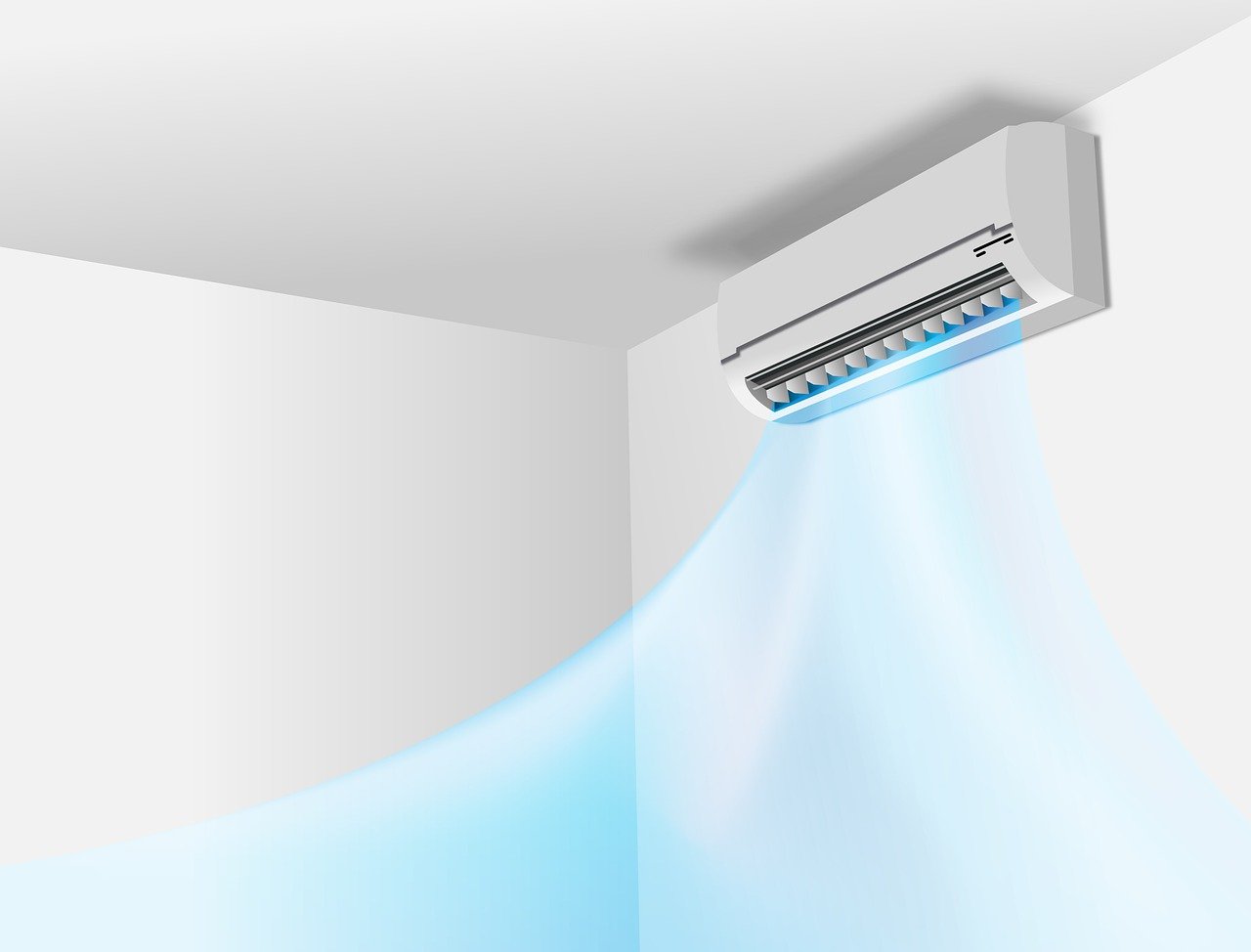
When outdoor summer temperatures spike past 36 degrees Celsius, ductless split inverter air conditioners frequently suffer sudden operational halts during peak midday heat—the indoor blower runs without cooling while diagnostic LEDs flash fault codes; this frustrating breakdown typically represents an outdoor unit "high-pressure thermal cutout (跳機)." Modern architectural trends often locate large outdoor condenser units in confined service balconies, louvered enclosures, or tightly against solid concrete parapets. When discharged exhaust air (reaching 45°C to 52°C) rebounds off walls with nowhere to escape, it creates an intense localized heat island, driving condensing pressures past emergency cutoffs. Enforcing intake and exhaust clearances, retrofitting 45-degree discharge airflow deflectors, and descaling condenser fins ensures continuous cooling under extreme summer heat waves.
AC Outdoor Unit Overheating and Air Deflector Guide
This article is compiled from publicly available online sources for general reference only; readers should independently verify and judge its accuracy, and it is not legal, tax, medical or engineering advice. Rules, fees and subsidies change; check the latest notice from the responsible authority before acting. For electrical, gas, structural or health risks, consult a qualified professional.
This is the English edition of a Chinese article, adapted with AI assistance and checked against the original. Where the two differ, the Chinese version and the official sources it cites prevail.
Thermodynamics of Refrigeration: Why Heat Stagnation Causes High-Pressure Trips
Air conditioners do not create cooling; they pump thermal energy from indoor living spaces into outdoor air through refrigerant phase changes:
1. Compression and Condenser Rejection: Low-pressure refrigerant gas compresses into superheated vapor at 70°C to 90°C before entering the outdoor condenser coil. Axial fans force ambient outdoor air across aluminum fins, condensing refrigerant vapor into warm, high-pressure liquid.
2. Thermal Short-Circuiting and Failed Condensation: When outdoor airflow is obstructed, discharged heat recirculates into rear intake coils, lifting intake air temperatures from 35°C to over 48°C. Without an adequate thermal gradient, refrigerant cannot condense efficiently, causing high-side condensing pressures to spike past thresholds (R410A and R32 refrigerant pressures surpassing 4.0 to 4.2 MPa).
3. Pressure Switches and Thermal Cutouts: Air conditioning microcontrollers monitor high-pressure sensors and compressor discharge thermistors. When pressures exceed safe thresholds or compressor temperatures exceed 110°C, circuits cut compressor power instantly to prevent motor winding burnout or ruptured copper tubing.
Outdoor Unit Installation Clearances: Clear Physical Standards
Certified HVAC installations must adhere strictly to manufacturer clearance envelopes, avoiding tight enclosures:
| Airflow Direction and Measurement Point | Manufacturer Recommended Clearance | Minimum Allowable Boundary | Thermal Performance Impact |
|---|---|---|---|
| Rear Intake Face (Distance to Wall) | 20 cm to 30 cm clearance | Never less than 15 cm | Intake air resistance chokes airflow, overheating fan motor |
| Front Discharge Face (Distance to Wall) | 100 cm+ open unobstructed space | Under 80 cm requires deflector | Hot exhaust rebounds, creating localized recirculation |
| Service Access Clearances (Sides) | Left 30 cm; Right 50 cm for service valves | 20 cm absolute minimum | Technicians cannot attach manifold gauges; PCB overheats |
| Top Vertical Clear Space | At least 50 cm to ceiling slab | Never flush with ceiling beams | Hot air traps overhead, impeding natural convective rising |
45-Degree Airflow Deflector Retrofit Standards
Where balcony parapets stand taller than condenser fan discharges or facing walls sit within 1 meter, adding an airflow deflector provides an economical remedy without relocating equipment:
1. Air Deflection Aerodynamics: Deflectors constructed of UV-stabilized ABS or coated galvanized steel feature fixed or adjustable 45-degree curved louvers. These redirect horizontal exhaust airflow upward at 45 degrees or laterally over balcony parapets into open ambient air, eliminating heat recirculation.
2. Mounting and Airflow Resistance: Deflectors bolt directly to factory metal fan grilles using stainless-steel fasteners. Clear opening ratios must remain above 75% to prevent backpressure that strains fan motors.
3. Measured Temperature Drops: Installing deflectors on confined balconies reduces condenser ambient intake temperatures from 46°C back to 35°C ambient. System pressures stabilize, preventing high-pressure cutouts and dropping indoor air supply temperatures by 3°C to 5°C within 10 minutes.
Condenser Aluminum Fin Maintenance Standards
Exposed outdoor condenser coils accumulate significant environmental contamination over time:
1. Dust and Oil Sludge Blockages: Vehicle exhaust, urban soot, and organic debris mat across outdoor aluminum coils. When dust covers 30% of coil surfaces, heat transfer collapses by half, driving compressor electrical draw up over 20%.
2. Cleaning Protocol: After isolating mains power, technicians brush away lint vertically along aluminum fins with soft nylon brushes, avoiding horizontal strokes that flatten delicate metal fins. Coils are flushed downward using garden hoses. Heavy grease deposits require neutral aluminum cleaners followed by thorough freshwater rinsing after 5 minutes.
When inspecting outdoor unit power wiring and branch breaker capacities, consult our wire gauge ampacity and breaker matching calculator to confirm breaker ampacities, calculate air conditioner running costs with our appliance electricity cost calculator, and examine our interactive home inspection checklist calculator for storm readiness.
Frequently Asked Questions
Can garden hoses be sprayed directly onto outdoor condenser units to cool them down during heatwaves?
It provides temporary emergency relief, but is not a permanent solution and carries electrical hazards. Spraying water onto rear aluminum condenser coils cools them via evaporation, dropping high-side pressures and permitting restarts. However, water must never spray into the right-side inverter electronics box (PCB) or fan motor junctions, which causes shorts. Furthermore, mineral scale from tap water bakes onto fins, permanently degrading heat dissipation. Improving ventilation and installing deflectors remains the proper engineering approach.
Does installing an airflow deflector increase outdoor unit operating noise?
Aerodynamically optimized deflectors increase acoustic noise by less than 1 to 2 dBA, imperceptible to human ears. However, substandard deflectors with opening ratios under 60% restrict air discharge, creating loud wind buffeting and motor vibration. Deflectors should always feature wide louver spacing tested for low air resistance.
Do architectural exterior metal louvers surrounding outdoor units impair heat dissipation?
Yes. Dense decorative louvers with opening ratios below 50% trap exhaust heat like solid walls. If condensers must sit behind louvers, locate units flush against the louver face (under 5 cm gap) or install duct extensions that route exhaust directly through openings into open air.
Sources and References
HVAC condenser engineering references and air conditioning standards consulted:
- ASHRAE Handbook: Refrigeration - Air-Cooled Condensers and System Design
- Bureau of Standards, Metrology and Inspection: Ductless Air Conditioner Standards (CNS 3615 / CNS 14464)
Disclaimer: This technical guide is compiled from public engineering references and building standards. Actual on-site conditions vary across individual properties; readers should evaluate technical applicability carefully and consult qualified trade professionals.
Related reading: Fixing AC Outdoor Unit Overheating and High-Pressure Trips · AC Heat Dissipation: Aluminum Fin Cleaning & Awning Guide · Refrigerator Overheating Gasket Seal and Defrost Repair