

2026 Shuangbei Decoration Trends and Market Insights: Old House Renovation, Smart Energy Saving and Flexible Design
🇹🇼 Looking for the Chinese version of this article?切換至繁體中文版 →

2026 Shuangbei Decoration Trends and Market Insights: Old House Renovation, Smart Energy Saving and Flexible Design

The residential market and decoration industry in Shuangbei are at a critical point of structural change. High housing prices have forced home buyers to turn to the second-hand market. Coupled with the more than 5 million households in Taiwan who own 30-year-old homes, there has been a huge rigid demand for "old house renovations." At the same time, the continued rise in material and labor costs, as well as consumers' rising awareness of health and sustainability, have jointly shaped the unique decoration trend in 2026. This article will analyze the future appearance of the Shuangbei decoration market from three aspects: market data, design philosophy and technology application.

1. Market driving forces: renovation of old houses, changes in cost structure and customer base

  1. Renovation of old houses has become the mainstream of the market:As a metropolitan area, Shuangbei has become increasingly prominent in problems such as peeling exterior walls, aging pipelines, and fire safety in old apartments. This is not only an aesthetic issue, but also a "safety" issue. Therefore, decoration needs have changed from the past style-oriented to basic projects with "structural reinforcement", "comprehensive pipeline renewal" and "barrier-free design" as the core. The “Old House Life Extension Program” and related subsidies promoted by the government have also accelerated this trend.
  2. Faced with "structurally rising" decoration costs: The increase in decoration costs from 2025 to 2026 is not a short-term fluctuation, but a "new normal" due to comprehensive improvements in materials, manpower, regulations, and environmental protection standards. The annual growth rate of the materials index is still high, and the half-day salary of a hydropower master in the north has reached NT$4,500-5,200. Against this background, homeowners are more inclined to use tools such as "building materials calculators" to dismantle quotations, and actively apply for government subsidies to maximize their budgets.
  3. Changes in the main customer group for decoration: Data show that young adults aged 25-44 have become the main force in decoration, and up to 77% of them are "first-time decorators." They have strong information search capabilities and value "process transparency" and "pursuing high quality within budget." In addition, the number of "households living alone" in Taiwan has exceeded 3.22 million. There is a significant demand for small homes and personalization, and safety and management convenience have become priority considerations.

2. Core design trends: light hard decoration, heavy soft decoration and sustainable health

Driven by the dual drive of budget and flexible demand, the design philosophy has undergone fundamental changes.

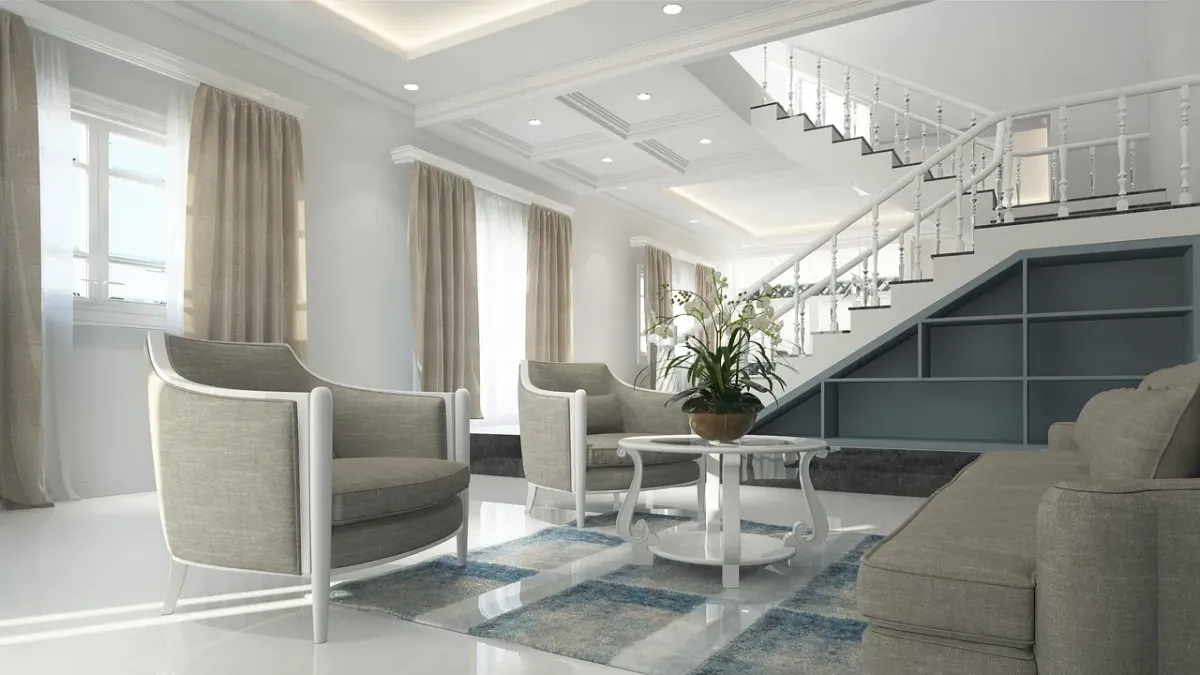
  • Light on hard decoration and heavy on soft decoration: The past practice of investing a large amount of budget in fixed and complex hardware decoration (hard decoration) is fading away. Instead, use "hard furnishings" such as ceilings, walls, and floors as a simple, neutral-colored background, and reserve more budget for "soft furnishings" such as furniture, lighting, and fabrics. This model gives the space a high degree of "breathing" and "freedom", making it easier for homeowners to adjust their style according to their life stages, and also meets the need for a small house to enlarge the sense of space.
  • Environmental protection and health have changed from trend to standard: Consumers are highly concerned about indoor air quality. Low formaldehyde E0 grade boards and low VOC (volatile organic compound) water-based paint have become the first choice from options. Government subsidies are even expected to push the penetration rate of low-VOC coatings into the residential market to 55% in 2026. In addition, demand for recycled wood fiberboards, which are moisture-resistant and insect-proof, as well as green building materials such as SPC stone-plastic flooring, continues to grow.
  • Style moves toward warmth and integration:Minimalist style has evolved into a more humanistic "Japanese style" or "new minimalist style", emphasizing natural materials and a quiet atmosphere. At the same time, "Mid-Century Modern" and "Mixed Style" are also favored because they can show personal taste, reflecting the mentality of homeowners who no longer blindly follow a single style and pursue uniqueness.
3. Smart Home and Future Prospects: From Showcase Technology to Energy Management

The development of smart home has entered a more pragmatic stage.

  • Core changes: Energy management:With the adjustment of electricity prices, the focus of smart homes has shifted from convenient functions such as remote lighting and voice control to "power consumption monitoring" and "energy efficiency optimization." Solutions that can help manage household power peaks and integrate solar and energy storage systems will become the next wave of hot spots.
  • Hidden costs need to be noted: When planning a smart home, you must consider in advance the cost of "weak current wiring" (if a wired stabilization solution is adopted, it will increase by about 300-500 yuan per square meter), as well as hidden budgets such as smart central gateways and possible annual cloud service fees.
  • Future Outlook: It is expected that after 2026, government subsidies may be linked to the calculation of the "carbon footprint" of renovation projects. This means that low-carbon choices from material production to construction are not only environmentally friendly, but may also directly affect financial subsidies and promote more sustainable development of the industrial chain.

Conclusion: Rational planning creates long-term value

For homeowners in Shuangbei, renovation in 2026 is a process in which "rational planning" trumps "emotional impulse". The key to success is: Facing the basic safety needs of old houses, embracing the flexible philosophy of "light and hard decoration", treating environmental protection and smart energy as long-term investments, and making good use of tools and subsidies to accurately control the budget. For business people paying attention to this market, these trends reveal the direction of service upgrades: providing transparent project management, deeply exploring green building materials and smart energy-saving integrated solutions, and meeting the personalized needs of young and single customers will be the core capabilities to win in the fiercely competitive Shuangbei market.

The Ministry of Economic Affairs' latest "Regulations on Consumer Electrical Equipment Installation" and the key points of electricity safety in old houses

Due to the popularity of high-power household appliances (such as air fryers, microwave ovens, dishwashers, instantaneous electric water heaters, and IH furnaces) in recent years, the Energy Administration of the Ministry of Economic Affairs has revised the "Regulations on Consumer Electrical Equipment Installation" many times to strictly require the diversion and protection mechanisms of residential electricity circuits. Statistics show that more than 30% of building fires in Taiwan are caused by electrical factors, among which "old wire insulation deteriorates and short circuits", "socket contacts are oxidized and loose, poor contact" and "non-fuse switch (NFB) overloaded and failed to trip" are the three main fatal causes.

Old apartments in Shuangbei that are more than 30 years old have a total original designed power capacity of only 30A to 40A, and several rooms often share the same 1.6mm or 2.0mm circuit. In the modern standard safety configuration, kitchen electrical cabinets, bathroom equipment, and air-conditioning and heating machines must all be equipped with 5.5mm² dedicated circuits (single circuit and single socket). It is recommended that the main switch box be upgraded to a busbar (Busbar) integrated distribution board, and the total amperage is increased to 75A or 100A (a qualified electrical appliance contractor needs to be entrusted to Taipower to review the additional power capacity).

Residential electricity self-test and regular inspection checklist

  • Appearance and temperature of the socket: Touch the outer cover of the commonly used socket lightly with the back of your hand. If it feels lukewarm or if you find that the plastic socket is yellowed and charred, or the plug is loose and shaking after being plugged in, it means that the internal copper plate clamping force is exhausted or the contact resistance is too high, and you should immediately cut off the power and replace it.
  • Regular testing of leakage circuit breakers (ELCB): For leakage circuit breakers in humid places such as balconies, bathrooms, and kitchen sinks, regulations require that the "TEST button" on the switch be pressed once every 1 to 3 months to confirm that it can automatically trip and cut off the power supply instantly.
  • Serial connection and overloading of extension cords are strictly prohibited: Extension cords should be purchased with 2.0mm thick wire diameter products that have CNS certification and automatic overload power-off protection. Do not share the same extension cord with high energy-consuming appliances to ensure zero hidden danger to life and property at home.

🇹🇼 Expat Living Note: Home Repairs in Taiwan

If you are an international resident renting an apartment in Taipei, New Taipei, or anywhere in Taiwan:

  • Voltage & Electrical Safety: Taiwan standard household voltage is 110V (60Hz). Do not plug 220V imported European/UK appliances directly without a certified step-up transformer.
  • Plumbing Terminology: Local plumbers are called 水電 (Shuǐdiàn) and handle both water and electrical repairs.
  • Landlord Obligations: Under Article 429 of Taiwan Civil Code, landlords are legally responsible for repairing natural wear and tear (such as hidden wall pipe leaks, water heater faults, or booster pump failures) unless explicitly waived in your lease.